Parkway Village is a mature southeast Memphis community whose commercial inventory - built primarily in the 1970s and 1980s along Airways and Lamar - is in the middle of its most significant reroof cycle in decades.
Parkway Village sits in the southeast quadrant of the city of Memphis, bounded roughly by Lamar Avenue to the north, Shelby Drive to the south, Airways Boulevard to the west, and the Whitehaven area to the southwest. The community developed primarily as a commercial suburb in the 1960s and 1970s, and its commercial inventory followed: neighborhood-serving shopping centers, auto service facilities, medical offices, grocery-anchored retail, and the institutional buildings - churches, community centers, schools - that serve the commercial base.
The commercial buildings in Parkway Village were constructed during a specific construction vintage - 1968 through 1988, predominantly - that is now presenting a concentrated reroof cycle. These buildings are 38-58 years old. Their original roof systems have long since expired and been patched, recovered, and re-patched. Many are now past the point where any system installed over the existing substrate can carry a manufacturer warranty - the recover layers have accumulated to the point where removal and full replacement is the only path to a warrantied system.
Airways Boulevard Commercial Corridor
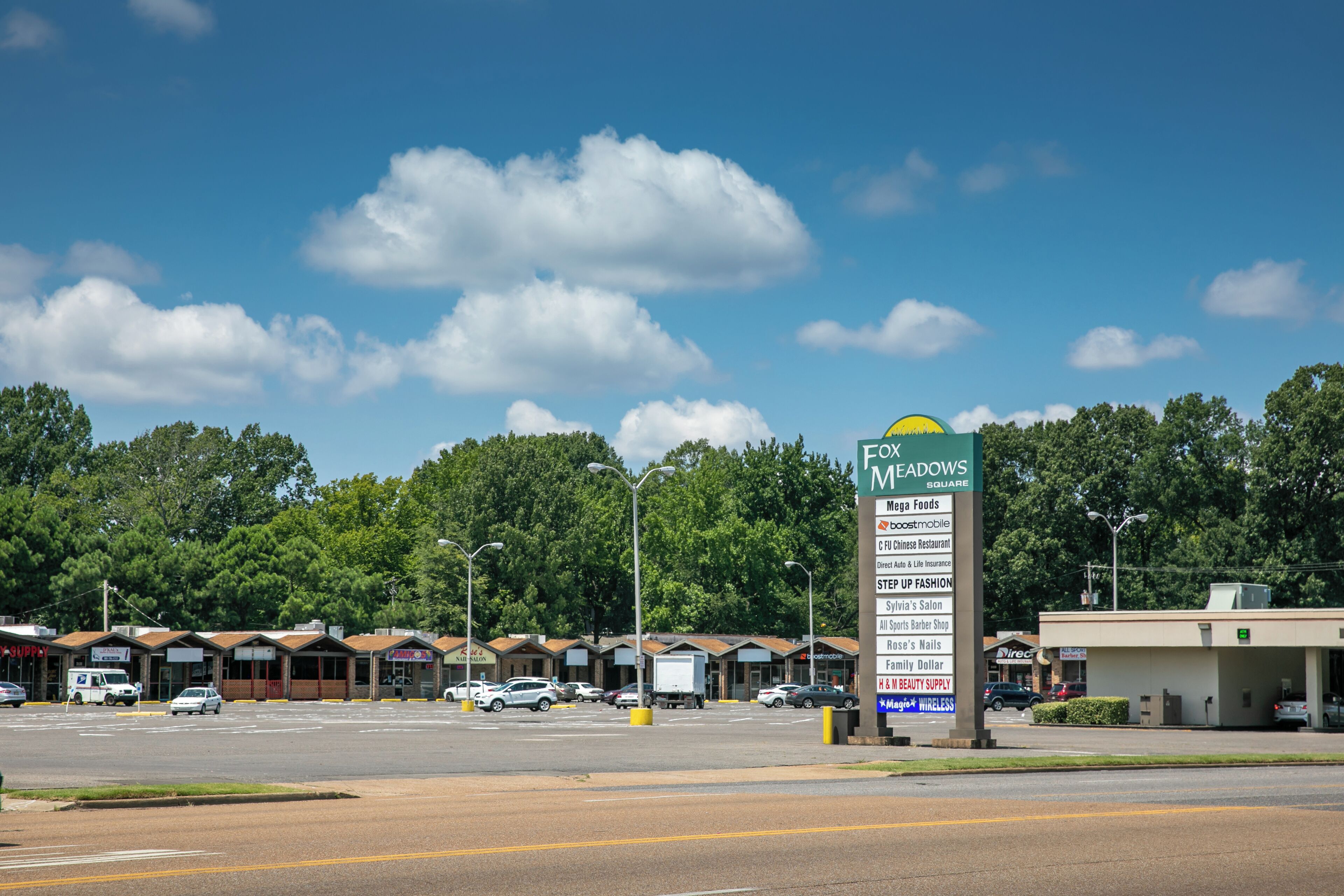
Airways Boulevard through Parkway Village runs north-south connecting Lamar Avenue to Shelby Drive, carrying a commercial strip of strip retail, auto service, fast food, and neighborhood commercial built primarily in the 1970s. These buildings are some of the oldest active commercial real estate in this part of southeast Memphis, and their roofing systems reflect it - multiple recover layers, drain systems that have been blocked and unblocked cyclically, and parapet flashings that have been repaired in place so many times that the original detail is no longer identifiable.
We assess Airways Boulevard commercial buildings with an expectation of deferred conditions. The initial roof walk documents surface conditions, but the moisture core pulls and limited deck exposure that we do during assessment are what determine the actual replacement scope. It is not unusual to find three recover layers over original built-up roofing on an Airways Boulevard building from this era - and in Memphis's humid climate, those layers trap moisture that has been building since the last recover was installed.
Lamar Avenue and Southeast Memphis Retail
The Lamar Avenue corridor through Parkway Village carries larger-format commercial - grocery-anchored centers, a concentration of auto dealers and service facilities, and the commercial buildings associated with the proximity to Memphis International Airport on the western side of the Lamar/Airways intersection. These buildings tend to be larger than the Airways strip retail, and their ownership is more often institutional than individual.
Grocery-anchored retail buildings in Parkway Village carry the specific challenges of anchor-tenant mechanical systems: large rooftop refrigeration condensing units that generate condensation drainage on the roof membrane, oversized HVAC systems with penetration clusters that create water-collection points when flashings degrade, and loading dock areas where forklift traffic occasionally contacts parapet walls. We assess all of these exposure points during our initial roof walk on any grocery-anchored property.
Institutional and Neighborhood Commercial Buildings
Parkway Village has a significant concentration of institutional buildings - Baptist, Methodist, and nondenominational churches with large sanctuary roofs, community centers, and the school facilities serving the commercial neighborhoods. These buildings have some of the most challenging roof geometries in the commercial inventory: large open-span sanctuary roofs with minimal interior slope, overflow drain systems that are tested only during extreme rain events, and HVAC systems sized for occupancy loads that may differ significantly from current use.
Church and community building roofing in Parkway Village is often funded through special campaigns or grants rather than operating capital, which means the decision timeline from assessment to replacement can be measured in months or years rather than weeks. We document conditions thoroughly and update assessments when conditions change, so the building's leadership has current information when the capital becomes available.
Parkway Village commercial or institutional roof inspection?
Tell us about your building and we will schedule a thorough assessment with a written condition report and scope options.