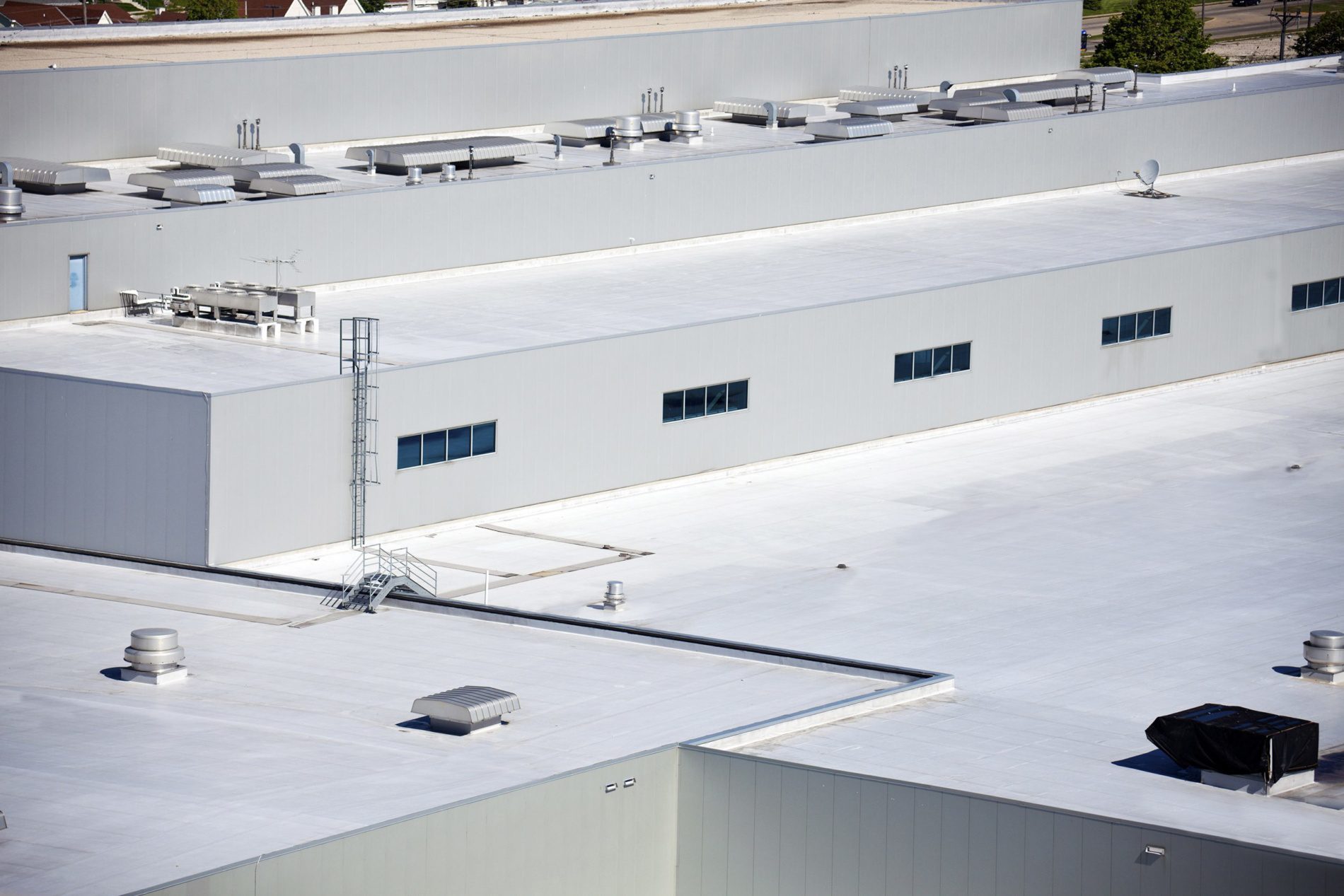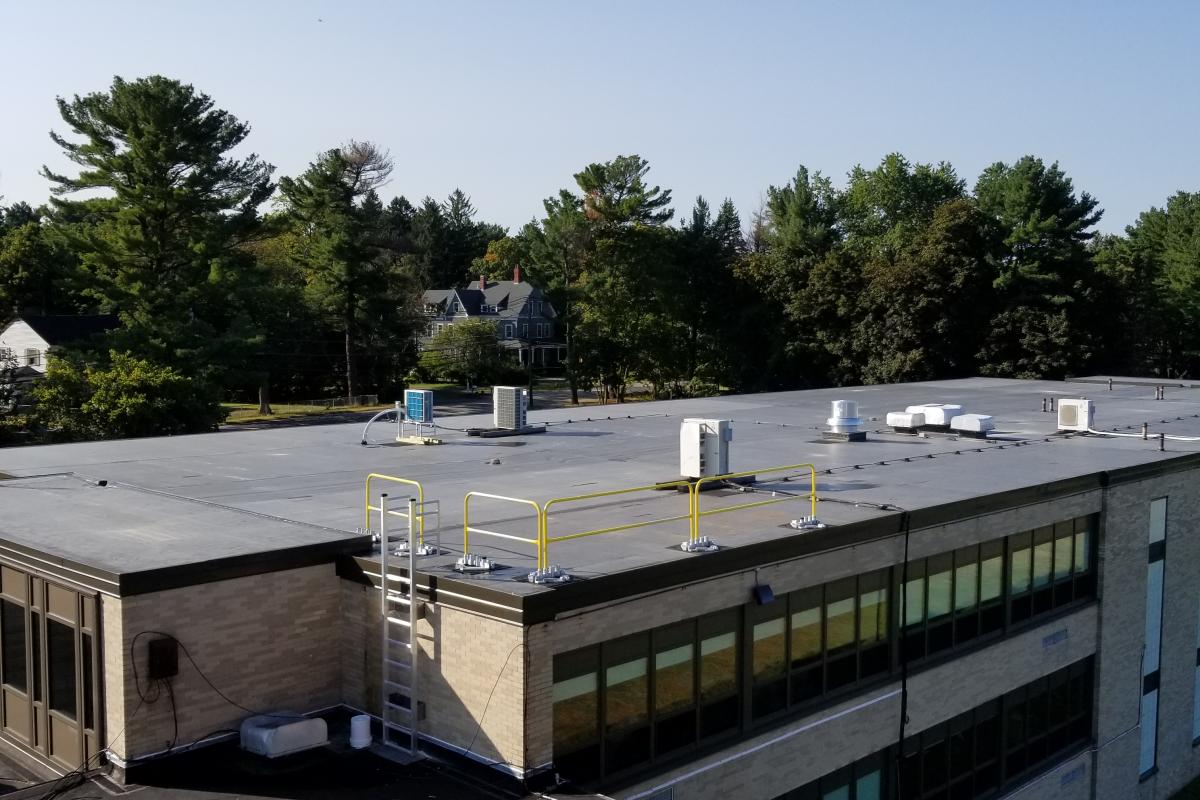
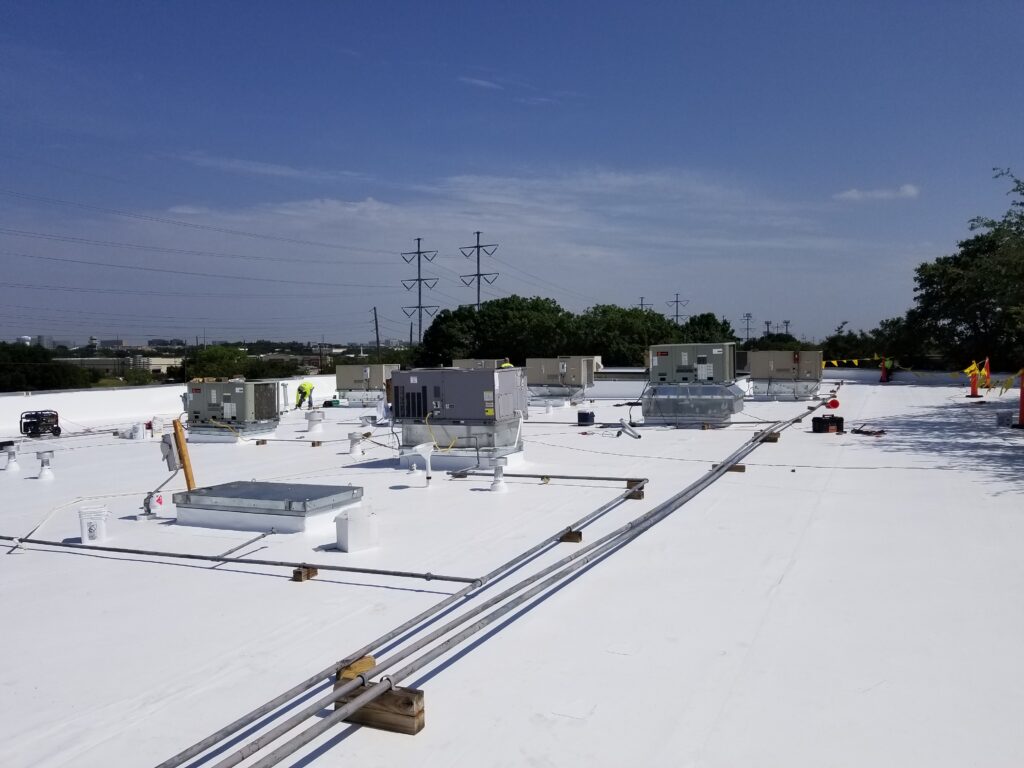
TPO is the dominant commercial single-ply membrane in Memphis new commercial and reroof work. We install 60-mil and 80-mil systems against manufacturer-spec details with 20-year no-dollar-limit warranty paths.
TPO (thermoplastic polyolefin) is the workhorse single-ply membrane for Memphis commercial flat roofs. Its reflective white surface is especially relevant here - Memphis rooftops regularly see surface temperatures of 150-170°F on dark membranes during July and August, and a reflective TPO surface can reduce that to 110-130°F, materially reducing cooling loads for the HVAC systems already working hard through a long humid summer.
We install TPO mechanically attached, fully adhered, or in ballasted configurations depending on building use, wind exposure, and the manufacturer's design package. Most Memphis commercial TPO work is mechanically attached on tapered polyiso over metal deck - the configuration that handles the metro's wind exposure, thermal cycling, and budget constraints at the lowest installed cost per square.
TPO Membrane Thickness - 60-mil vs 80-mil
60-mil TPO is the standard specification for Memphis commercial buildings - adequate for most warehouse, retail, office, and logistics facilities with normal foot traffic and standard rooftop equipment. Carries a 20-year manufacturer NDL warranty from every major manufacturer. This is what we install on the majority of Memphis commercial projects.
80-mil TPO costs more per square but extends warranty life (up to 25 years from some manufacturers), handles higher mechanical-traffic environments, and provides additional puncture resistance. We spec 80-mil for buildings with heavy rooftop equipment traffic - cargo facilities near MEM airport, medical buildings with frequent rooftop HVAC maintenance, or owners who want the longer warranty term and lower lifecycle cost per year.
Attachment Methods - Mechanical, Fully-Adhered, Ballasted
Mechanically attached: Standard for most Memphis projects. Membrane fastened with screws and plates through the membrane and insulation into the deck on a pattern designed against the building's wind-uplift requirement. Fast installation, cost-effective, and compatible with humid-weather scheduling.
Fully adhered: Membrane bonded to the substrate with a TPO-compatible adhesive. Used for the cleanest aesthetic finish, buildings where the deck cannot accept additional penetrations, or wind-uplift requirements beyond what mechanical attachment can deliver. Humidity and temperature during adhesive application require closer scheduling management in Memphis's climate than in drier markets.
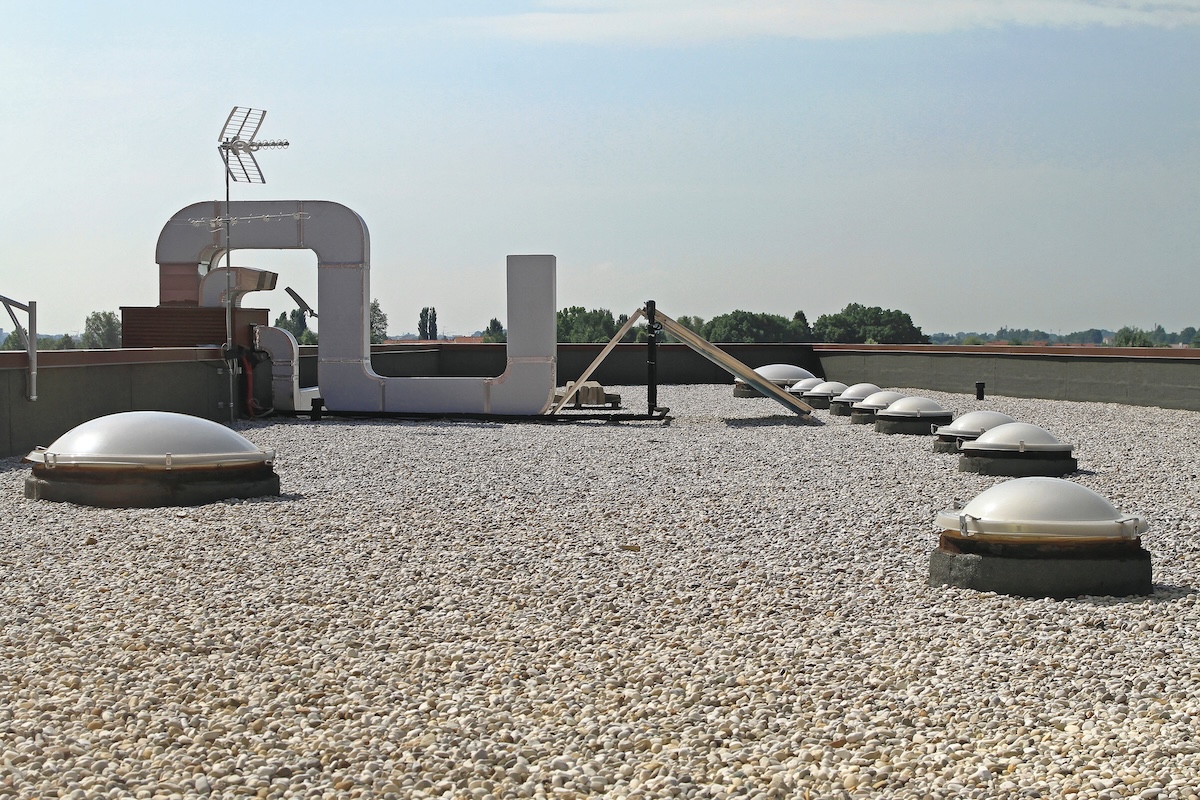
Ballasted: Membrane loose-laid with stone ballast on top. Rarely specified for Memphis commercial work - the structural load is prohibitive for most commercial decks, and the system complicates future maintenance and re-inspections.
Memphis-Specific TPO Failure Modes
Seam failure from humidity-assisted contaminants: Memphis's humid air deposits organic residue on stored membrane rolls that compromises heat-weld seam adhesion if rolls are not cleaned before welding. Our welders prep every seam edge with a solvent wipe before welding. We probe-test every seam at 5-lb test-wheel pressure before closeout.
Flashing detail failure at drain bodies: Memphis's heavy rainfall - 54 inches per year with intense spring storms - stresses drain-to-membrane flashings beyond what light-rainfall markets see. We use two-ply reinforced flashing at every drain, sized to manufacturer specification, photographed at closeout against the published detail.
Condensation-driven insulation saturation under the membrane: In Memphis's humid climate, vapor drive through the membrane in winter (cold outside, heated interior) can introduce moisture into the insulation board. We specify vapor retarders on all heated-interior buildings and confirm the vapor control strategy matches the wall-assembly design before speccing the insulation stack.