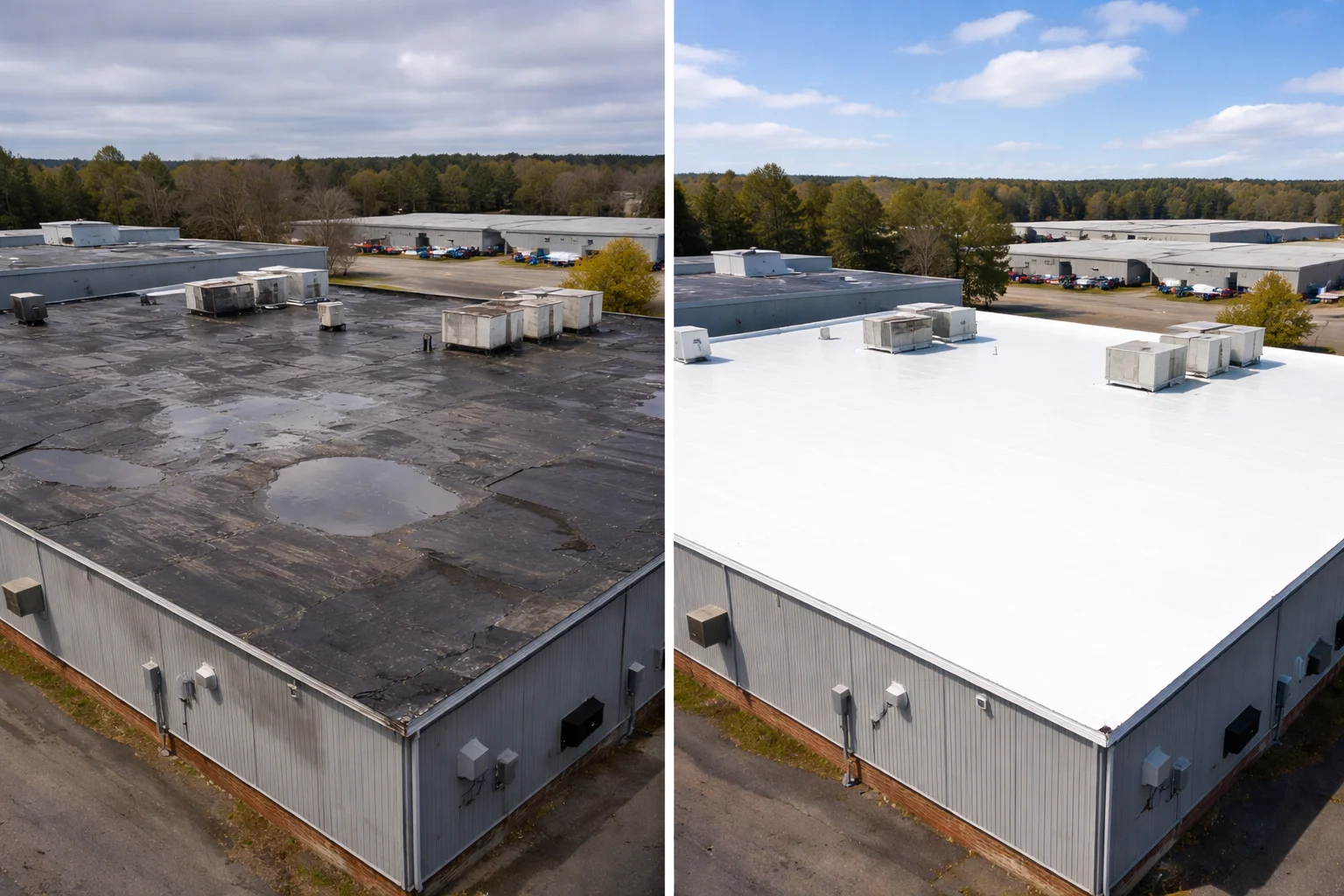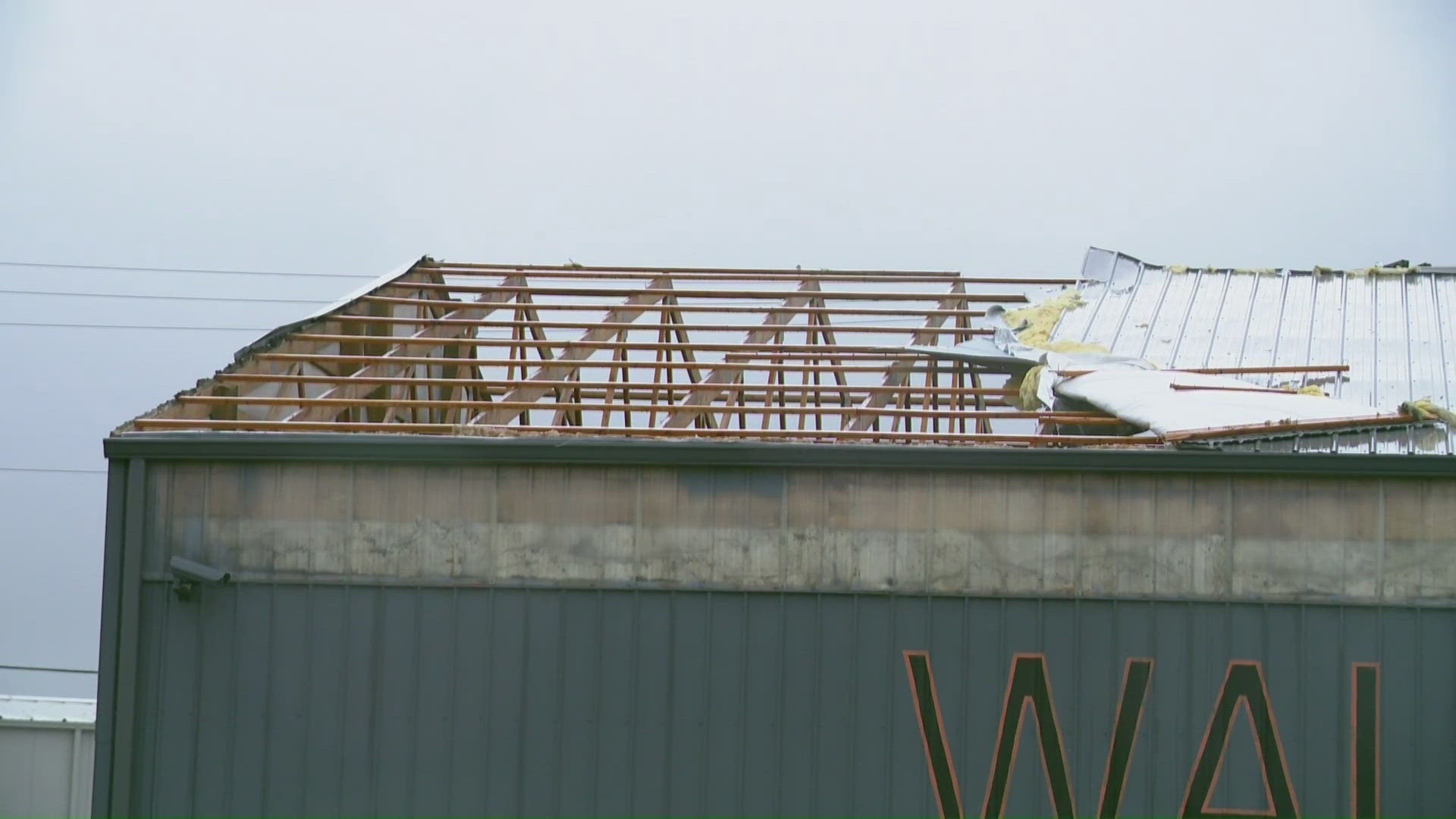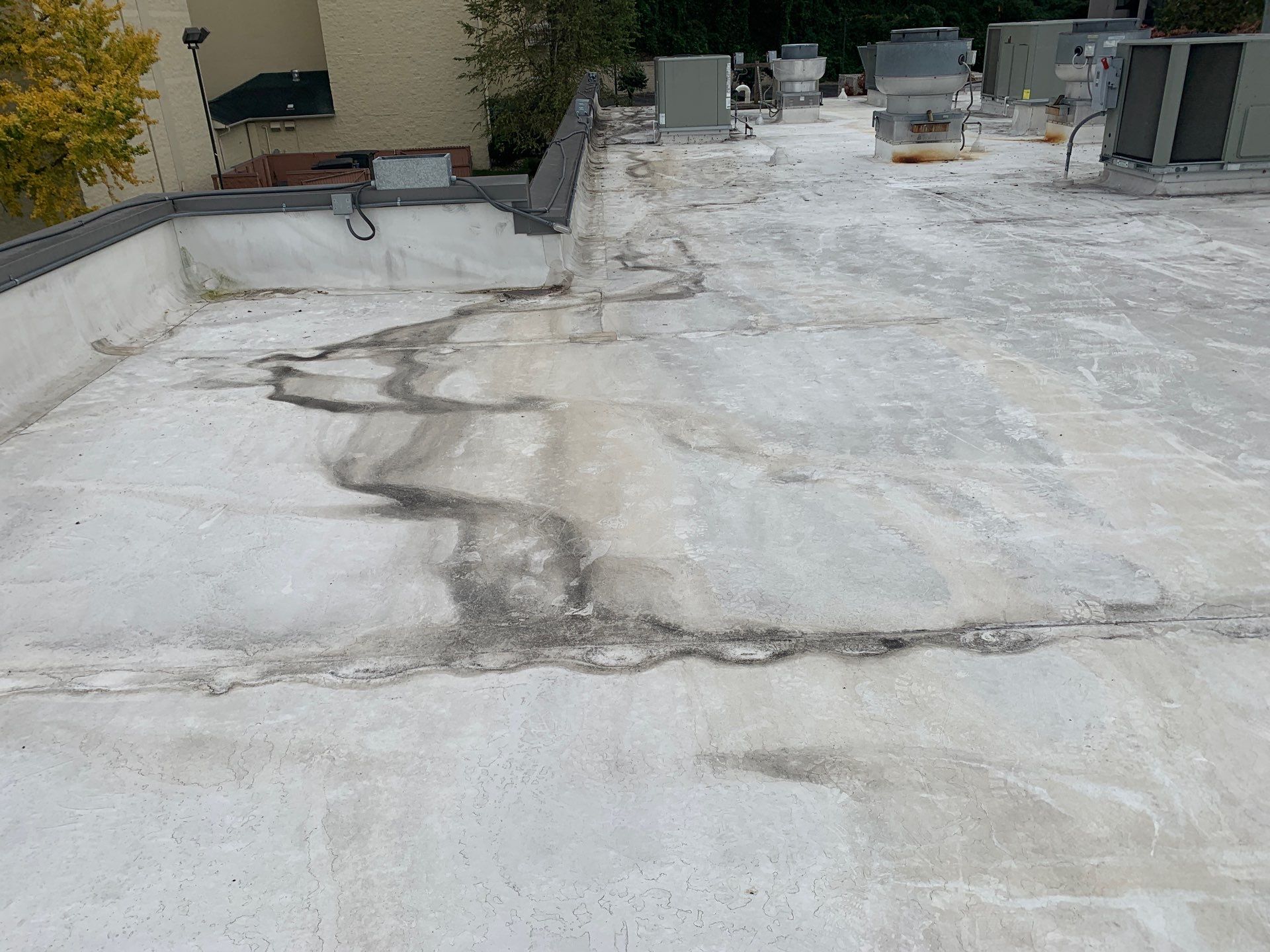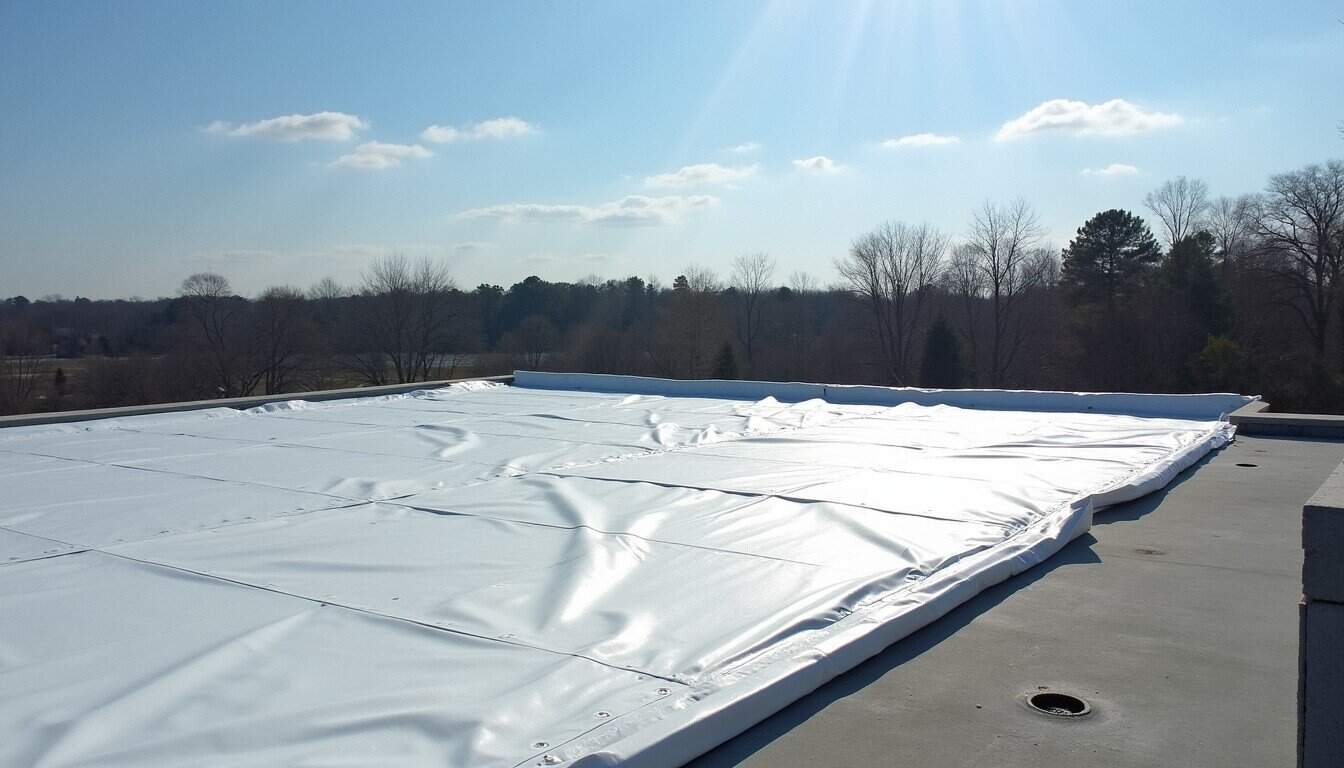
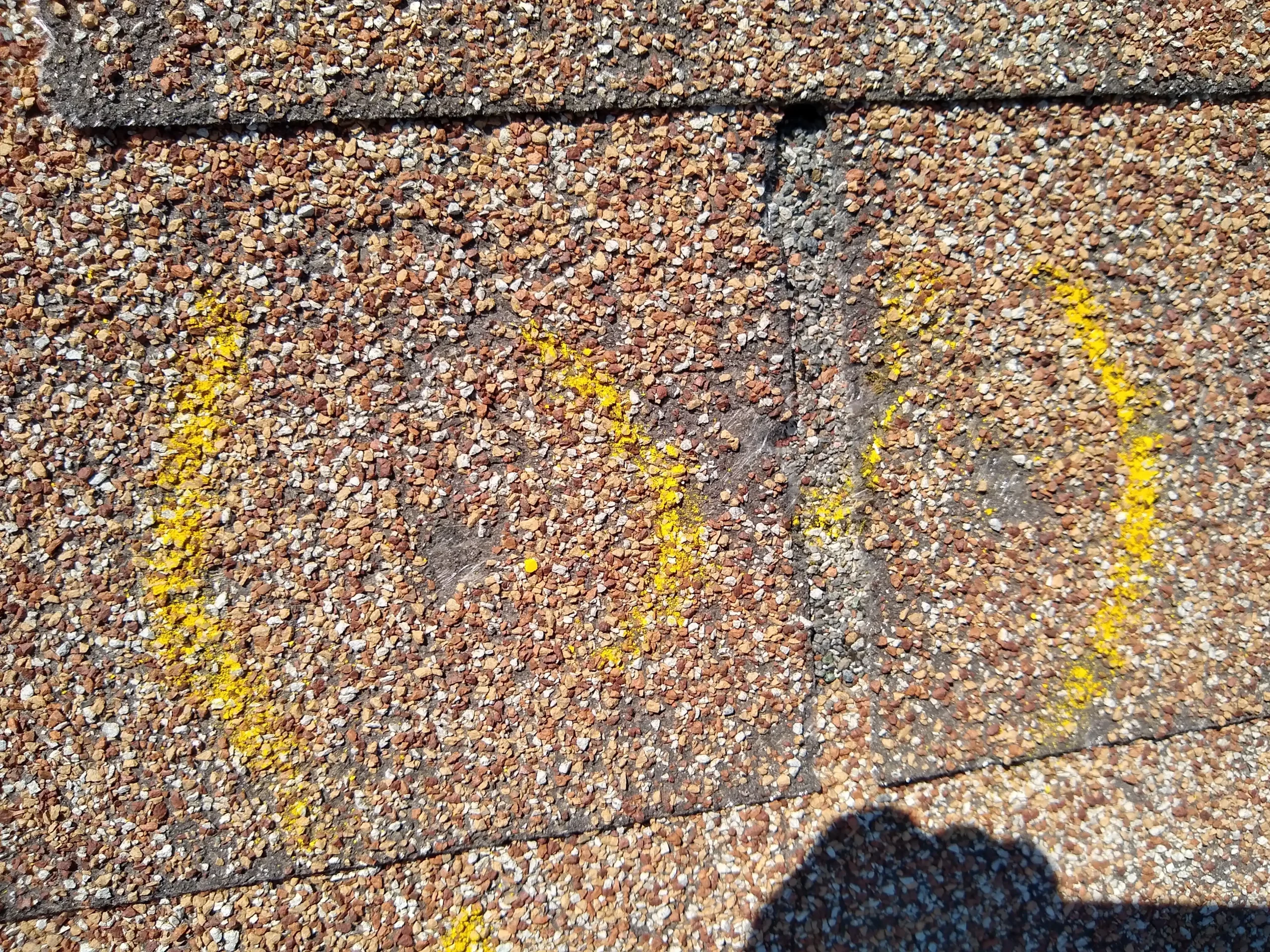
Memphis's spring hail seasons - March through May, with secondary activity in October and November - produce large hailstones that bruise and fracture single-ply membranes, destroy modified bitumen surfacing, and accelerate UV degradation on already-aging commercial flat roofs. Hail damage on commercial roofs is not always immediately obvious, and it does not always cause immediate leaks - but it shortens the remaining service life of the membrane system.
Commercial flat roof hail damage in Memphis runs differently than the commercial slope-roof hail claims that dominate media coverage after storm events. On a steep-slope shingle roof, hail damage is visible at grade - knocked-off granules, dented metal trim, broken shingles. On a commercial flat membrane roof, the damage is often surface-level bruising, membrane fracture, or insulation compression that is not visible from the ground and does not produce immediate leaks. The damage becomes consequential over the subsequent months as the bruised or fractured membrane admits UV, loses tensile strength, and begins to split under thermal cycling.
The spring hail season in Memphis is real and active. Shelby County sits in a geography where Gulf moisture feeds supercell thunderstorms capable of producing large hail - 1.5-inch to 2-inch hailstones are documented multiple times per decade, and the 2011 spring storm sequence produced hail events across the metro that resulted in significant commercial roof damage claims across the FedEx Aerotropolis zone and Midtown commercial corridors.
How Hail Damages Memphis Commercial Flat Roofs by System Type
TPO membrane: Hailstones above approximately 1 inch in diameter can fracture 60-mil TPO at impact, creating a star-shaped membrane break that may not immediately separate but has lost its waterproofing integrity at the fracture point. Smaller hailstones create surface bruising on TPO that accelerates UV degradation and can reduce the membrane's effective service life by 3-5 years per major hail event. After a documented large-hail event, we probe-test TPO membranes systematically across the hail impact zone to identify fracture points that look like surface bruising.
EPDM membrane: EPDM is more impact-resistant than TPO at equivalent thicknesses - the rubber compound absorbs impact energy better than thermoplastic. However, large hail events above approximately 1.5 inches can puncture 45-mil EPDM, particularly at aged areas where the rubber has lost elasticity. The puncture mode on EPDM tends to be a small round hole rather than the star-fracture pattern of TPO - these holes can be difficult to find without a systematic probe walk of the entire hail impact zone.
Modified bitumen: Hail impact on granule-surfaced modified bitumen displaces the granule aggregate from the surface, exposing the underlying bitumen to direct UV. Granule displacement is documented by weighing collected granule material from drains after a hail event - a measurable increase in granule accumulation in drains post-storm is direct evidence of hail impact. Smooth-surfaced modified bitumen sustains impact bruising and surface fracture similar to TPO.
The Hail Damage Documentation Process
Our hail damage assessment starts with NWS Memphis storm report data - documented hailstone size, storm track, and hail density data for the date of loss. We cross-reference the building's location with the storm track to confirm the building was within the hail impact zone. That storm report data is attached to our assessment document as a supporting exhibit.
On the roof, we follow a systematic grid walk of the full roof area, probing the membrane at every suspected impact point and photographing each identified damage location. Hail impact locations are marked on the zone diagram with density notation - low, moderate, or high impact density - so the adjuster can see the distribution pattern. A hail-impact pattern that is random across the roof surface is the signature of genuine hail damage; damage concentrated at mechanically stressed locations (seams, fastener lines, penetration edges) is more likely pre-existing deterioration.
We document membrane fracture, bruising, granule displacement, insulation compression (visible as dimpling through the membrane), and penetration flashing damage at each impact location. We distinguish between functional damage - the membrane's waterproofing integrity is compromised - and cosmetic damage, where the membrane surface is marked but not breached. Insurance adjusters apply different standards to the two categories.
Permanent Hail Damage Repair on Commercial Roofs
For localized fracture damage - typical of moderate hail events with documented functional damage at less than 15-20% of the roof area - the repair scope is membrane patch replacement at each fracture location using manufacturer-specified patch materials and minimum patch dimensions, integrated into the field membrane with heat-welded seams on TPO or adhered seams on EPDM. Each patch location is probe-tested before closeout.
For high-density hail damage across a large percentage of the roof area - typical of documented large-hail events above 1.5 inches across a wide swath - the economics of individual patching become unfavorable relative to full membrane replacement, particularly on membranes that were already in the second half of their design life before the hail event. We scope both repair and replacement options with cost and remaining-life analysis so the building owner and their insurance representative can make a documented decision.
Modified bitumen granule loss across the full impact zone requires surfacing replacement - the exposed bitumen will oxidize rapidly without granule protection. Surfacing replacement on a sound modified bitumen system is an approved repair path that preserves the underlying membrane and extends service life; it is a different scope from full membrane replacement and should be documented as such.
Suspected hail damage on a Memphis commercial roof?
We produce a systematic photo-logged assessment documenting damage type, density, and location - keyed to NWS storm data - in a format structured for insurance claim use.