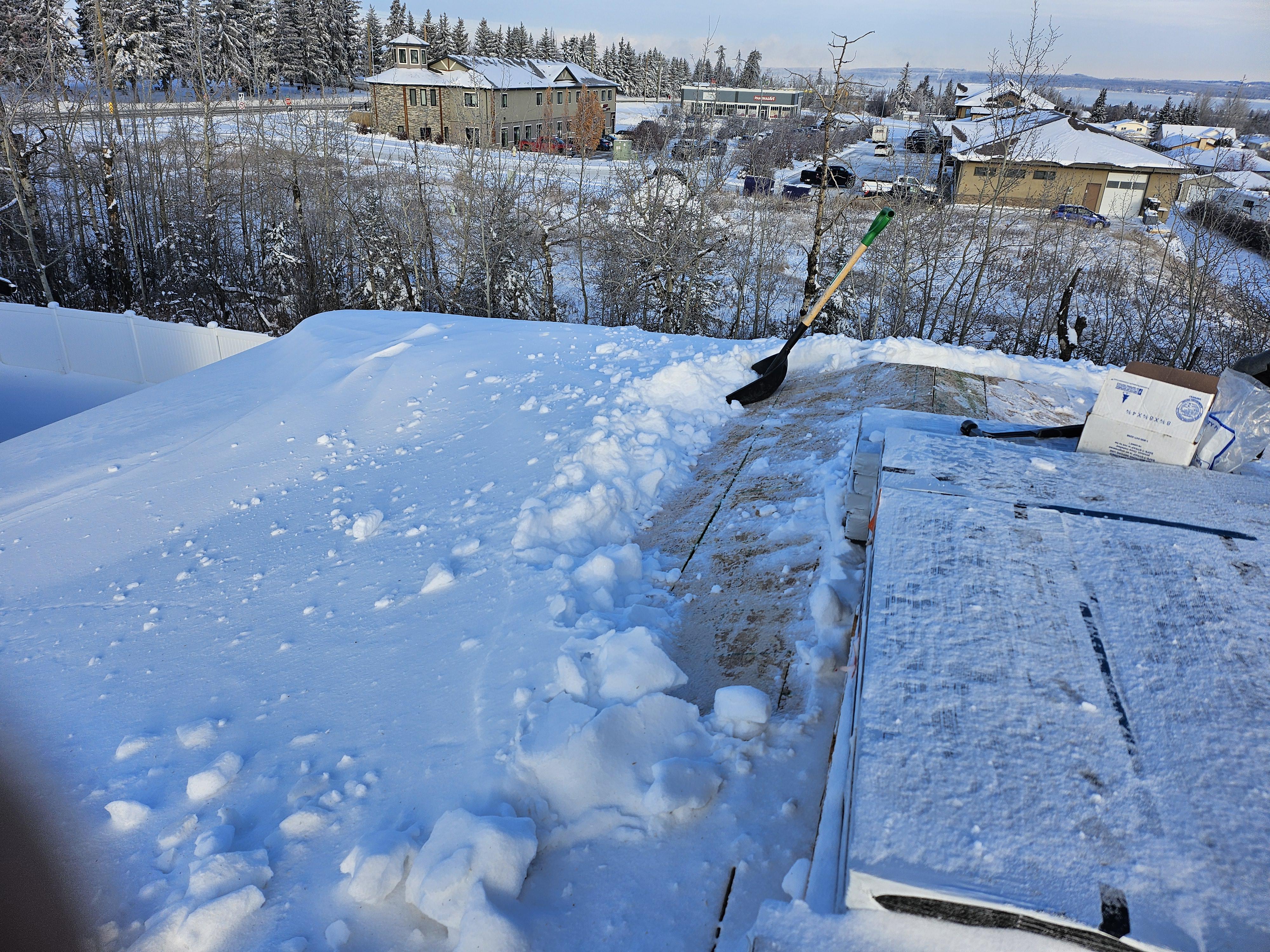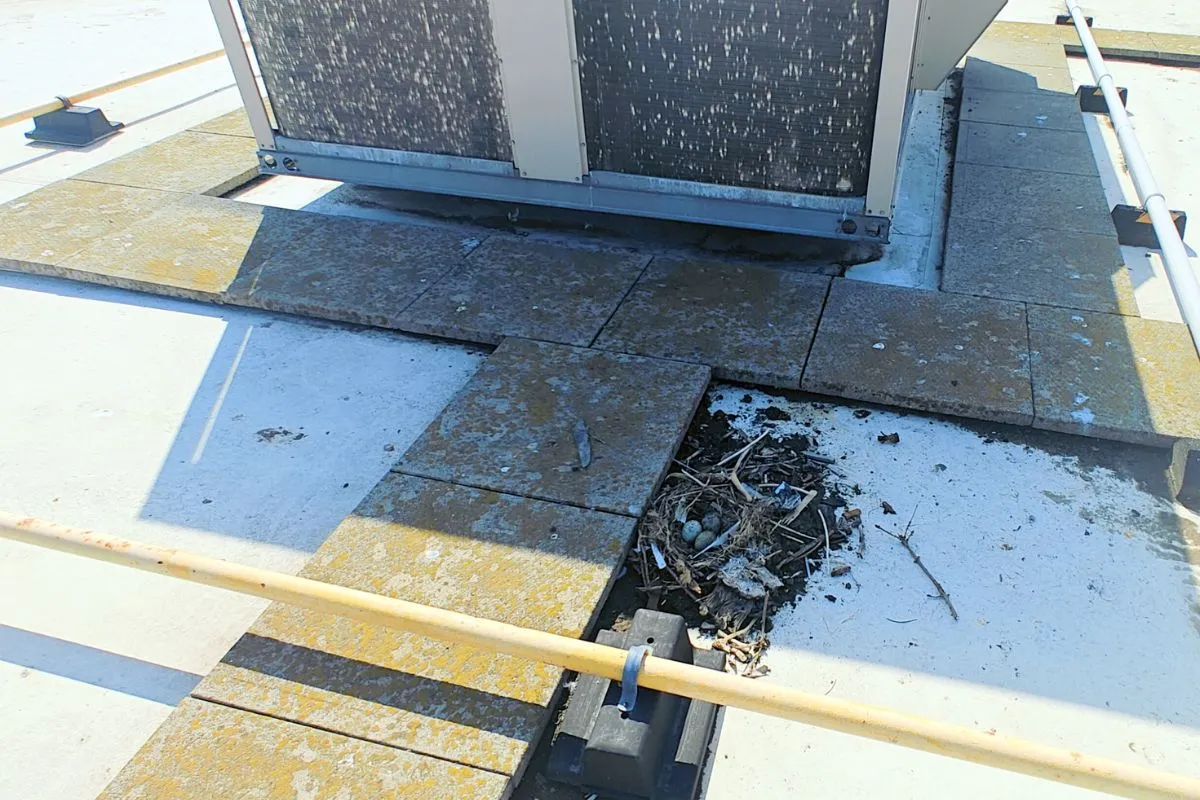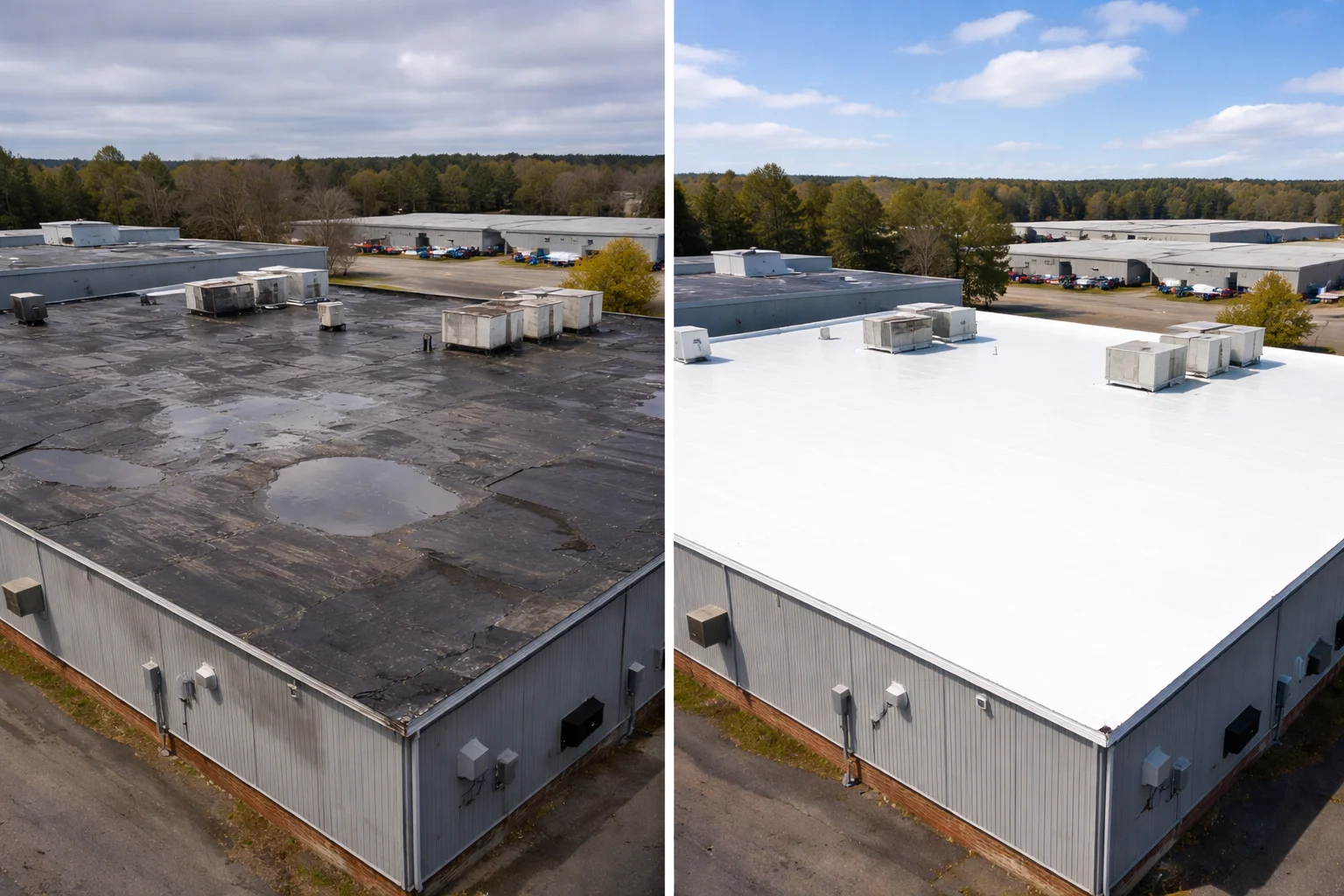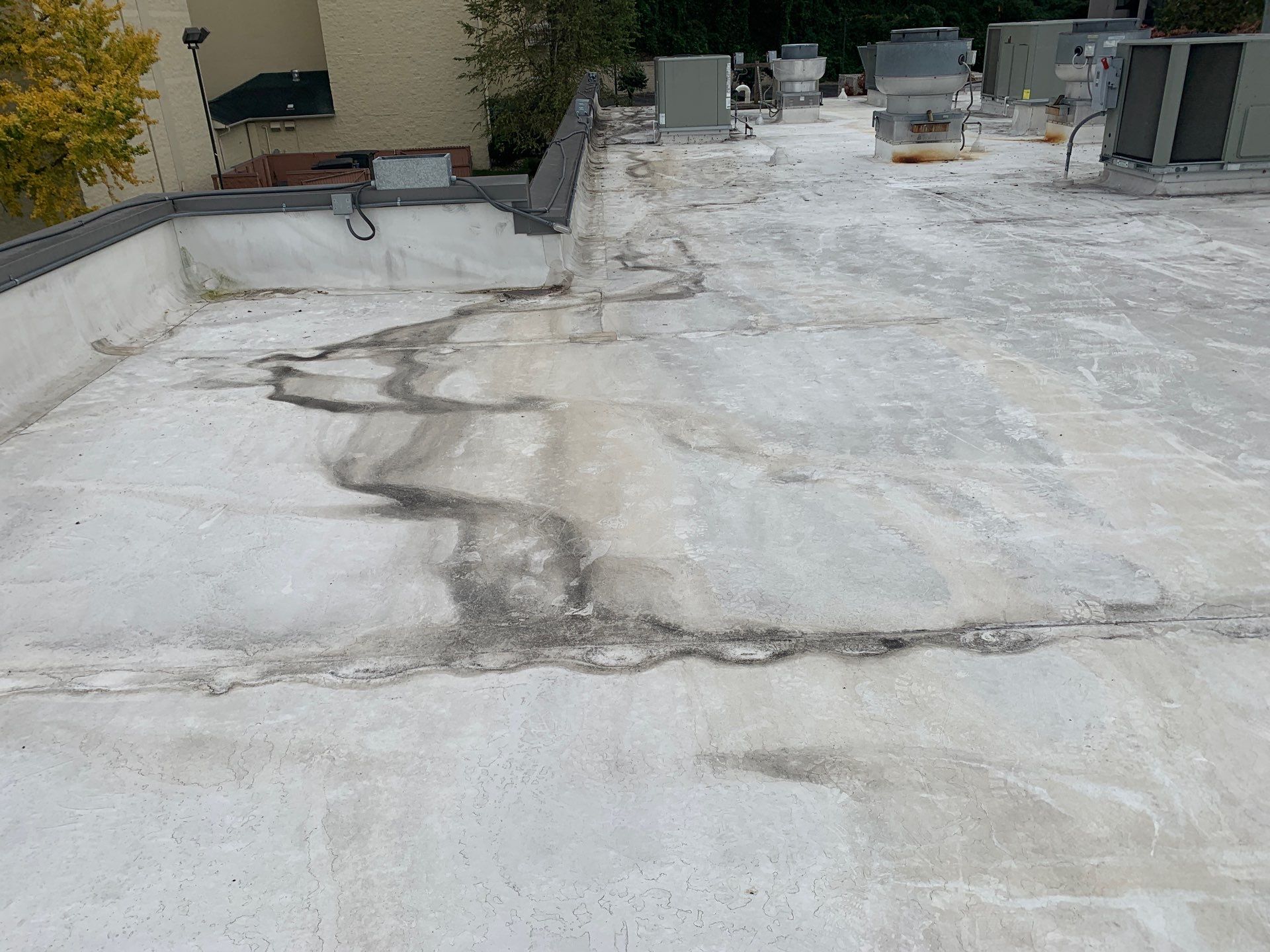
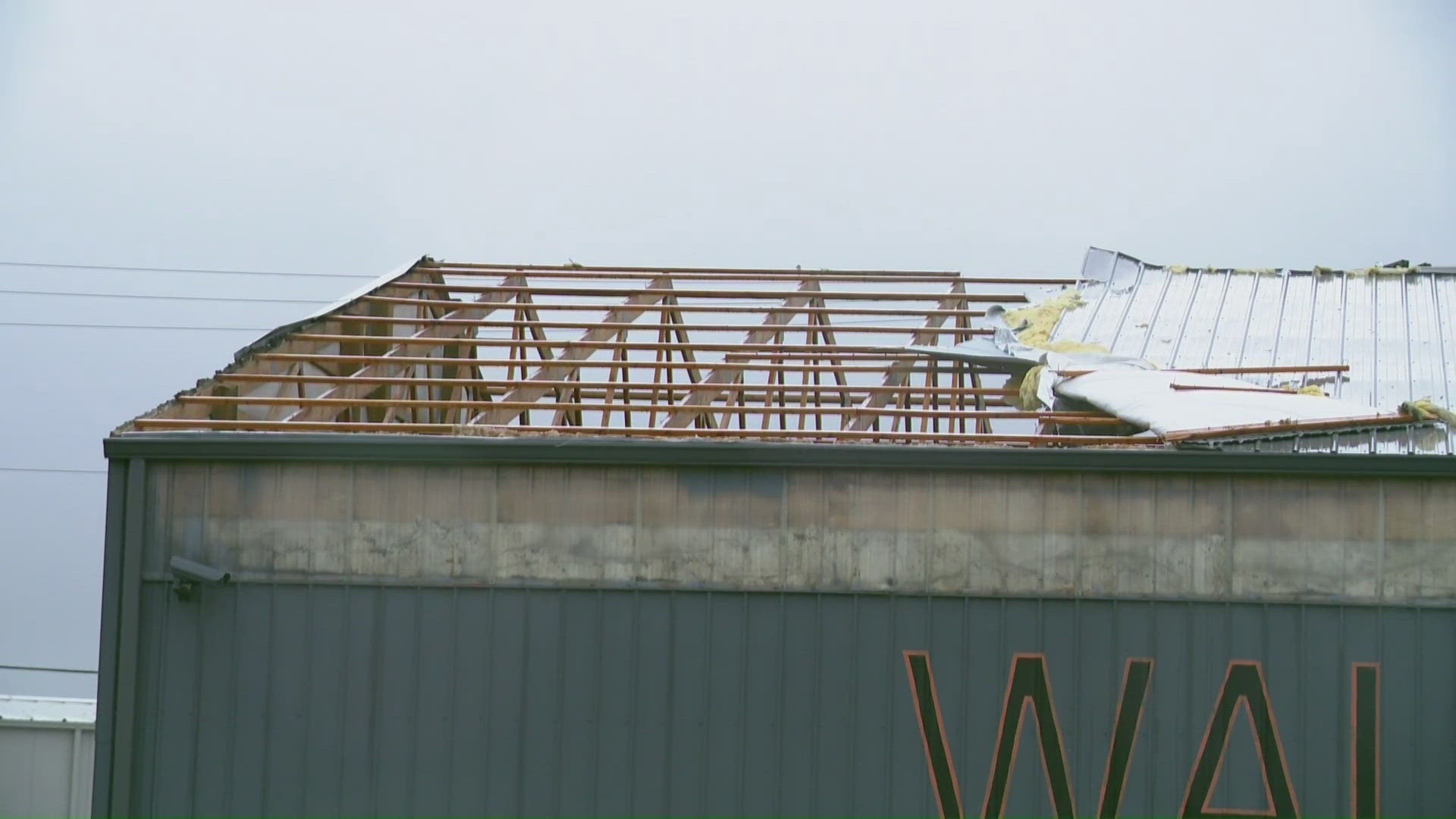
Memphis sits inside one of the most active tornado corridors in the country. When a tornado event compromises your commercial roof - membrane uplift, parapet breach, structural deck deformation - we get on the roof fast, document what happened, and scope the repair against what the storm actually caused.
The 2008 Super Tuesday tornado outbreak tracked through Shelby County on February 5th and left documented structural roof damage across the Memphis Medical District, multiple Midtown commercial corridors, and suburban office parks in Bartlett and Cordova. That event is the benchmark our assessors work from - not hypothetical storm models, but roofs we walked, documented, and repaired in the aftermath of a real event that moved through this specific geography.
Memphis tornado risk is not theoretical. The National Weather Service Memphis office tracks tornado touchdowns inside Shelby County multiple times per decade, and the metro sits in a geography where Gulf moisture, Ohio Valley cold fronts, and the Mississippi River valley's channeling effect combine to produce violent supercell activity with relatively short warning windows. Commercial buildings in the metro need their roofs assessed quickly after a tornado event - not only to stop further water intrusion, but to capture the event-related damage before weathering and subsequent rain events degrade the documentation that insurance adjusters require.
How Tornado Wind Loads Fail Commercial Roofs
Tornado damage to commercial flat roofs follows a distinct pattern that differs from straight-line wind damage. The rotational and updraft components of tornado wind loading apply upward pressure at the membrane corners and field simultaneously - the failure mode is uplift, not horizontal sliding. Fasteners pull through membrane and insulation in the field, seams separate at their heat-weld or adhesive bonds, and large sections of membrane can billow and delaminate from the insulation substrate even when the insulation itself remains mechanically fastened.
Parapet walls are particularly vulnerable. Tornadoes apply lateral and uplift forces to parapet cap flashings that exceeds the fastener pullout strength of aging counterflashing systems. After the 2008 Super Tuesday event, we documented parapet cap separation on multiple commercial buildings along Union Avenue and Madison Avenue in Midtown - cap flashings pulled away from the wall, leaving the parapet-to-roof junction exposed to the rain that followed.
Structural deck damage - actual deformation or connection failure at the deck-to-joist interface - is rare in typical commercial tornado events but is the scenario that changes a repair scope into a replacement scope. After any tornado event with an EF2 or stronger track near the building, we inspect deck fastener connections at the perimeter and at the first interior purlin line. If we see deck ripple or connection failure, the project goes to structural review before any re-roofing begins.
The Damage Assessment Process After a Memphis Tornado Event
Our first call after a tornado event affecting a Memphis commercial corridor is to buildings on our maintenance contracts - we know the pre-event roof condition, we have the baseline photo set, and we can get assessors mobilized as soon as the storm has passed and access is safe. For buildings we have not worked on before, we accept storm-damage calls in priority order based on building use and occupancy impact.
The assessment follows a fixed protocol: full perimeter walk from grade to identify visible uplift, parapet failure, or debris impact; roof walk on all accessible areas beginning at the perimeter where tornado damage concentrates; core pulls at any location with visible membrane disturbance or suspected insulation dislodgement; photo log keyed to a roof zone diagram with GPS-tagged photographs where possible; written narrative separating pre-existing condition from event-related damage; repair scope with line-item pricing by damage type.
We provide the completed assessment package - photo log, zone diagram, written narrative, repair scope - in a format structured for insurance claim submission. We do not act as public adjusters and do not negotiate with carriers on the building owner's behalf. We provide the documentation package, and the owner or their representative works with the adjuster from there.
Permanent Repair Scope After Tornado Damage
Permanent tornado-damage repair on a commercial roof in Memphis depends on what the storm caused. For membrane uplift without insulation displacement or deck damage, the repair is membrane replacement in the affected zones with seam integration back into the undamaged field, new fastener pattern at the uplift zone at a tighter density than the original installation, and a seam probe test of all new and adjacent seams before close-out.
For parapet flashing separation, the repair involves removing the damaged counterflashing, cleaning the reglet or through-wall counterflashing receptor, installing new through-wall counterflashing, new base flashing welded or adhered to the membrane field, and cap flashing replaced in the full separation zone. Parapet repairs are not spot-repaired at the failure point only - the counterflashing system is replaced from one terminus to another, not patched mid-run.
Where tornado damage has compromised the insulation layer - dislodged insulation boards, saturated insulation from post-storm rain intrusion through breached membrane - we specify insulation replacement in the affected zone. We do not recover new membrane over displaced or wet insulation. New insulation is installed to current Tennessee energy code R-value requirements, not to match the pre-event condition if the pre-event condition was below current code.
Tornado damage to a Memphis commercial roof?
We walk the roof, document event-related damage versus pre-existing condition, install temporary dry-in if there is active breach, and produce a written scope and insurance-grade photo package before we leave the site.