
A leak in a commercial flat roof in Memphis rarely comes from the most obvious location. Water travels under membranes, through insulation, across vapor barriers, and through structural deck penetrations before it appears on a ceiling tile three sections away from the actual entry point. Finding the leak source requires systematic investigation - not walking the roof and patching the first suspect location.
Memphis averages 54 inches of annual rainfall, with peak rain months in March through May and periodic summer storm sequences that can deliver several inches in a few hours. A commercial flat roof in the Memphis metro faces this rainfall load on membranes that age, on insulation that accumulates moisture over years, and on drains that can become restricted by the organic debris that washes off the tree canopy blanketing commercial areas from Midtown through Germantown and Bartlett. Active leaks in Memphis commercial buildings are not rare events - they are the predictable consequence of deferred maintenance on aging membrane systems in a high-rainfall climate.
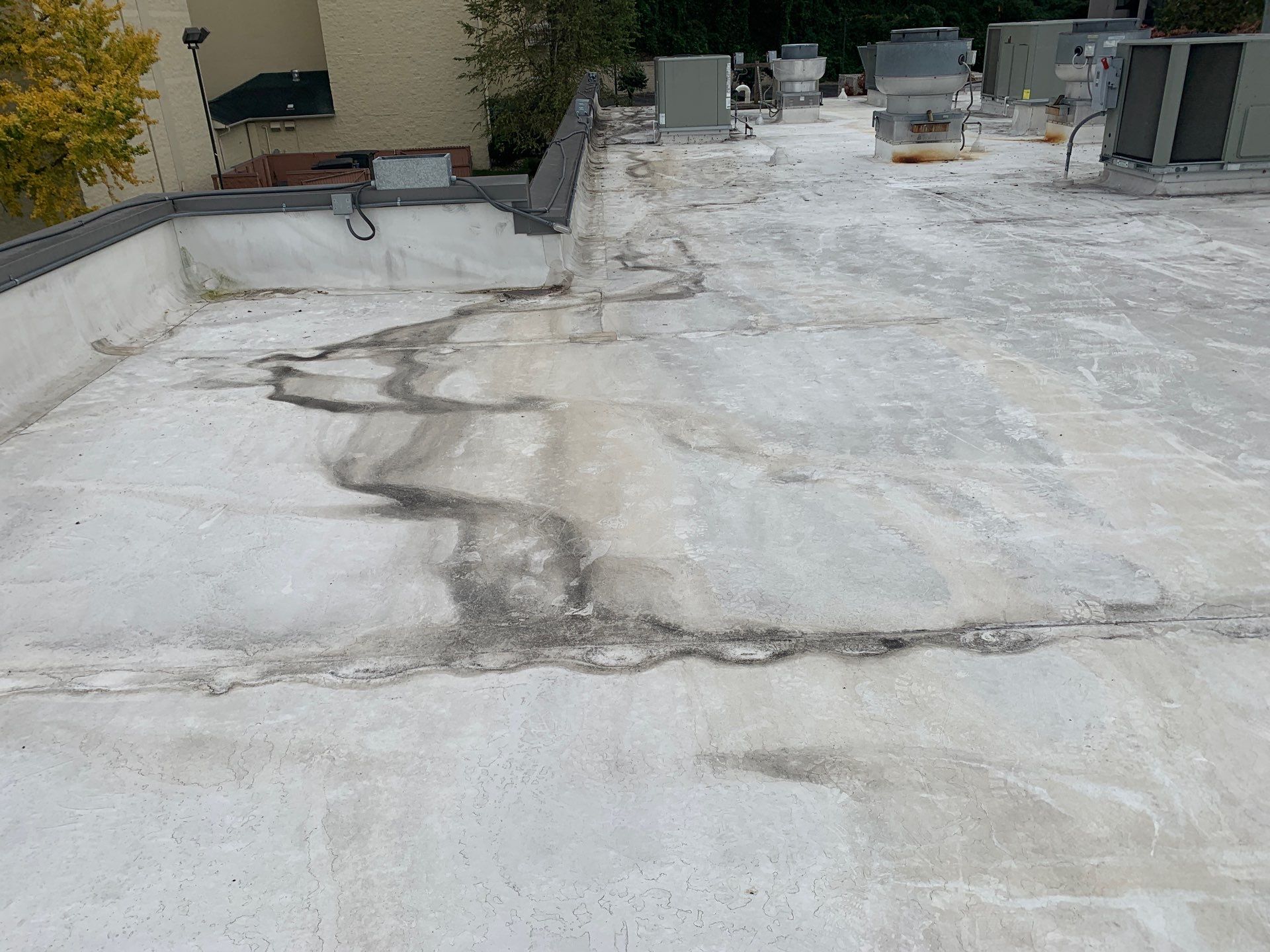
We investigate commercial roof leaks from the roof, not from the ceiling. Every roof leak investigation we conduct starts with a full roof walk documenting the condition of every potential entry point: membrane seams, penetration flashings, drain flashings, parapet cap flashings and counterflashings, and any prior repair locations. We cross-reference the roof-condition findings against the interior leak location and the building's architectural plan where available. The correlation between entry point candidates and interior leak locations - accounting for water travel - tells us where to focus the diagnostic work.
Leak Source Investigation on Memphis Commercial Roofs
Active leak investigation on commercial flat roofs in Memphis follows a systematic protocol. We do not walk the roof and patch the most likely-looking location - that approach produces callbacks and escalating repair costs without ever resolving the underlying problem. Our investigation begins with four data points: where is the interior manifestation of the leak, what is the drainage pattern of that roof zone based on slope, when does the leak appear relative to rain events, and where are the potential entry points in the membrane system above and upslope of the interior manifestation.
The interior manifestation location is the starting point for a water-travel analysis. Water entering a membrane system through a penetration flashing four feet from the parapet can travel horizontally under the membrane for twenty feet before finding a path through the vapor retarder and deck to the interior ceiling. The interior stain is not the entry point - it is the exit point. We document both.
Potential entry points are ranked by probability based on age, condition, and history. First-priority investigation locations on Memphis commercial buildings: drain flanges and drain-body-to-membrane flashings (drain-related leaks are the most common single source we identify on Memphis flat roofs, driven by the combination of heavy rainfall and restricted drains from organic debris accumulation); penetration flashings at HVAC curbs; parapet counterflashing reglets; and membrane seams in the zone upslope of the interior manifestation.
Common Leak Sources on Memphis Commercial Roofs
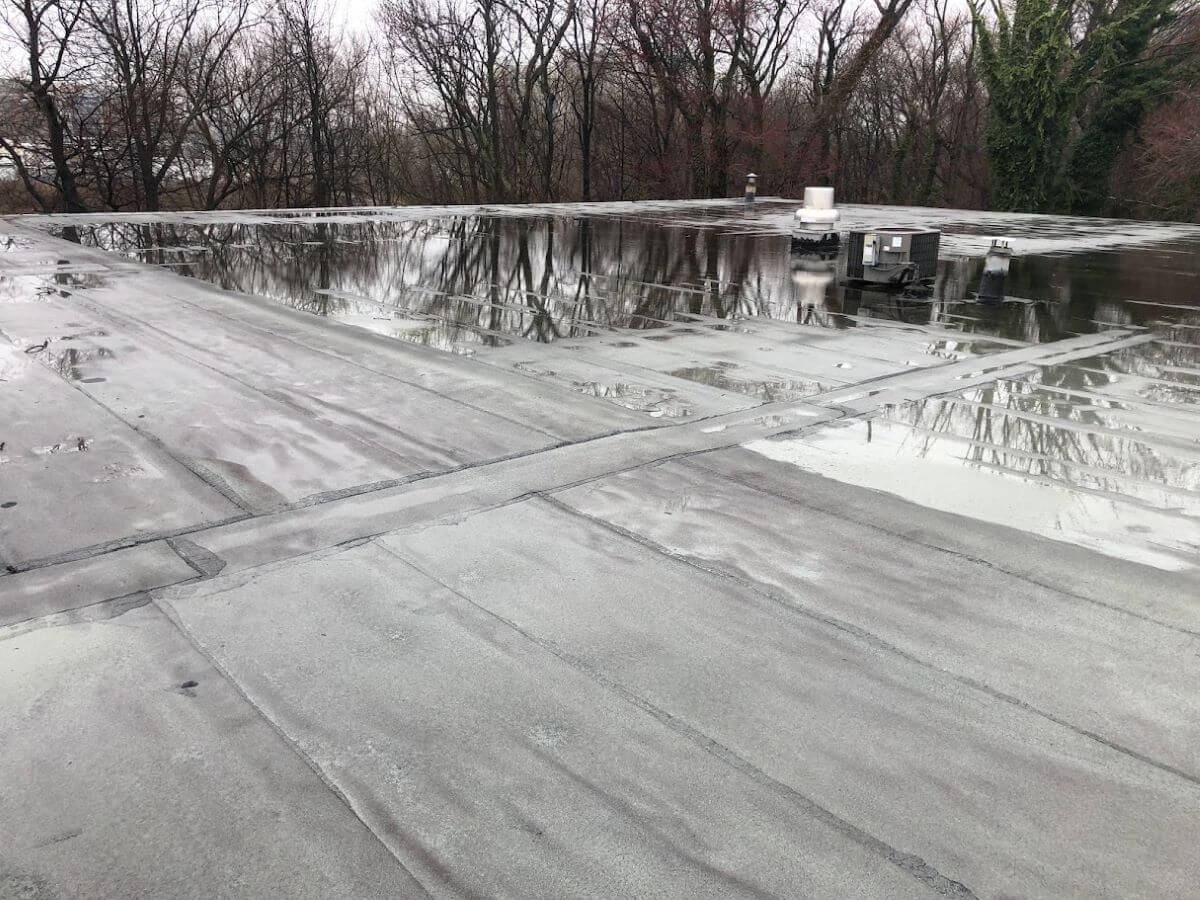
Drain flashing failure is the most common active leak source we identify on Memphis commercial buildings. Memphis's 54-inch annual rainfall moves substantial volume through roof drains, and the drain-to-membrane flashing interface - the point where the primary membrane transitions to the drain body - is the most mechanically stressed flashing detail on a flat roof. High rain volume stresses the flashing; organic debris restriction creates standing water that stresses it further; and drain bodies that settle or shift in the silty clay loam subsoil under Memphis buildings can separate from the membrane flashing even when the membrane itself is in good condition.
Parapet cap flashing separation is the second most common source. Memphis's summer heat and humidity drive thermal expansion cycling in metal cap flashings that exceeds what most installation fastener patterns can sustain over a 15-20 year service life. Counterflashing reglets - the embedded metal channel that receives the cap flashing - can fill with organic material that prevents the cap flashing from seating, creating a capillary path for water entry behind the flashing.
Prior repair locations - areas where roof cement, patch tape, or silicone caulk were applied by building maintenance staff or prior contractors - are high-probability leak sources because non-engineered patches fail at predictable intervals and the failure often creates a larger breach than the original defect. We document all prior repair locations on every roof we inspect and include their condition in our assessment.
Permanent Leak Repair and Integration With Maintenance
Permanent leak repair addresses the entry point, the water travel path, and the contributing condition - not just the interior symptom. A drain-flashing failure repair includes: drain-body-to-membrane flashing replacement with a two-ply reinforced flashing to manufacturer specification, drain-body inspection and replacement if the body has corroded or settled, drain-line cleaning to confirm the downstream obstruction is not contributing to ponding, and membrane probe-testing in the zone surrounding the drain to confirm no secondary saturation from long-standing water.
Parapet cap flashing repair includes: counterflashing removal and counterflashing reglet cleaning and reseating, new two-piece through-wall counterflashing or new surface-mounted counterflashing to manufacturer detail, new cap flashing lapping over the counterflashing to the specified overlap, and sealant at terminations. Parapet flashing repairs are run from terminus to terminus - not patched at the failure point mid-run.
After permanent repair, we integrate the repaired zones into the building's maintenance program. Active leak locations are high-priority inspection points on every subsequent maintenance walk - we photograph them, probe-test the repair seams, and document the condition in every maintenance report. If a building has had multiple leak events in the same zone, the maintenance report reflects that history and flags the zone for accelerated inspection frequency.
Active leak in a Memphis commercial building?
We investigate from the roof down, identify the entry point, document the cause, and produce a permanent repair scope - not a patch and a prayer.