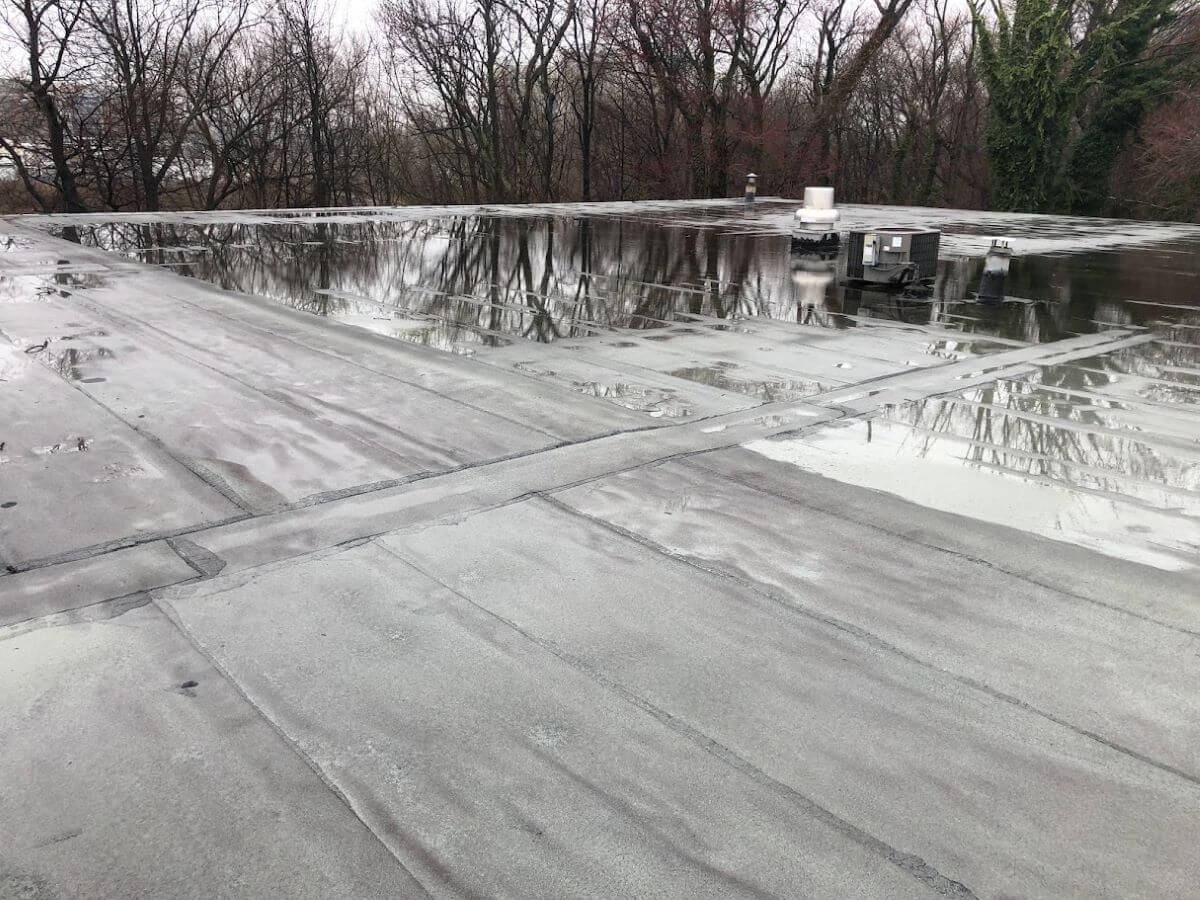
Water damage to a Memphis commercial roof accumulates over time, not just during storm events. Ponding water, restricted drains, and Memphis's 54-inch annual rainfall combine to create moisture conditions in commercial roof assemblies that degrade insulation, corrode metal decks, and reduce membrane service life long before a visible leak appears.
Water damage on a commercial flat roof in Memphis is rarely a single-event problem. It is the accumulated effect of months and years of moisture exposure - restricted drains that allow ponding water to sit on the membrane, insulation that absorbs moisture through pinhole breaches and seam failures over years, metal deck that corrodes from condensation on the underside - all developing quietly until a ceiling tile stains or a tenant calls. By the time interior water damage appears, the roof assembly above is often significantly compromised.
Memphis's climate accelerates this process in specific ways. The city's 54-inch annual rainfall - combined with high July and August dewpoints averaging 70°F - creates a moisture load on commercial roof assemblies that exceeds what most drier markets see by a meaningful margin. Organic debris accumulation in drains from Shelby County's substantial urban tree canopy - particularly in Midtown, Germantown, and Bartlett's commercial areas - is a frequent driver of restricted drainage and ponding. And the Mississippi River alluvial subsoil under Memphis creates seasonal building movement that displaces drains and opens parapet flashings on a multi-year cycle.
Water Damage Assessment: What We're Looking For
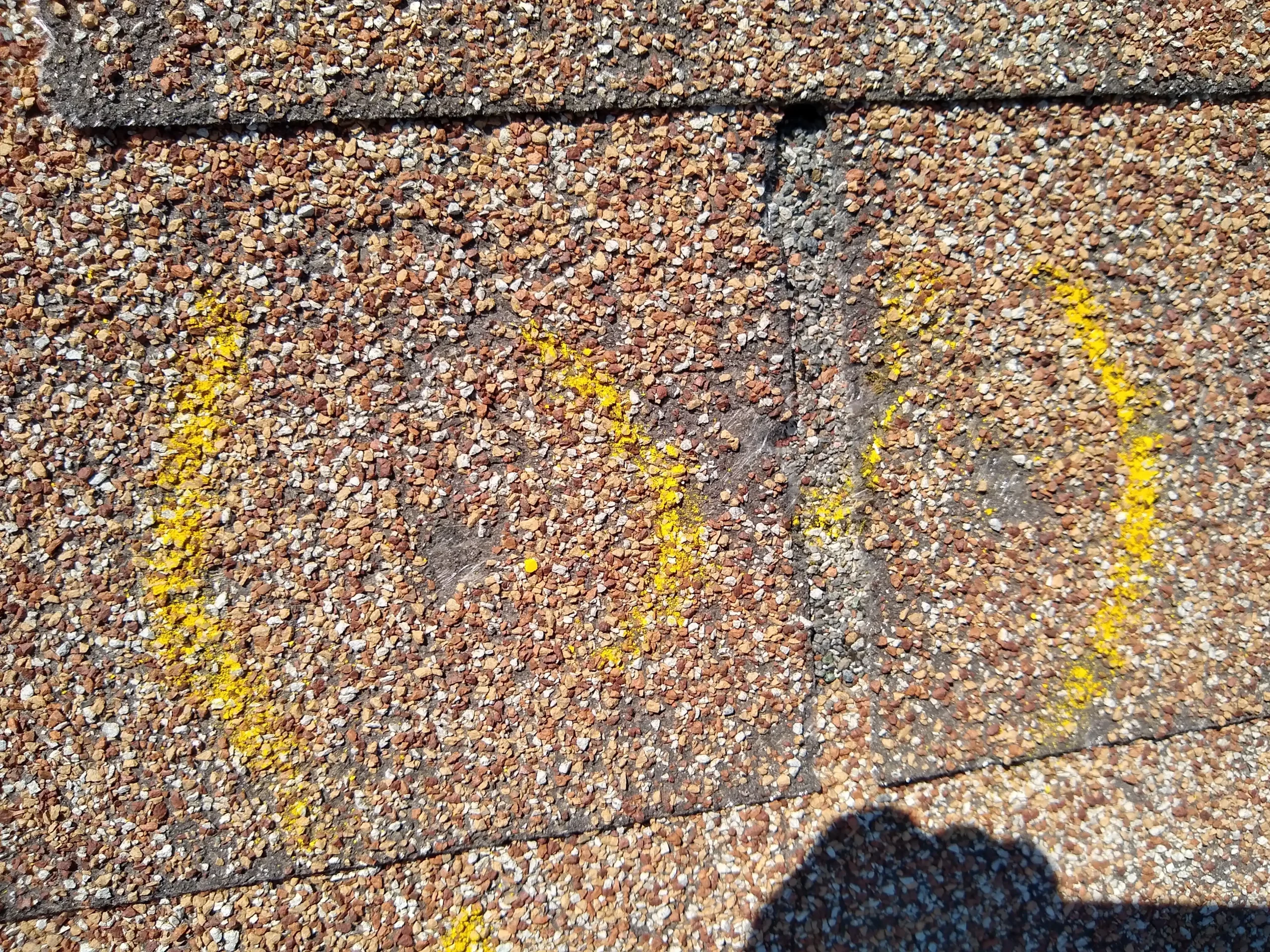
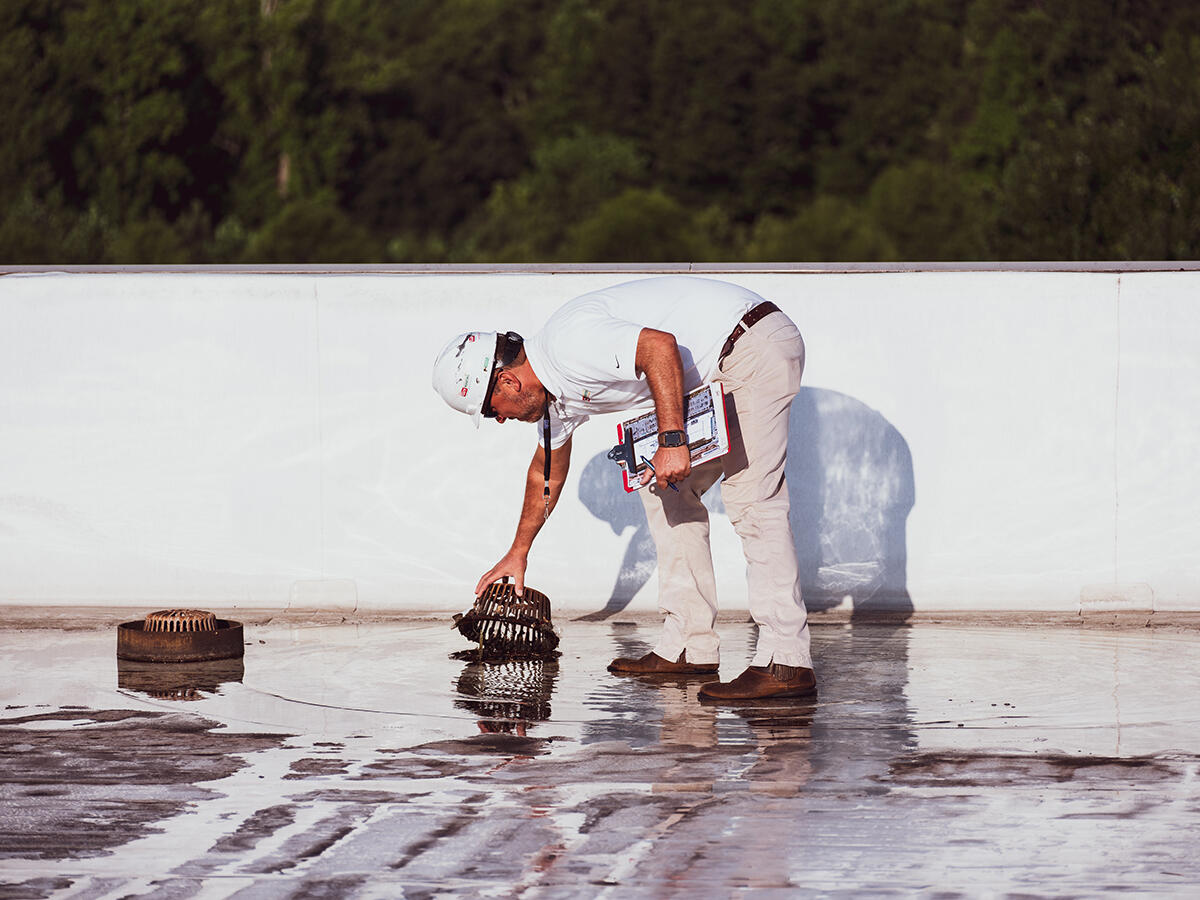
Visual inspection from the roof surface tells part of the story: membrane discoloration at chronic ponding zones, surface oxidation around restricted drains, membrane surface depression that indicates insulation compression from long-term water load, and prior repair tape or roof cement applications that signal prior leak history. These visual indicators identify the zones where moisture core pulls are warranted.
Moisture core pulls are the definitive test. We use a core saw to cut a 4-inch diameter core through the membrane and insulation at locations where visual inspection identifies possible saturation. The insulation board is extracted and observed for moisture content - wet insulation shows visible saturation, and some insulation types (polyiso, open-cell fiberboard) show saturation clearly on extraction. We core in a representative pattern across the suspect zone, typically at five-to-ten locations per major ponding area, to determine the extent of saturation.
Infrared thermal scanning is an option for mapping moisture distribution across large roof areas. Wet insulation retains heat differently than dry insulation after sunset, and an infrared scan conducted after the roof surface has cooled can map the extent of wet insulation with high spatial resolution. We subcontract thermal scanning on large roofs (above 100,000 sq ft) where the scan data meaningfully improves the accuracy of the insulation-condition assessment and the cost of the scan is justified by the scope decision it informs.
Consequences of Prolonged Ponding Water on Memphis Commercial Roofs
Membrane degradation: Most commercial flat roof membranes are affected by prolonged ponding water. EPDM absorbs water and swells, which eventually causes seam stress and separation. TPO and PVC are more resistant to ponding effects than EPDM but are not immune - prolonged ponding accelerates photolytic degradation at the waterline where the membrane cycles between wet and dry as water levels fluctuate. Modified bitumen blisters under chronic ponding conditions as the trapped moisture in the bitumen layers expands and contracts with temperature changes.
Insulation performance loss: Wet polyiso insulation permanently loses a portion of its thermal performance - saturated polyiso does not fully recover its R-value after drying. This matters in Memphis's high-cooling-load climate, where insulation performance directly affects HVAC operating cost. A roof with 30% insulation saturation is delivering materially less thermal resistance than the installed R-value, and that performance gap does not close without insulation replacement.
Structural deck corrosion: On commercial buildings with steel deck, chronic ponding water above pinhole membrane breaches will find its way to the top of the deck. Metal deck corrosion from above is the most serious structural consequence of prolonged water damage on a Memphis commercial roof - corroded deck may require deck panel replacement before re-roofing is possible, and that turns a repair scope into a capital project. We inspect deck condition at every core pull location where we find wet insulation.
Water Damage Repair Scope
For localized insulation saturation at drain zones or isolated ponding areas - less than 15-20% of the total roof area - the repair scope is targeted: membrane removal in the saturated zone, wet insulation replacement at the affected area with new polyiso meeting current Tennessee energy code R-value, membrane replacement in the repaired zone integrated into the surrounding field, and drain clearing or replacement if drain condition contributed to the ponding.
For distributed insulation saturation across 25% or more of the roof area - a condition we find on Memphis roofs over 15 years old with no documented maintenance history at a rate that regularly surprises building owners - the economics of targeted repair versus full roof replacement shift. We scope both options with a lifecycle cost comparison: the installed cost of patching the saturated zones against the installed cost of full replacement and the expected service-life extension each approach delivers.
The 2011 Mississippi River flood, which caused significant groundwater and surface water intrusion into Memphis commercial building crawl spaces and lower stories, also drove moisture infiltration into roof assemblies through vapor drive from flooded interiors - wet interior air migrated upward through penetrations and vapor retarder defects, saturating insulation from below in some buildings. If your building had interior flooding in 2011 and the roof was not assessed post-flood for above-deck moisture, that is a risk factor worth investigating.
Concerned about water damage in a Memphis commercial roof?
We assess from the top down - roof walk, moisture cores, drain confirmation - and produce a written finding that tells you what is actually in the roof assembly, not what might be.