Memphis's commercial corridors span the I-40 and I-55 industrial belts, the FedEx logistics hub at Memphis International Airport, the Midtown and South Main redevelopment districts, and the Shelby County industrial parks. Storm damage documentation and insurance claim roofing in this market requires a contractor who can produce GPS-tagged hail impact maps, wind damage assessments, and supplemental claim documentation in the format that commercial property adjusters use - a repair estimate alone isn't enough; it's the evidence package that supports the claim's full, accurate scope.
Storm damage roof repair and insurance claims in Memphis, TN require documentation at a precision that standard repair work doesn't. A successful commercial insurance claim starts with a damage assessment that identifies hail impact density, wind-related membrane displacement, flashing damage, and equipment damage - all documented with GPS-tagged photography, impact measurements, and a written assessment formatted for the insurance adjuster processing the claim. We've worked alongside commercial property insurers and public adjusters throughout TN and know what documentation Memphis adjusters expect to see before they can evaluate a claim.
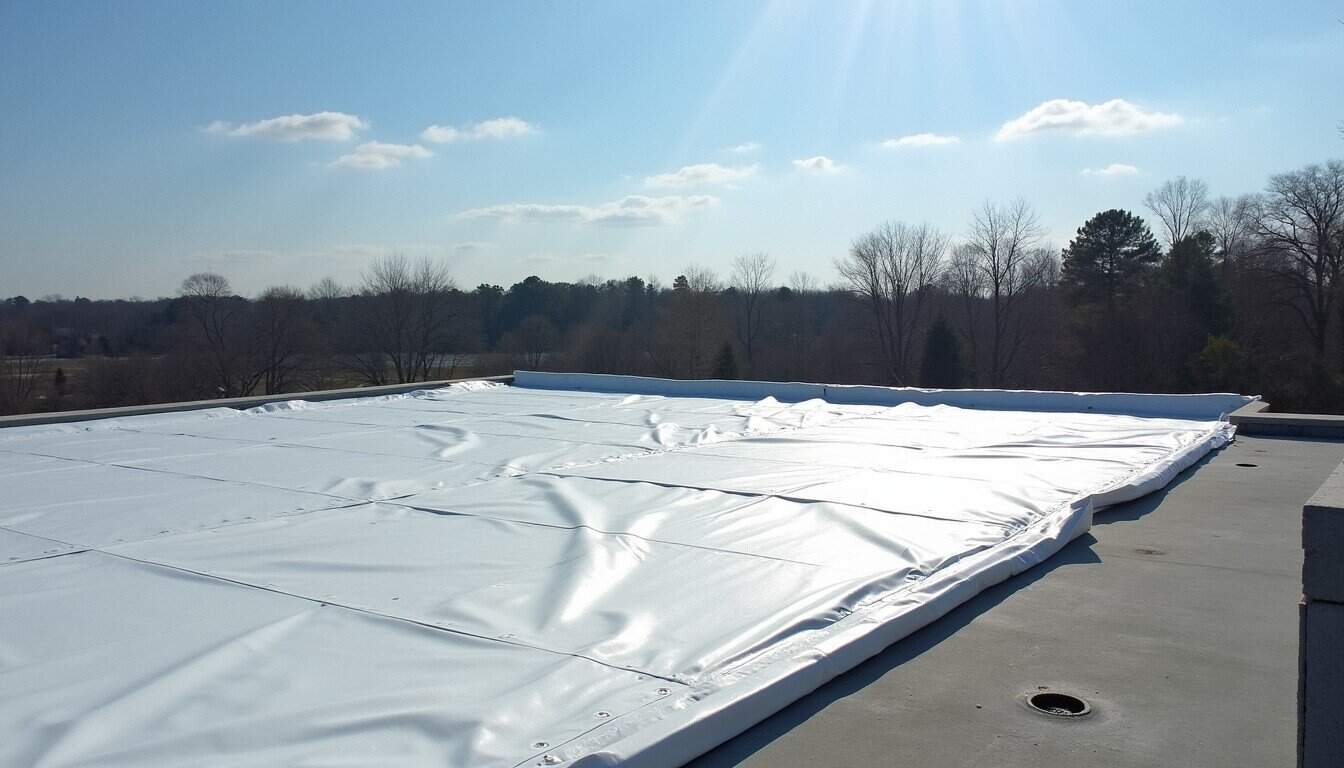
Hail damage to commercial TPO and PVC roofing membranes in Memphis is not always visible to the naked eye at ground level, and it's often missed in cursory roof walkovers by adjusters who don't specialize in commercial roofing. Hail impact patterns create membrane fatigue that accelerates seam failure and UV degradation - the visible effect appears months or years after the storm, not immediately. We document hail impact density with close-range photography and, where needed, thermal imaging that reveals subsurface impact damage. We're your roofing contractor, not a public adjuster - we document and substantiate the roof damage so you and your adjuster work from an accurate scope.
Storm Damage & Insurance Claim Roofing Questions
Our hail damage assessment includes: GPS-tagged photographs of impact locations across the full roof surface, impact density measurement per section, membrane cross-section sampling at impact locations (where the adjuster requires physical evidence), and a written assessment that documents the impact pattern, estimated hail size based on impact geometry, and the membrane's remaining serviceable life post-impact. This documentation matches the format that commercial property adjusters use to process hail claims.
On TPO and PVC membranes, moderate hail (1" diameter and above) leaves impact impressions in the membrane surface - circular depressions where the hail compressed the membrane and underlying insulation. The impressions are often not visible without close-range inspection on a dry surface in low-angle light. The damage weakens the membrane at impact points, creating stress concentration locations that accelerate future seam and surface failures. Our hail documentation shows the impact density map across your entire roof.
Yes. We meet the adjuster on the roof when a joint inspection is requested and answer technical questions about the damage we found. If the submitted documentation needs supplementation to support the full claimed scope, we provide it. We're your roofing contractor, not a public adjuster - we document and substantiate the roof damage so you and your adjuster work from an accurate scope, not from an estimate that missed part of the damage.