Memphis occupies a singular position in American hotel markets as both a pilgrimage destination for music and cultural tourism - Beale Street, Graceland, Sun Studio, and the National Civil Rights Museum draw visitors year-round - and a major logistics hub defined by FedEx's global operations and a substantial medical presence at Baptist Memorial and the University of Tennessee Health Science Center. The Peabody Hotel downtown is the market's standard-bearer, but the full inventory ranges from boutique properties in the Cooper-Young and South Main neighborhoods to the mid-scale and limited-service brands clustered around the airport and along the I-240 corridor serving FedEx employees and logistics industry travelers. These distinct demand segments produce different scheduling dynamics for hotel roofing capital projects.
Memphis's climate straddles the humid subtropical and humid continental transition zone, producing roofing stresses that combine characteristics of both regions. The city receives approximately fifty-three inches of annual rainfall distributed fairly evenly across the year, with no genuine dry season. Summer heat loads are intense - sustained weeks above ninety degrees Fahrenheit are typical from June through August - and winter brings a genuine freeze-thaw cycle averaging twenty-five to thirty annual transitions. This combination means hotel roofing systems in Memphis must perform under both high-heat UV loading and cold-weather thermal cycling, a dual requirement that favors fully adhered membrane systems with adequate insulation R-values over mechanically fastened alternatives that create thermal bridging pathways.
Hotel and Hospitality Property Roofing in Memphis, TN Scope Notes
Property Improvement Plans at Memphis's branded hotels - the downtown Marriott, Courtyard, Hampton Inn, and the Convention Center area full-service properties - must navigate the scheduling complexity created by the city's event calendar. Memphis in May's Beale Street Music Festival and World Championship Barbecue Cooking Contest consecutively fill downtown hotels for weeks, and Elvis Week in mid-August produces extraordinary demand at properties throughout the metro. These anchor events, combined with the Peabody-adjacent convention business and the FedEx St. Jude Championship golf event, compress the calendar in ways that leave franchise operators with limited windows for roofing work that would be noticed by guests.
The logistics industry creates a specific extended-stay hotel demand in Memphis that generates predictable mid-week occupancy throughout the year. FedEx employees on project rotations, supply chain management consultants serving the distribution center corridor, and traveling medical professionals at St. Jude and Le Bonheur occupy extended-stay brands in the airport and east corridor areas with minimal seasonal variation. These properties have limited natural low-occupancy periods, requiring roofing maintenance and repairs to be executed with active occupancy management protocols. A contractor who has worked on occupied extended-stay properties near major airport hubs understands the expectation that rooftop work directly above occupied rooms is coordinated with the front desk, not assumed to be tolerable based on the height separation between roof and rooms.
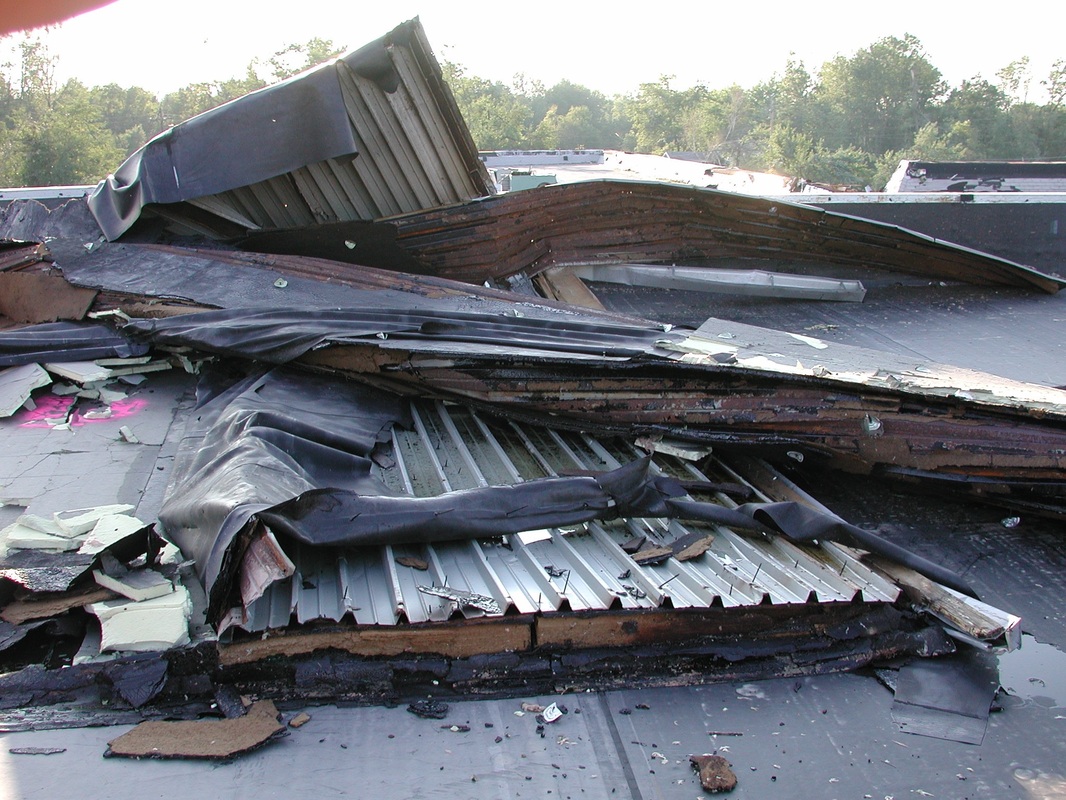
Memphis's position in the Mid-South severe weather belt produces hail and wind events that affect hotel roofing more frequently than the city's moderate reputation suggests. Spring supercell activity across Tennessee and Arkansas regularly produces hail-generating storms that track over the Memphis metro, and straight-line wind events from derecho storm systems affect the region multiple times per decade. Hotels with aging membrane systems that have not been inspected since the last significant storm event may be carrying undetected hail impacts or lifted seams that are slowly degrading without yet producing visible interior symptoms. Storm-triggered inspections should be standard practice for any Memphis hotel operator following a hail-producing weather event.
The Beale Street entertainment district and South Main neighborhood hotel segment includes properties in older buildings with complex roofing conditions that newer suburban construction doesn't present. Multi-layer accumulated roofing systems, irregular parapet configurations, undersized drainage from original construction, and limited roof access from interior stairways are common conditions at downtown Memphis hotels in historic structures. Reroofing these properties requires a site investigation approach rather than a standard commercial specification process - the actual conditions typically differ meaningfully from what's visible from the street or from a cursory rooftop visit, and a proper scope requires destructive probe investigation to determine existing layer conditions and substrate integrity.
Pool area waterproofing at Memphis's full-service hotels requires attention to the combination of heat loading and indoor humidity management that characterizes mid-South indoor pool environments. Hotels in Memphis with indoor pool facilities typically run the natatorium at elevated temperatures year-round, creating an environment where moisture vapor pressure differentials drive condensation into waterproofing assemblies from below. Vapor retarder placement in pool area waterproofing assemblies is the technical design element that most often differentiates successful long-term performance from premature system failure in this climate. Contractors who specify pool waterproofing systems in Memphis without properly addressing vapor retarder location may produce a system that looks correct but degrades from below rather than above.
Emergency roofing response in Memphis should account for the fact that significant storm events affecting the city often also affect the broader Mid-South region simultaneously. When a major spring storm system crosses the Mississippi River valley, the Memphis market and the Arkansas, Mississippi, and Tennessee markets immediately surrounding it all generate emergency roofing calls simultaneously. Contractor capacity is finite and subject to exhaustion in these scenarios. Memphis hotel operators who have pre-established emergency response contracts with contractors who specifically serve the commercial hospitality segment - rather than relying on commercial contractors who will prioritize their larger existing customer base - are in substantially better position when demand for emergency response spikes.
Capital planning for Memphis hotel roofing should incorporate the full context of the city's occupancy calendar, storm exposure, and the specific conditions of each property's building type and age. Properties in the downtown historic district face different scoping challenges than suburban franchise properties, and the appropriate system and timeline for each differs accordingly. The through-line across all Memphis hotel roofing projects is the need for a contractor who understands hospitality-specific scheduling constraints, communicates proactively with hotel management during active work, and brings the technical capability to handle the climate's combined demands of heat, humidity, UV, and periodic storm events.