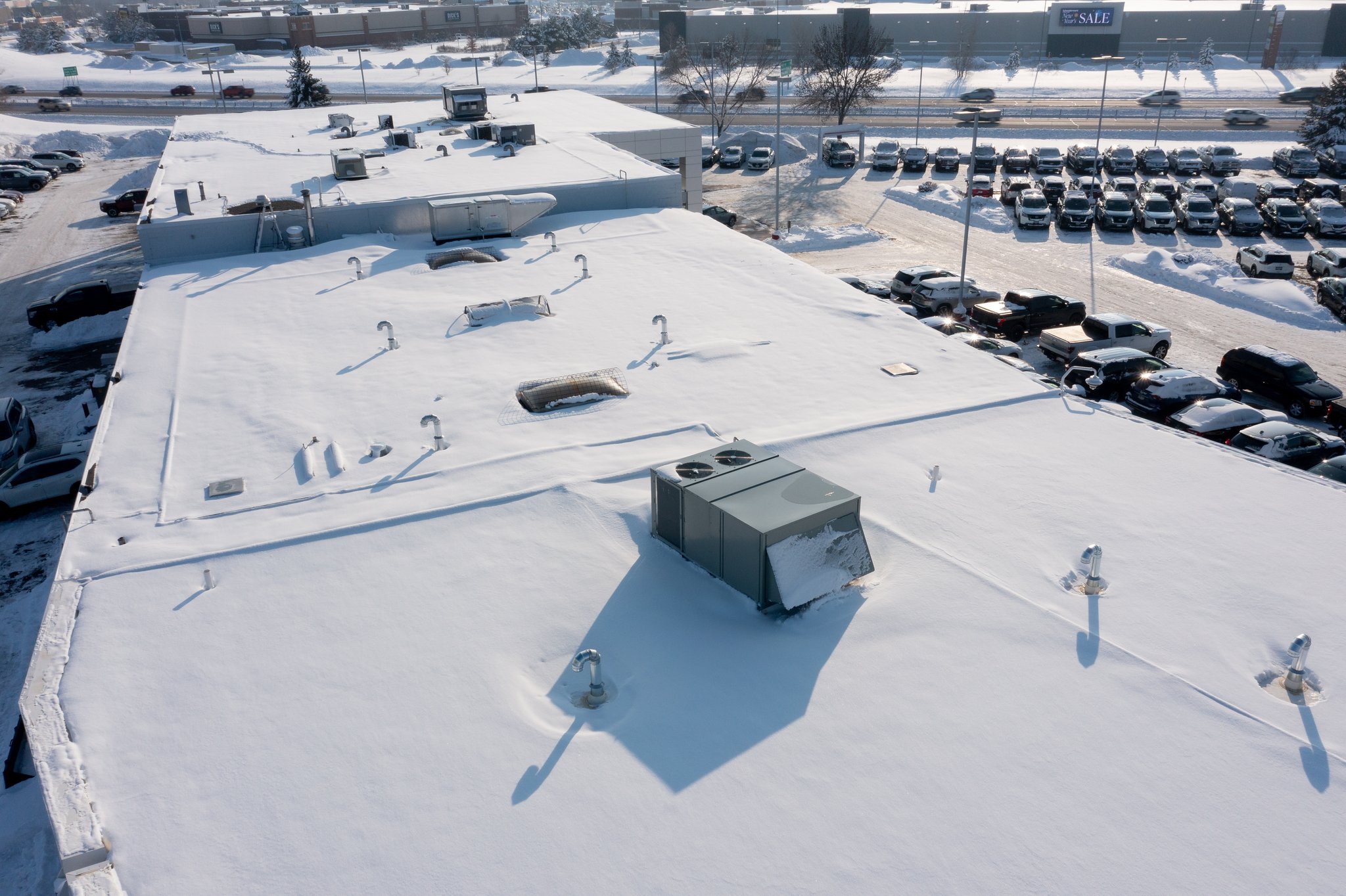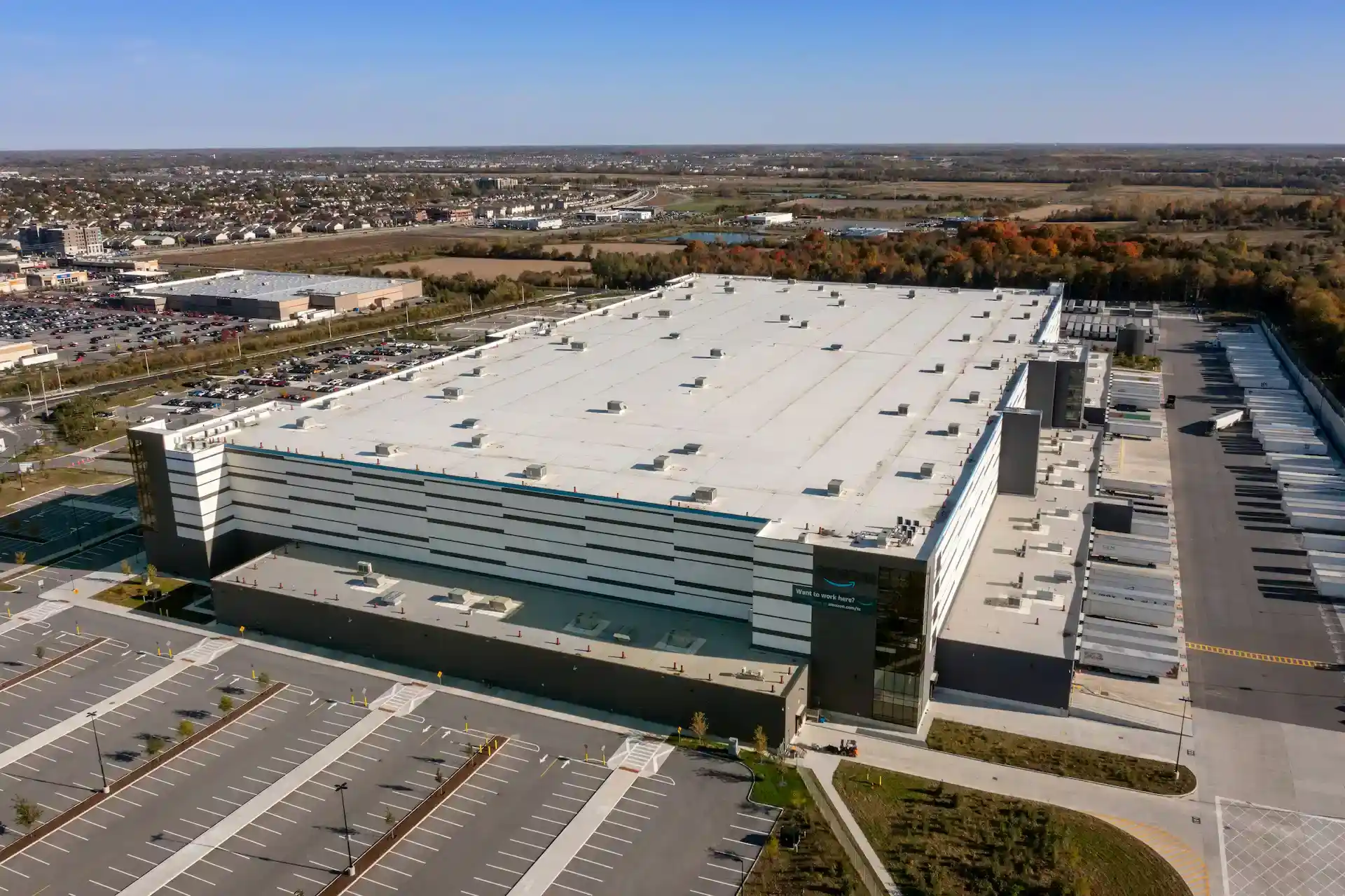
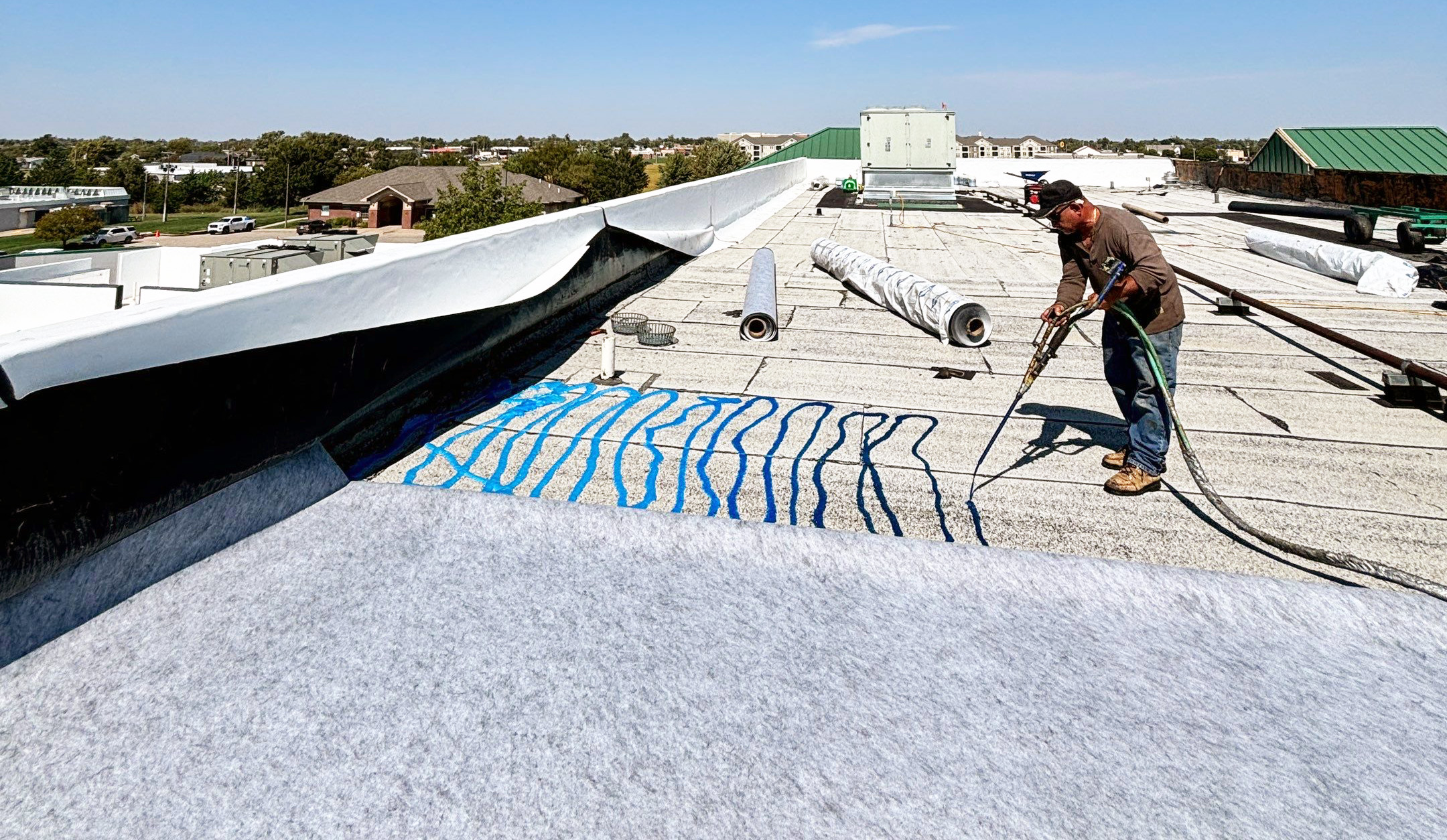
A roof recover installs a new system over an existing one without full tear-off - roughly half the labor cost of replacement when the substrate qualifies. The qualification step is what most recover projects skip and what most failed recovers have in common.
Roof recover is a legitimate and frequently economical option for Memphis commercial buildings - but only when the substrate passes the assessment that determines whether recover is the honest scope. The recover decision requires dry insulation in core pulls across the full roof area, a structurally sound deck, no more than one existing roof system in place (to stay within IBC two-system limits), and seams and flashings in condition that the new system can be detailed against.
Memphis's humid subtropical climate makes the insulation-moisture question more consequential here than in arid markets. A recover installed over wet insulation on a Memphis commercial building traps moisture between the systems, accelerates deck corrosion at the trapped-moisture locations, and produces a manufacturer warranty claim denial because dry-substrate prep is a warranty condition in every major manufacturer's recover specification. We have assessed Memphis buildings where a prior contractor performed a recover over wet insulation - the resulting deck corrosion and warranty denial left the owner with a larger capital problem than a full replacement would have been.
Recover System Options for Memphis Commercial Buildings
TPO recover over existing single-ply or BUR: The most common recover scenario in the Memphis market. New TPO (typically 60-mil mechanically attached) over an existing single-ply membrane or over a BUR system that has had the aggregate removed and surface cleaned. Requires that the existing membrane seams be addressed with compatible detail materials at the new system's laps. Carries a 20-year NDL manufacturer warranty from most manufacturers when the installation meets their recover specification. This is the recover system we install most frequently on Memphis warehouse, office, and logistics buildings.
EPDM recover over existing single-ply: Less common in the current market but appropriate for certain Memphis industrial facilities - particularly buildings with EPDM already in place where the owner wants to maintain manufacturer continuity. Mechanically attached EPDM 60-mil over existing membrane follows the same substrate-dry-insulation requirement as TPO recover.
Modified bitumen recover over BUR: The traditional recover path for aggregate-surfaced BUR systems in Memphis. Aggregate removed, surface vacuumed and primed, two-ply modified bitumen system torch-applied or cold-process adhered over the prepared BUR. This recover option is appropriate for BUR systems with dry insulation and sound decks - it adds roughly 15-20 years of service life to a system that would otherwise require full replacement.
The Recover Assessment Process
Core pulls at five-percent sampling density: We pull cores at a density that gives us statistical confidence in the insulation-moisture condition across the full roof area. A 50,000 sq ft Memphis commercial roof gets a minimum of 10 cores at representative locations - low points, drain areas, areas downhill of mechanical units, any area where the membrane surface condition suggests prior saturation. We measure moisture content at each core with a pin meter and photograph the insulation cross-section before closing the core.
Seam and flashing condition documentation: The existing seams and flashings are inspected at every lap, every drain, every penetration, and every parapet termination. Seams that have lifted or delaminated must be repaired before a recover system is applied - the new system cannot bridge a failed seam below it without concentrating stress at that point. We document every seam condition finding with photograph and location reference on the zone diagram.
Slope and drainage verification: A recover system adds insulation thickness, which changes the slope and drainage dynamics of the roof. On Memphis commercial roofs with marginal drainage already - a common condition in the older commercial inventory - a recover can worsen ponding at low points. We verify existing slope and drainage routing before recommending recover, and we include tapered recover insulation to correct deficient drainage where the existing conditions warrant it.
When Recover Is Not the Right Scope
Wet insulation in more than 25% of cores: The threshold where replacement becomes the economically and technically honest recommendation. Recovering over wet insulation does not drain it - it seals it in. The resulting trapped moisture accelerates deck corrosion, voids the new warranty, and produces a second capital event on an accelerated timeline.
Two existing roof systems already in place: Most Memphis municipalities follow IBC provisions limiting total roof assemblies to two systems. A building that already has one recover in place must go to full replacement on the next cycle. We identify existing system count in the core pull process and inform the owner if they are at the limit.
Deck condition requiring correction: A recover installed over a corroded metal deck or deflected plywood deck does not fix the structural issue - it covers it. We pull deck inspection ports under wet cores and at visible deflection points. Deck replacement is a replacement-class scope, not a recover scope.
Is your Memphis building a roof recover candidate?
Our project managers will walk the roof, pull cores, and give you a documented recover-or-replace recommendation - with the substrate data that supports it.