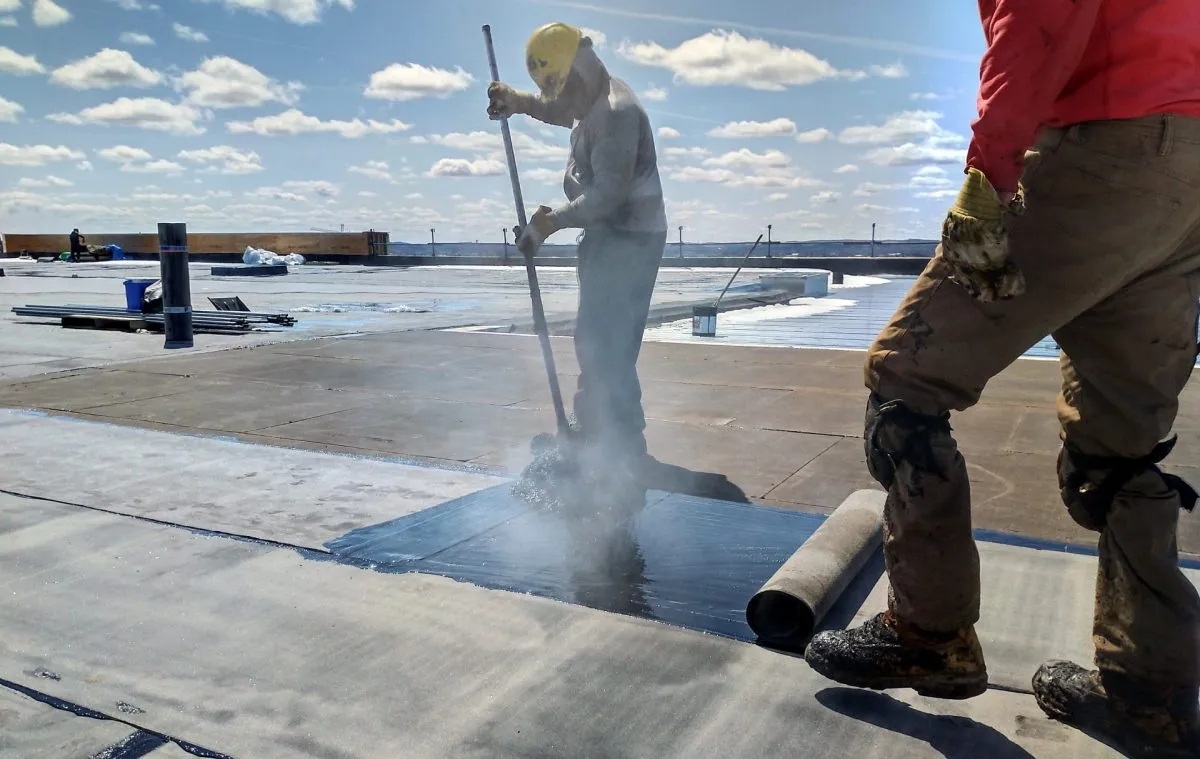
Memphis's older commercial and institutional buildings carry significant built-up roofing - BUR installed in the 1960s through 1980s that is now at or past end of life. I assess, repair, and scope recovery and replacement for BUR systems across Shelby County.
Built-up roofing - alternating plies of felt or fiberglass mat saturated with asphalt or coal-tar pitch, topped with a flood coat and aggregate - was the commercial flat roofing standard for most of the twentieth century. Memphis's institutional and commercial building inventory from that era is substantial: the civic buildings Downtown, the older hospital structures in the Medical District, the University of Memphis campus buildings on the Highland strip, the older industrial buildings in the South Memphis freight corridor, and the original Midtown commercial inventory along Union Avenue and Poplar Avenue all carry BUR systems of various ages and conditions.
A BUR system at 40 or 50 years old is not automatically a replacement - some BUR systems installed by competent crews with quality materials and maintained consistently are still performing. But the failure modes on aging Memphis BUR are predictable: alligatored surface from dried flood coat, drain depression from aggregate settlement, flashing separation at parapets driven by the seasonal soil movement that the Mississippi River alluvial plain produces, and the inevitable interply moisture intrusion that follows any flashing failure in a climate that averages 54 inches of rain per year.
Diagnosing Aging BUR Systems in Memphis
Surface condition is the starting point but not the ending point of a BUR assessment. Alligatored surface - the network of surface cracks that appears when the flood coat dries out and loses flexibility - indicates that the top ply is UV-degraded but does not by itself indicate that the plies beneath are saturated or delaminated. We see many Memphis BUR surfaces that look alarming on visual inspection but have sound plies and dry insulation underneath. I also see surfaces that look intact from a distance with significant interply delamination and wet insulation below.
Nuclear moisture scanning or moisture core pulls are the definitive diagnostic. I use core pulls at a minimum of five locations on any BUR assessment - at suspected wet areas based on surface staining and drain layout, plus at representative dry-appearing field locations. The cores tell the ply count, confirm adhesion between plies, and reveal whether the insulation or the deck surface has absorbed moisture. This information drives the recover-vs-replace recommendation more than any surface observation.
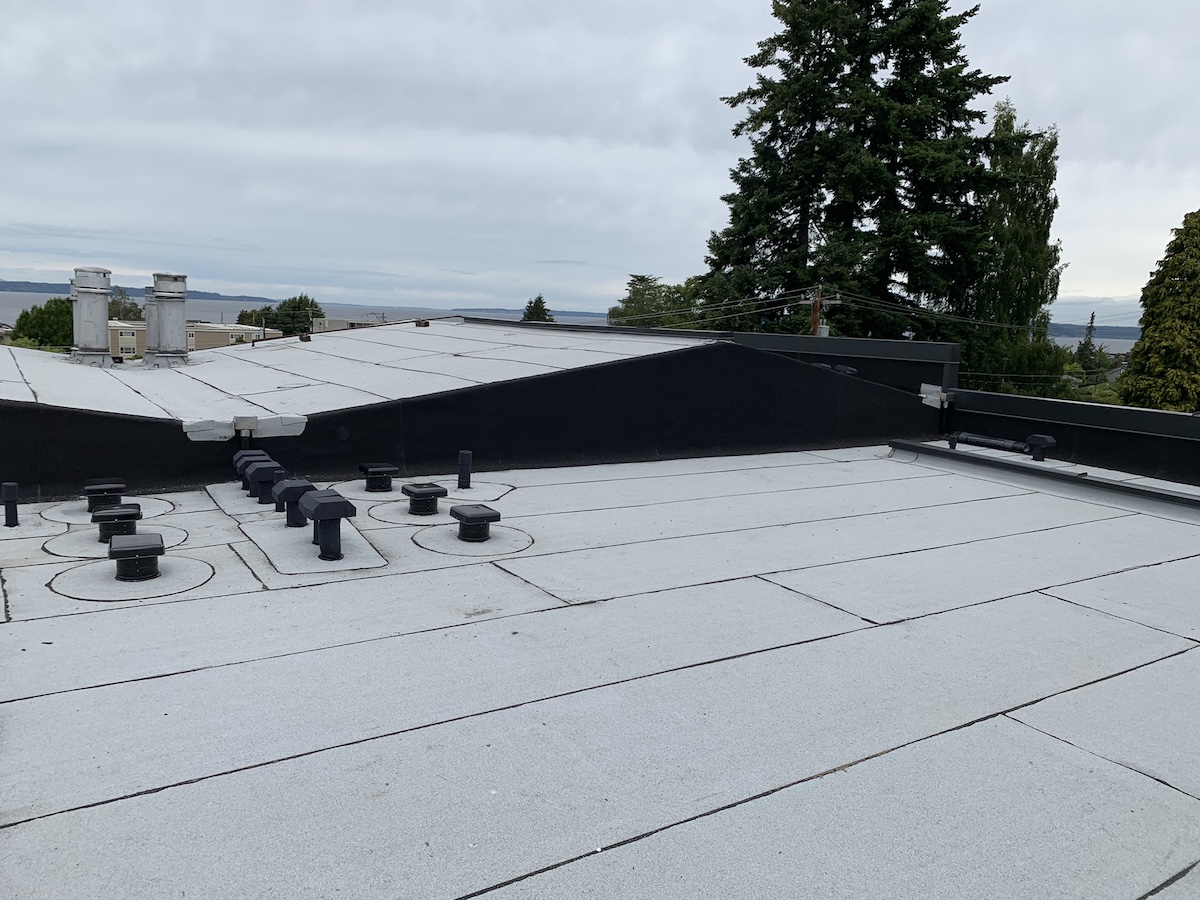
Drain depression is a BUR-specific diagnostic indicator. Aggregate-surfaced BUR systems develop a characteristic bowl around each drain over time as foot traffic and drainage compress the aggregate and flood coat layers. This depression can create a pond-within-a-pond condition that holds standing water against the drain flashing long after each rain event, accelerating flashing failure. We document drain depression depth and drainage calculations at every BUR inspection.
BUR Recover Paths
When BUR insulation is dry and plies are adhered, the recover path avoids the full tear-off cost and keeps the existing insulation R-value in service. Two recover options are standard in Memphis: a modified bitumen cap sheet recover (installing a two-ply mod-bit system directly over the existing BUR with cold adhesive), or a single-ply recover (mechanically fastening TPO, EPDM, or PVC on recover board over the BUR surface).
Modified bitumen cap sheet recover on existing BUR is the more traditional recover path and makes sense when the BUR surface is clean and flat enough to bond to. The result is a system with increased ply count and a fresh granule-surfaced cap that extends service life 15-20 years. It requires dry insulation and a drain-layout that can accommodate the additional thickness at drain sumps.
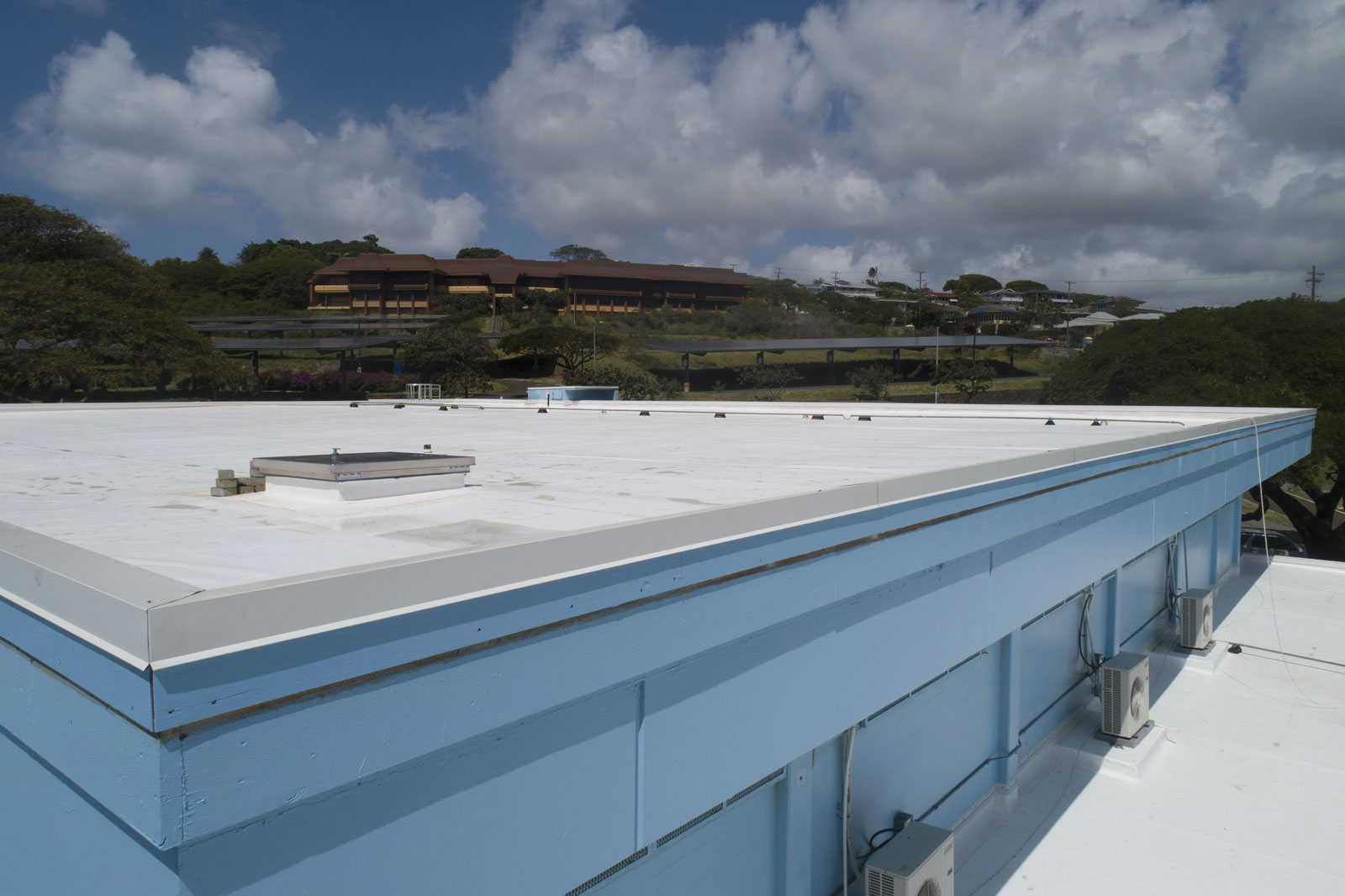
Single-ply TPO recover over BUR is the current standard for Memphis buildings where the BUR has a rough or irregular surface that does not provide a good bond base for adhesive, or where the owner wants a reflective white surface and a modern manufacturer warranty. Recover board is typically installed over the BUR to provide a smooth substrate and additional R-value. This approach delivers a 20-year NDL warranty on the new system while retaining the existing insulation - the most cost-effective capital deployment when the BUR insulation is confirmed dry.
BUR Replacement and Deck Considerations
When BUR tear-off is required - wet insulation, delaminated plies, or deck condition that requires repair - the replacement scope specifies the new system from deck up. On Memphis commercial buildings from the 1960s-80s era, the deck is often concrete or metal deck with original insulation installed directly to the deck without air barrier. The replacement scope must address vapor control for heated and cooled spaces, bring the insulation R-value to current Tennessee energy code minimums, and specify the drain layout against the current drainage calculation.
Deck inspection during BUR tear-off on Memphis buildings frequently surfaces concrete deck spalling, rebar corrosion in buildings near the Mississippi River where chloride exposure has affected the deck over decades, and metal deck corrosion in buildings where the original insulation failed to control condensation. I price deck repair as a separate unit-price line item in replacement scopes - deck condition cannot be fully confirmed until the tear-off is complete, and owners need to know the exposure before contract signing.
The New Madrid Seismic Zone consideration is relevant in BUR replacement on older Memphis buildings. Many 1960s-70s commercial structures were designed before current seismic detailing requirements. Roof-to-wall connections on these buildings may not I flag roof-to-wall connection condition during any BUR replacement inspection and can coordinate structural review on request.
BUR assessment or replacement scope for your Memphis building?
We will walk the roof, pull cores, evaluate deck condition, and produce a written assessment with recover-path or replacement scope and capital cost band.