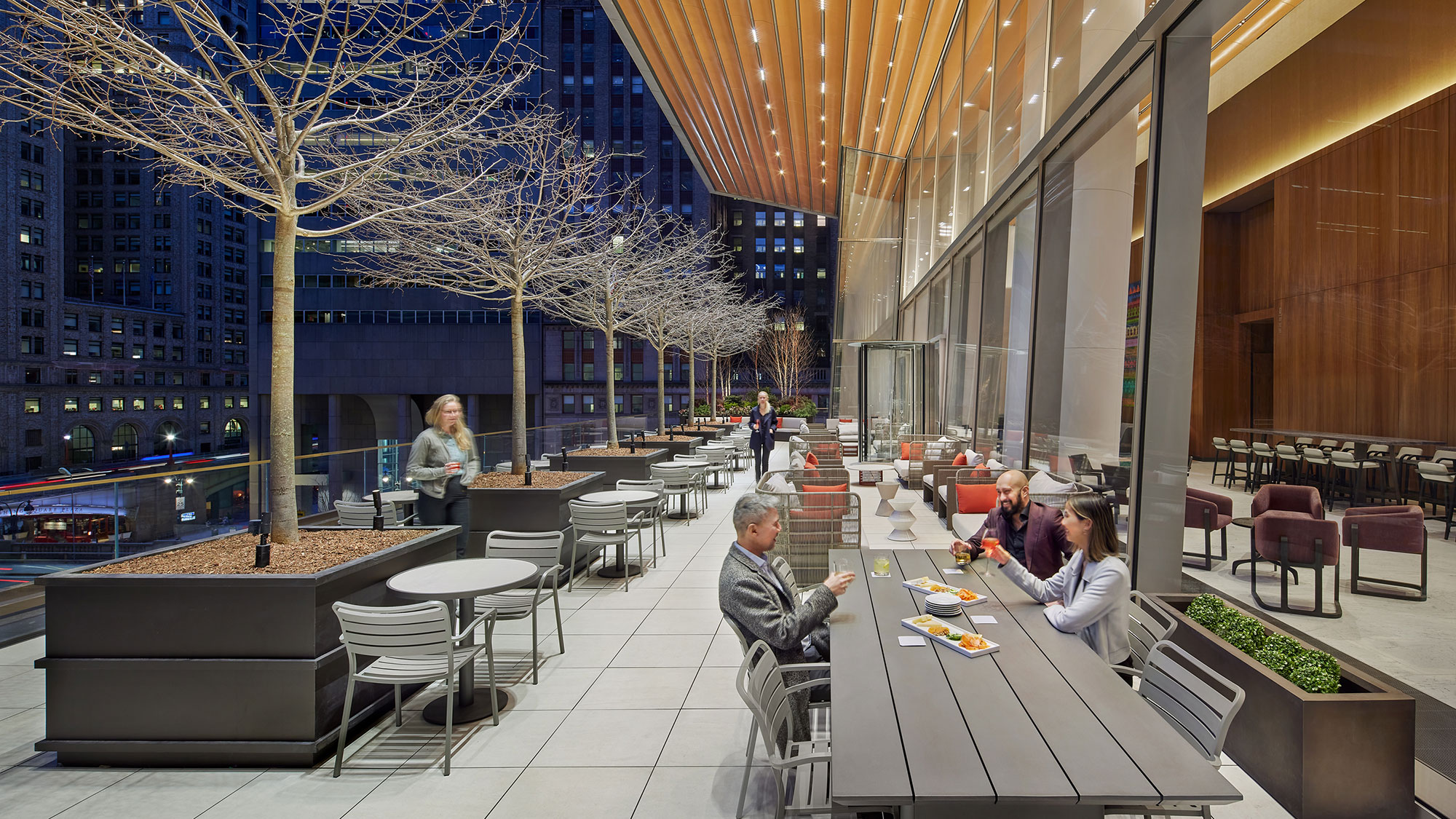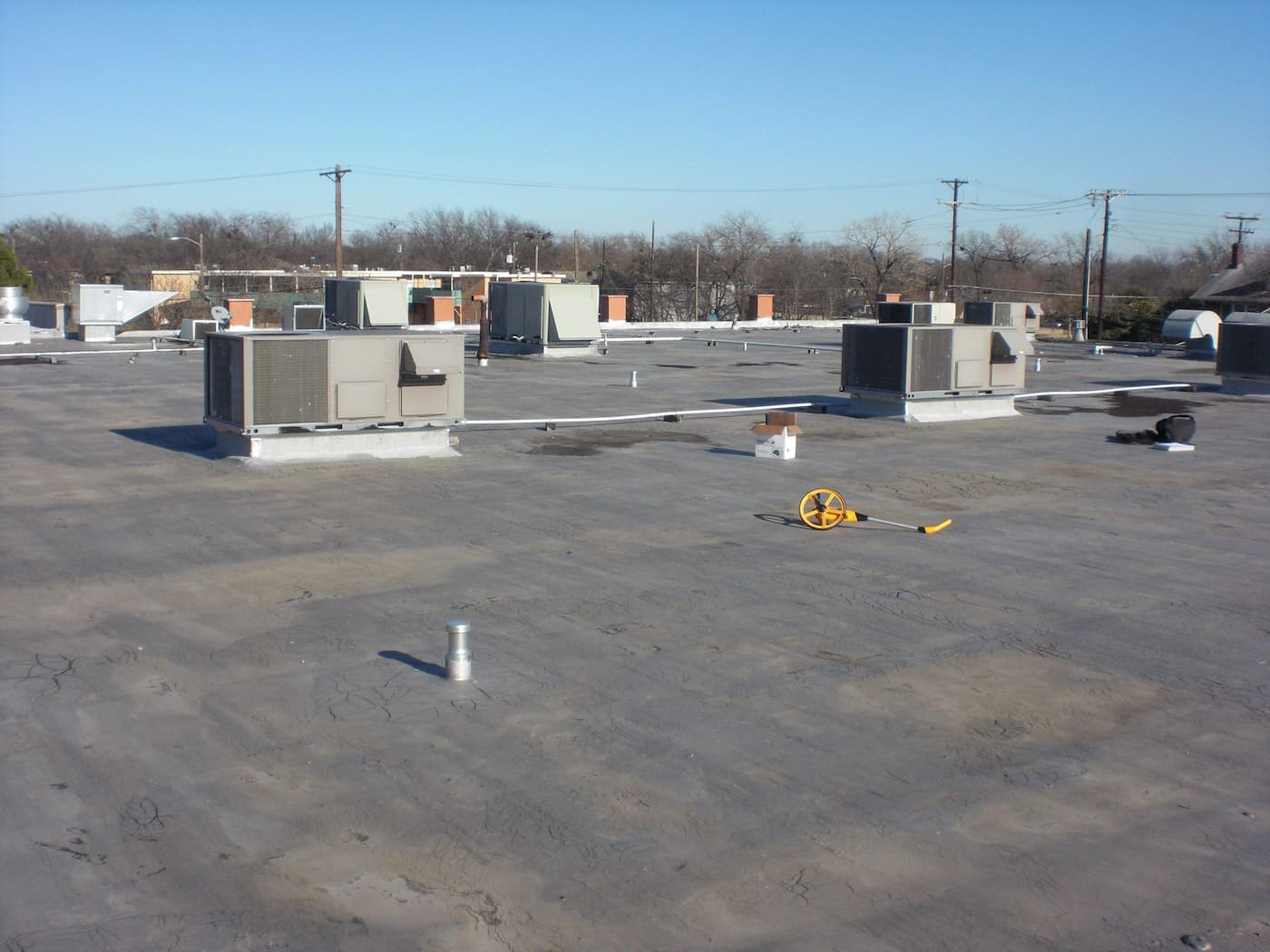
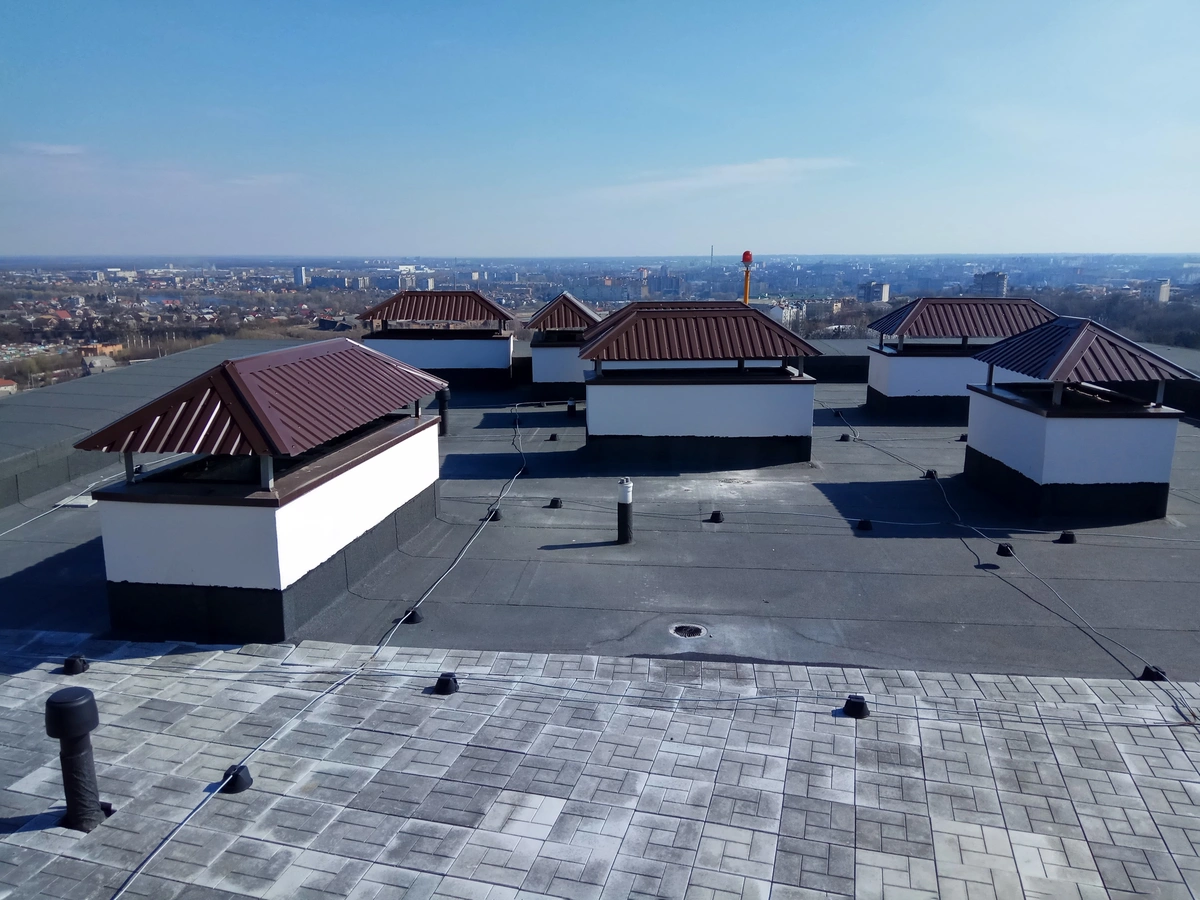
Downtown Memphis's office inventory runs from historic warehouse-conversions in the South Main Arts District to the high-rise Class A towers along Main Street and the riverfront - including 100 N Main, where our office is on the 25th floor. We walk these buildings regularly for inspection and maintenance work, and we understand what aging office tower roofing looks like when it is been patched for ten years by whoever was cheapest that season. The pattern is usually the same: an original EPDM or modified bitumen system from the 1980s or 1990s under a series of elastomeric coatings, with seams that have been torch-patched and re-patched until the membrane itself is compromised. At that stage, replacement is the honest answer regardless of what a coating salesman proposes.
The East Memphis Poplar Avenue corridor - from Poplar and Highland east to Germantown Road and beyond - is home to a dense concentration of corporate office campuses and professional services buildings built in the 1990s and 2000s. These buildings are now running first-generation 45-mil EPDM and early TPO systems at or past their design life. Many have facility managers actively managing capital planning for roof replacement, and they need scope documentation that is detailed enough to support a board-level capital appropriation, not a one-page bid.
Downtown Memphis Office Towers - What Mid-Rise and High-Rise Roofing Requires
High-rise office buildings in Downtown Memphis present wind exposure, material staging, and access constraints that low-slope commercial work does not. Buildings above eight stories in Memphis's Exposure B wind zone require fastener patterns designed against the higher wind pressure at elevation - edge zones and corner zones get significantly denser fastener patterns than field zones, and the calculation is building-specific, not a generic spec. We engineer the fastener pattern for each high-rise project rather than defaulting to the field-zone pattern across the whole roof.
Material hoisting on Downtown Memphis high-rise projects requires crane or elevator coordination with the building management and neighboring properties. Lamar Avenue frontage, Front Street, and Main Street in Downtown Memphis have active pedestrian and vehicle traffic that requires permits and safety planning for ground-level staging. We have managed this coordination on Downtown Memphis projects and know which building managers require 30-day pre-notification before any crane work on or near the building.
East Memphis Poplar Corridor - Corporate Campuses and Class A Office
The Poplar Avenue corridor east of the Medical District - from the I- - contains the largest concentration of corporate headquarters and Class A professional office space in the metro outside of Downtown. International Paper's global headquarters at , FedEx corporate offices, and dozens of medical group administrative buildings make this corridor the primary target for planned roof replacement and maintenance contract work in our annual production schedule.
These buildings have facility management teams with formal capital planning cycles - annual budget submissions, multi-year capital plans, and lender or board documentation requirements for major building systems. Our written scope packages for Poplar corridor projects include condition assessment with photos, recover-versus-replace analysis with moisture-core documentation, capital cost band for both options, manufacturer warranty path, and a maintenance contract proposal to protect the warranty post-installation. That is the deliverable that gets approved at a capital committee - not a per-square bid on three lines.
Tenant Disruption and Occupied-Building Protocols
Roofing an occupied office building in Memphis requires coordination that commercial roofing work does not. Law firms, accounting practices, and medical administrative offices in East Memphis and Downtown cannot operate through uncontrolled noise, odor, or dust. We schedule HVAC fresh-air intake shutoffs during membrane adhesive application on fully-adhered systems, notify building management 48 hours before any work that generates elevated noise (power tools, screw guns, tear-off), and coordinate with building security for after-hours access when early-morning or weekend production is required to minimize tenant impact.
We provide written production schedules before contract execution and update them proactively when weather or production delays require reschedule. Facility managers and property managers receive same-day notification of any schedule change that affects their tenants. This is standard protocol for our office building projects - not an upgrade the owner has to ask for.
Planning a roof replacement for a Memphis office building?
We will walk the roof, document the condition, and produce a written scope detailed enough to support a capital appropriation - not a three-line bid.