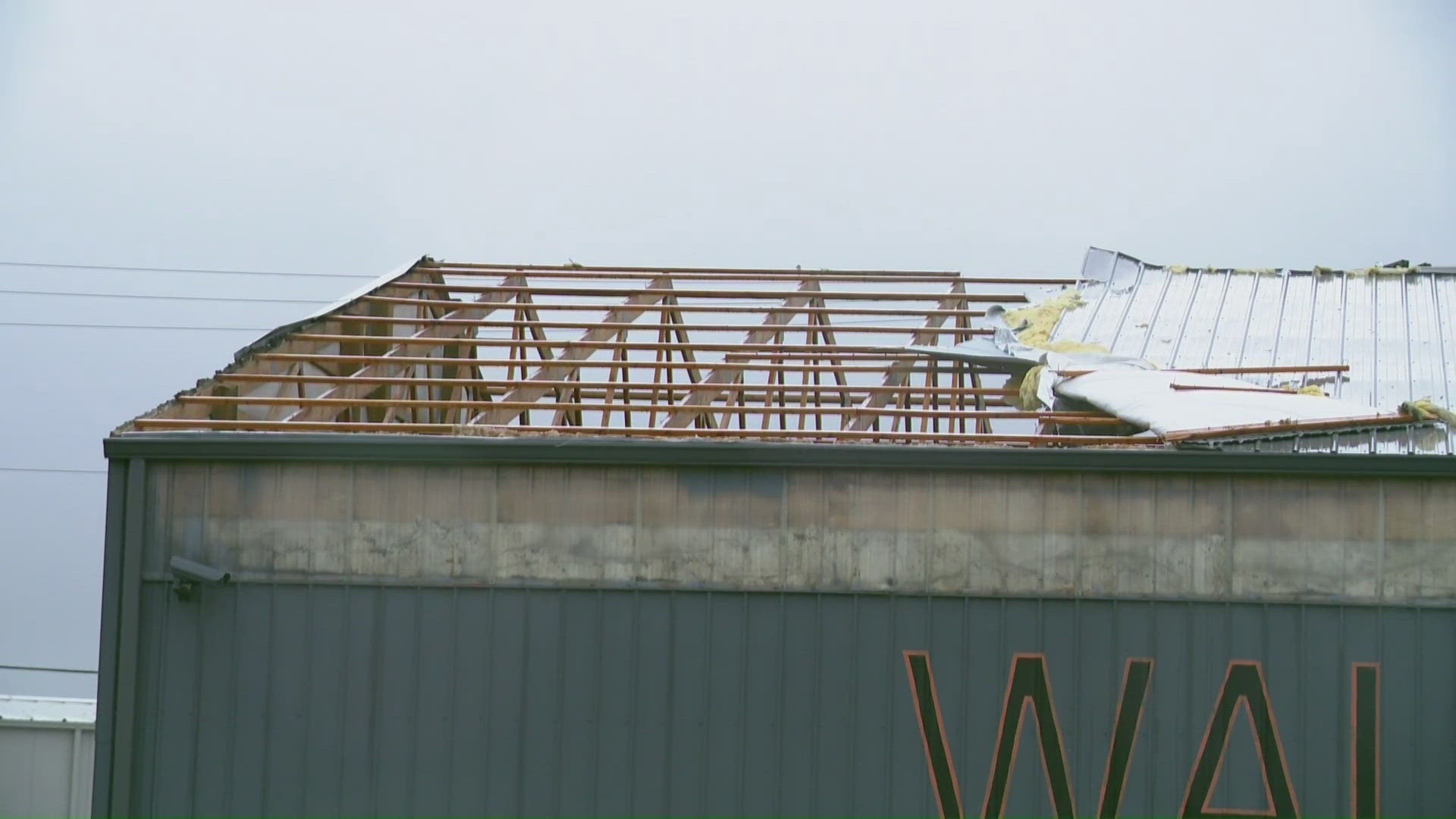
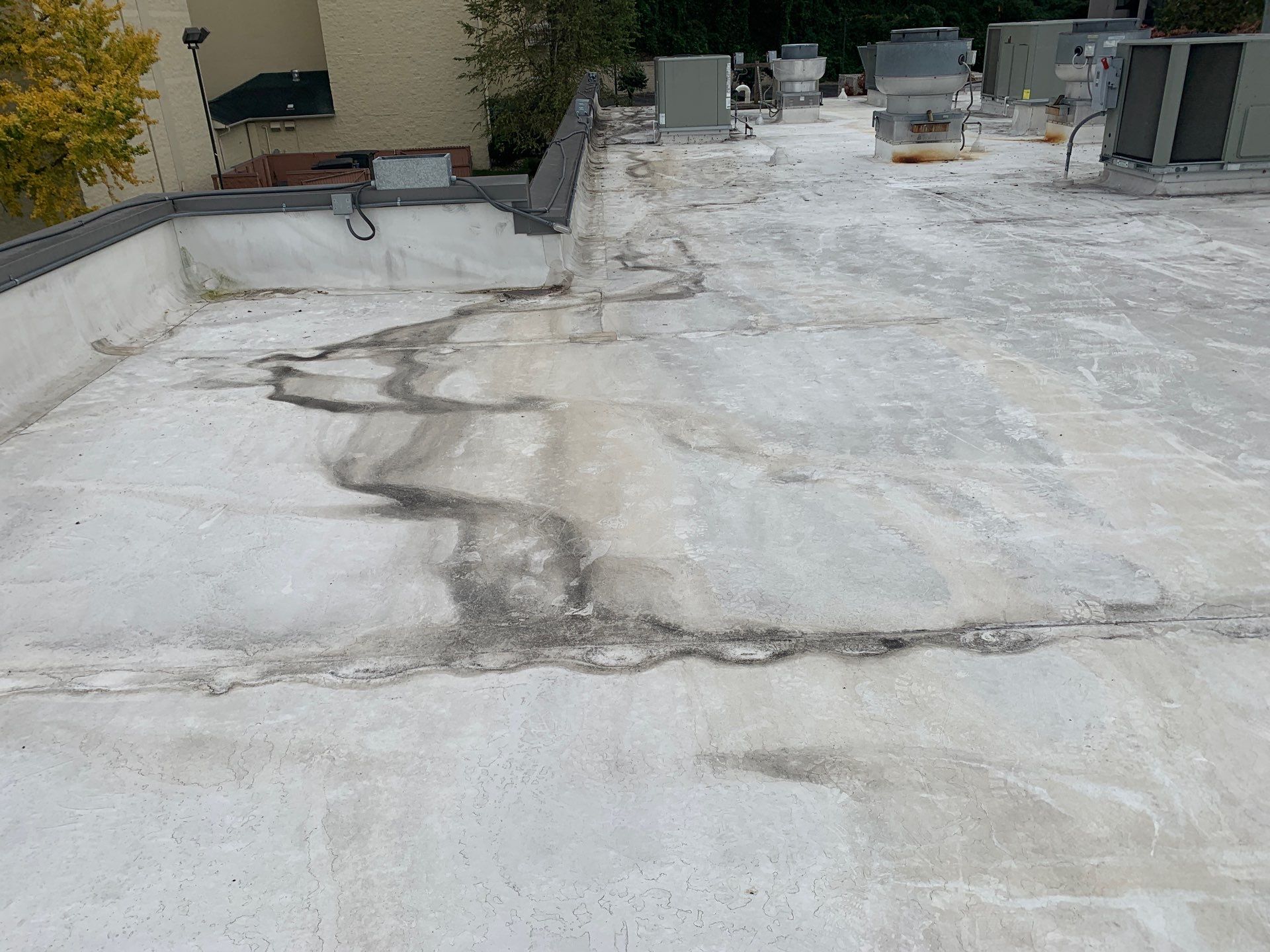
Straight-line wind events and summer derechos move through Memphis multiple times per year. When sustained winds compromise membrane seams, pull perimeter flashings, or initiate corner uplift on a commercial flat roof, the repair window before water intrusion begins is short - and the documentation window for an insurance claim is even shorter.
Memphis's summer derecho season - typically June through August - produces straight-line wind gusts that routinely exceed 60 mph and periodically push past 80 mph during organized convective events. Unlike tornadoes, derechos cover broad areas simultaneously, which means multiple commercial buildings across the metro can sustain membrane wind damage in a single event. The repair priority queue after a derecho is a real problem for building owners: the contractors with capacity to respond are working multiple calls at once.
Wind damage to commercial flat roofs concentrates at three locations: the perimeter zone (the outer ten feet of the roof where wind uplift pressure is highest), membrane seams (particularly seams that run perpendicular to the prevailing wind direction), and penetration flashings (where membrane transitions to mechanical equipment curbs, pipes, and structural elements). A membrane system that performs adequately under normal conditions can fail at any of these locations under sustained high-wind loading if the original fastener pattern was designed to code minimum rather than to a more conservative uplift resistance target.
Where Wind Damage Concentrates on Memphis Commercial Roofs
The perimeter zone is the primary wind-damage location on commercial flat roofs. Building codes define this as the outer ten percent of the roof width, with corner zones at the intersections receiving the highest design uplift pressure. IBC 2021 wind-uplift requirements for commercial buildings in Memphis - Exposure B, basic wind speed approximately 105 mph for Risk Category II buildings - specify significantly higher fastener density in the perimeter and corner zones than in the field. When we inspect wind-damaged roofs in Memphis, we find perimeter and corner zone fastener pull-through as the most common failure mode on roofs installed before the post-Katrina code-cycle updates tightened perimeter requirements.
Membrane seam failure is the second most common wind-damage type we document. Seams that have aged past their design life - heat-weld seams on 15-year-old TPO, adhesive-bonded seams on aged EPDM - can part under sustained uplift loading even when the surrounding membrane field remains mechanically fastened. Seam failures are particularly consequential because the parted seam allows water intrusion immediately and creates a stress riser for further membrane tearing under continued wind loading.
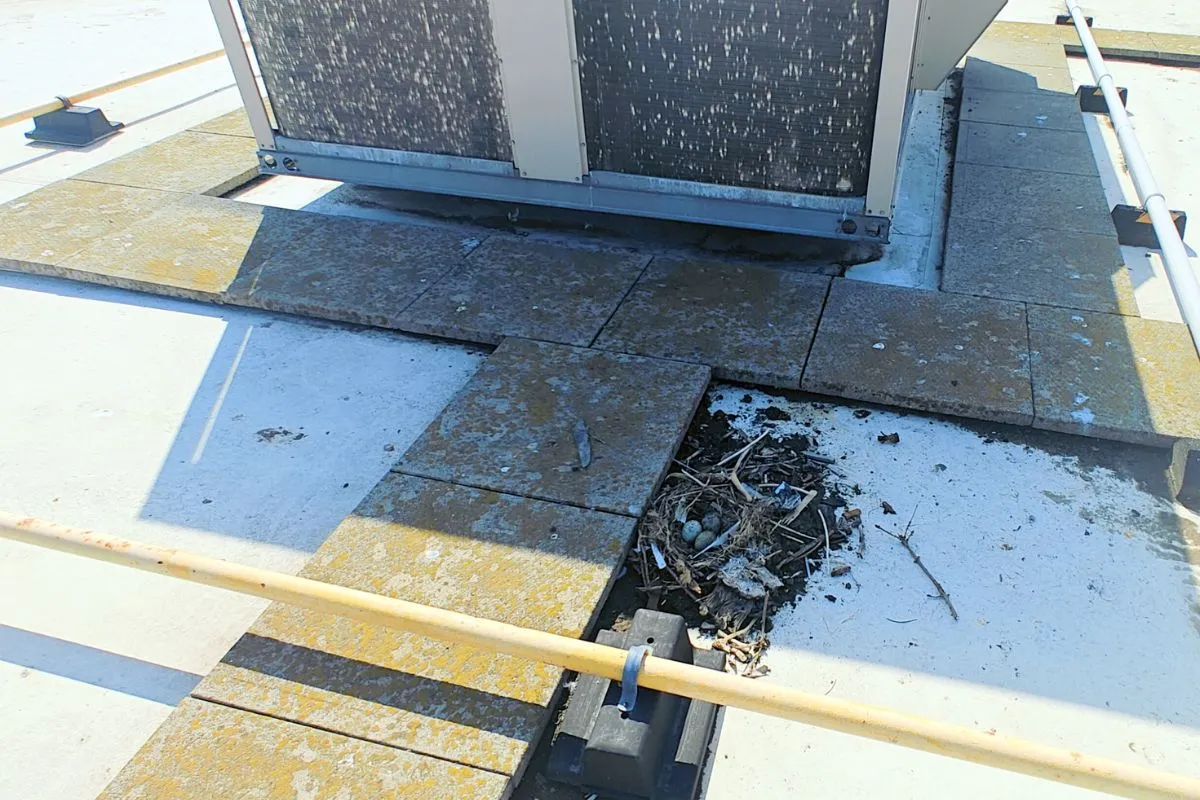
Penetration flashings - HVAC curb flashings, pipe penetration boots, drain flashings - are the third concentration point. These flashings transition the primary membrane to fixed penetrations that cannot move with the membrane under wind loading. Aged or improperly detailed penetration flashings can separate from the primary membrane under wind loading without the membrane itself failing. A building can sustain a wind event with no visible field membrane damage and still have active water intrusion through separated penetration flashings.
Wind-Damage Assessment Protocol
Our wind-damage assessment begins at grade - a perimeter walk of the building exterior looking for displaced cap flashings, drip-edge separation, and visible membrane movement at the parapet line. These ground-level observations often identify the failure zones before we access the roof.
On the roof, we work the perimeter and corners first, probing membrane-to-insulation bond and fastener integrity along the edge. We probe-test seams in the perimeter zone and at any seam oriented perpendicular to the reported storm direction. Penetration flashings are inspected for membrane-to-flashing separation. The field is walked in a grid pattern with probe-testing at intervals, looking for membrane billowing, insulation displacement under the membrane, and ponding patterns that indicate drainage disruption.
Every damage location is photographed against a GPS-keyed zone diagram. The written narrative distinguishes event-related damage - characterized by fresh membrane parting, clean fastener pull-through with undegraded membrane around the pull-through point - from pre-existing deterioration, which shows degraded membrane material at the failure point, long-standing ponding stains, and repair-tape evidence of prior patching.
Permanent Wind-Damage Repair
Perimeter zone fastener pull-through repair involves removing the failed membrane in the pull-through zone, installing new insulation if the existing insulation boards are displaced or compromised, and installing new membrane in the perimeter zone with a fastener pattern meeting current IBC perimeter zone requirements - not the original code-minimum pattern if the original pattern proved insufficient. The new perimeter installation is integrated into the undamaged field membrane with a heat-welded or adhered seam, and all new seams are probe-tested before closeout.
Seam failure repair requires removing membrane on both sides of the parted seam back to the nearest undamaged seam or field anchor, installing new membrane in the failure zone, and heat-welding or adhering the new membrane into the existing field. We do not patch failed seams with seam tape or lap cement - patch repairs at seam failure locations fail again. The repair zone is sized to reach sound membrane on all edges.
Penetration flashing repair follows manufacturer details for the specific penetration type. HVAC curb flashings are replaced full-perimeter, not patched at the separation point. Pipe boots are replaced with new two-piece boots or manufacturer-specified prefabricated flashings. All penetration flashing repairs are photographed against the published manufacturer detail before membrane termination strips are installed over the flashing edges.
Wind damage to a Memphis commercial building?
Same-day assessment, temporary dry-in on any active breach, and a written scope with insurance-grade documentation before we leave the site.