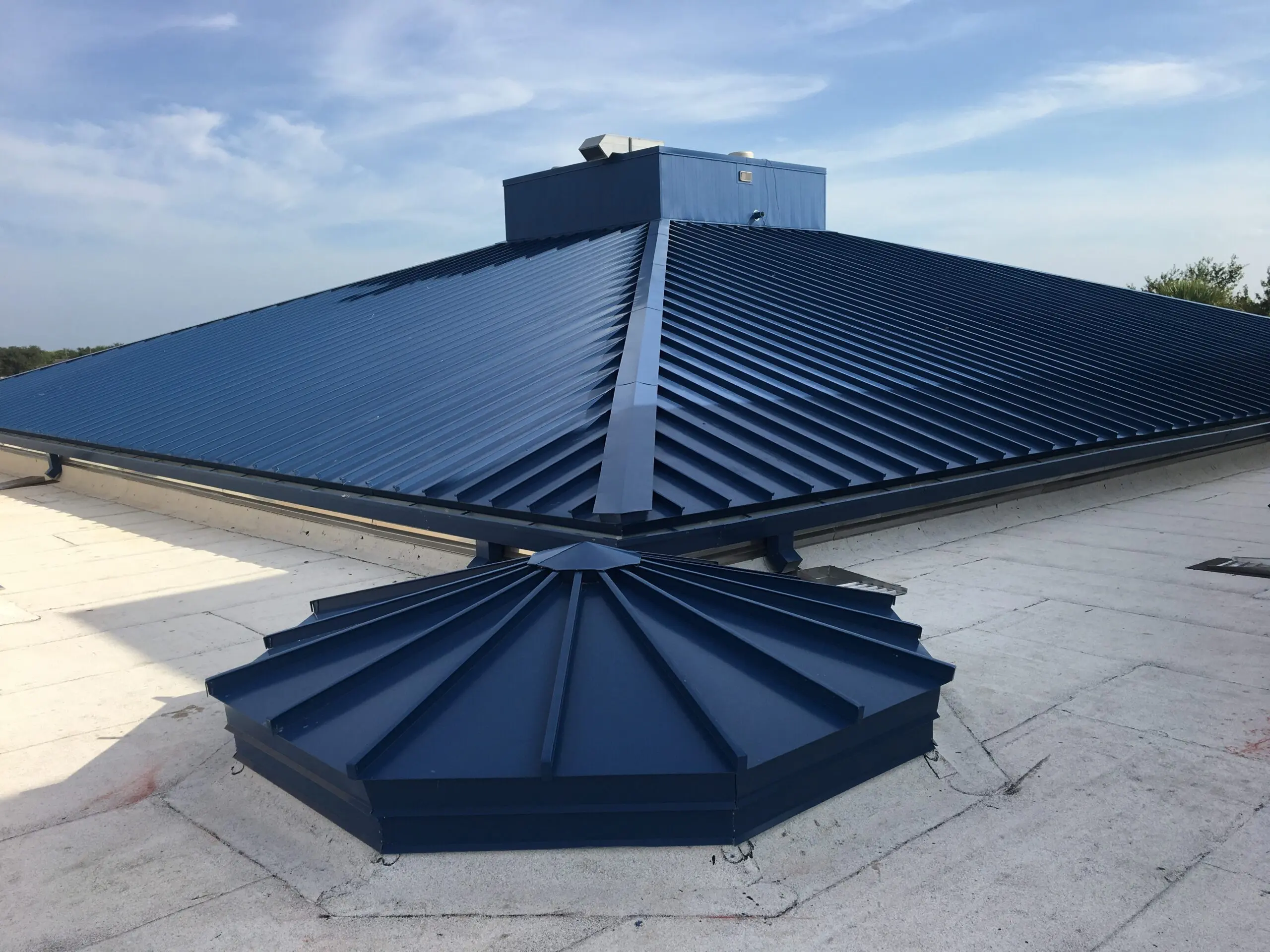
The standing seam system is fundamentally different from exposed-fastener metal. The seam is raised and interlocked, the fastener clip is concealed under the seam cap, and the panel floats longitudinally on the clip rather than being rigidly pinned. This floating attachment is what gives standing seam its advantage in Memphis's thermal environment: panels cycle through 100°F temperature swings between a January cold snap and a July afternoon, and that floating clip allows the thermal movement that would otherwise buckle a rigidly fastened panel or work a screw hole into a leak.
Memphis's Mississippi River alluvial subsoil introduces another consideration: buildings on silty clay loam soil experience more structural movement than buildings in more stable geology. The parapet-to-wall transitions and eave conditions on Memphis commercial buildings get inspected closely before any metal roofing scope is finalized, because movement that is inconsequential to a membrane flashing can open a standing seam transition detail if it is not detailed for it.
Standing Seam Panel Systems - What We Install
Snap-lock panels: The most common standing seam system for commercial reroofing in the Memphis market. The seam snaps together without a mechanical seamer, which speeds installation on reroofing projects and reduces the skill dependency of the seam closure. Appropriate for slopes above 1:12. Most of the commercial standing seam we install in the Germantown corporate corridor and East Memphis office parks falls into this category.
Mechanical-lock panels: Panels that require a mechanical seamer tool run along the seam to fold and lock the seam cap. Slower to install, more demanding on crew skill, but produces a tighter weather seal that is preferred on very low slopes (down to 0.5:12 on some systems) and for buildings in high-wind-exposure conditions. The Aerotropolis facilities west of Memphis International Airport - subject to aircraft-generated turbulence and flat open-terrain wind - frequently get mechanical-lock specified over snap-lock.
Panel width and material: Standard commercial panels run 16 inches to 24 inches wide in 24-gauge and 22-gauge Galvalume or paint-coat steel. Aluminum panels are specified for buildings near the river where salt-mist or industrial-environment corrosion is a concern. Painted panels in Kynar 500 or Hylar 5000 fluoropolymer coating carry 40-year color-fade warranties from major manufacturers. We match the panel spec to the building's service requirements and the manufacturer warranty path the owner needs.
Memphis Climate Considerations for Metal Roofing
Thermal cycling: Memphis experiences over 100 heating and cooling degree days swing annually. Panels installed in January at 30°F and exposed to a July afternoon surface temperature of 160°F on a dark panel, or 120°F on a reflective Galvalume or light-color paint, cycle through significant expansion and contraction. The floating clip attachment is the mechanical solution - but eave trim, ridge cap, gutter connections, and penetration details must all accommodate that movement without binding. Our standing seam details specify slip joints at all fixed transitions.
Condensation at the underside: Memphis's humid subtropical climate creates condensation risk on the underside of metal panels in winter - cold panel surface, humid attic or plenum air, dew point exceeded. We specify continuous vapor barrier and vented or conditioned attic assemblies under all standing seam installations to address this. Uninvented metal roofing over unconditioned attic space in Memphis consistently produces condensation damage within five years.
Hail and wind: Memphis's position in the Midsouth tornado corridor means standing seam panels must be designed against the wind-uplift requirements for the building's zone and exposure category under IBC 2021. The same supercell systems that produced the 2008 Super Tuesday tornado outbreak deliver hail as well - 24-gauge and 22-gauge panels resist cosmetic hail denting better than 26-gauge, and we specify the heavier gauge for any building where the owner needs a hail-resistance narrative for insurance purposes.
Installation Scope and Closeout
Standing seam reroofing in Memphis typically involves removing existing single-ply membrane or BUR, verifying and if necessary replacing the deck, installing continuous insulation (polyiso, mineral wool, or tapered polyiso to Tennessee IECC energy code R-value), installing the standing seam system on approved underlayment, and completing all penetration, eave, ridge, and parapet details to the manufacturer's published specifications. The full sequence is documented with photo logs at each phase.
Manufacturer warranty on standing seam systems is typically 30-40 years on the panel material and 20-30 years on the paint finish. Warranty issuance requires manufacturer-trained installer certification and a field inspection at closeout. Our crews carry current certifications for the manufacturers we install - Firestone, Metal Sales, MBCI, and New Tech Machinery are among our standing relationships. The closeout package delivered to the building owner includes the warranty document, the field inspection report, a zone diagram with all photo-keyed conditions, and the maintenance schedule required to keep the warranty intact.