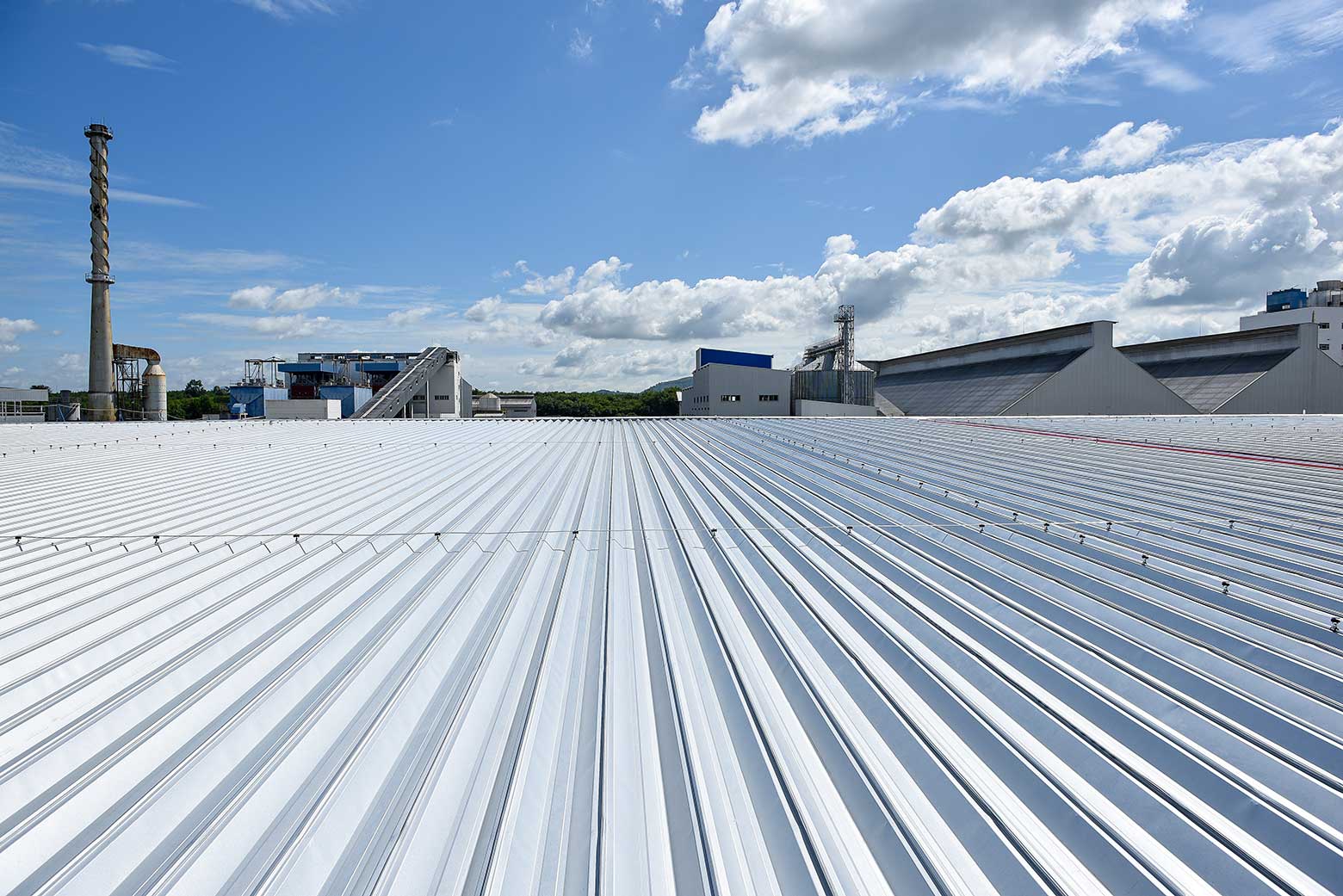
Standing seam metal provides the longest service life of any commercial roofing system in Memphis - 40 to 60 years on properly installed Galvalume or painted steel panels, with concealed fasteners and thermally accommodating seam design that addresses Memphis's temperature range.
Standing seam metal roofing occupies a different position in the Memphis commercial market than single-ply membrane systems. The installed cost is higher - roughly two to three times the cost of a mechanically attached TPO system per square foot - but the service life calculation is fundamentally different: a standing seam metal system installed on a corporate headquarters, a healthcare building, or a high-end retail development in Memphis carries a 40 to 60 year service life on Galvalume or Kynar-coated steel. The lifecycle cost per year is competitive with membrane systems when the calculation runs the full service period.
The Memphis buildings where We see standing seam most often are architecturally distinctive commercial buildings where the roof is visible from grade - the sloped-roof sections of East Memphis corporate campuses, retail centers in Germantown and Collierville, church and institutional buildings, and mixed-use developments in Midtown where the architectural character of the building drives the specification. Standing seam is also specified on low-slope commercial roofs in high-wind-exposure locations where a mechanically attached single-ply cannot achieve the needed uplift resistance without ballasting.
Panel Materials and Finishes for Memphis Conditions
Galvalume (aluminum-zinc alloy coated steel) is the standard substrate for commercial standing seam roofing in Memphis. Galvalume provides corrosion resistance across the life of the panel, which matters in Memphis's humid subtropical environment where steel without protective coating corrodes measurably in the 40-60 year service period. For exposed applications, Galvalume is usually finished with a Kynar 500 (PVDF) fluoropolymer coating - Kynar-coated panels retain color and gloss through the UV exposure of a Memphis summer at a level that polyester coatings do not match.
Aluminum standing seam panels are specified for coastal applications where salt-air corrosion is the primary threat - less relevant in Memphis's landlocked location. Copper standing seam is specified for historic building rehabilitation where the architectural character requires it - Downtown Memphis has several historic civic and institutional buildings where copper is the appropriate specification for restoration work.
Panel width and seam height affect the system's performance in Memphis conditions. Narrower panels with higher seams accommodate thermal movement better than wide panels with low seams. We specify 16-inch panel widths with 2-inch seam height as the standard for commercial standing seam in Memphis - this combination handles the full annual temperature range without seam deformation or clip overload.
Low-Slope Standing Seam and Flat-to-Slope Transitions
Commercial buildings in Memphis frequently combine low-slope flat roof sections - over the main building floor plate - with standing seam metal on parapet caps, mansard sections, mechanical screen enclosures, or sloped entrance canopies. The transition from flat membrane to standing seam is the most critical detail in these hybrid systems, and it is where most of the failures I am called to investigate originate.
The flat-to-standing-seam transition requires a properly lapped, compatible counterflashing system that accommodates the thermal movement of the metal panel while maintaining a watertight connection to the membrane. I use a reglet-and-counterflashing detail with a 4-inch minimum lap over the membrane flashing, terminated with a sealant bead at the bottom edge of the counterflashing. The common failure We see on Memphis buildings - standing seam counterflashing lapped under the membrane rather than over it - creates a reverse-lap condition that funnels every rain event behind the membrane.
Mechanical equipment penetrations through standing seam sections require metal curbs and custom-fabricated pitch pockets or pipe boots that match the panel profile. I fabricate penetration details from matching Galvalume or painted steel, not rubber boots retrofitted over the panel seam - rubber boots degrade in Memphis UV within 10-15 years and are not appropriate for a 50-year metal roof system.
Standing Seam on Memphis Commercial Projects
Germantown and Collierville retail and office: Upscale retail centers and Class A office buildings in these municipalities frequently specify standing seam on sloped sections and parapet caps. The building character in Germantown's Poplar Avenue corridor favors standing seam for its aesthetic and longevity - property owners in this market expect 40-year roof systems, not 20-year systems on visible sloped elements.
East Memphis corporate campus: Corporate headquarters and campus buildings along the Poplar corridor from Germantown Road east have specified standing seam on entrance canopies, covered parking structures, and sloped accent roof elements. International Paper's campus facilities and similar corporate assets in this corridor are designed for long-term ownership, and the lifecycle economics of standing seam support that design intent.
Church and institutional buildings: Memphis has a large inventory of institutional buildings - churches, synagogues, civic buildings, university structures - where the architectural character and long ownership horizon make standing seam the appropriate long-term specification. I have scoped standing seam replacement and new installation on institutional buildings from Midtown through Collierville.
Standing seam scope for a Memphis commercial building?
We will evaluate the slope, deck condition, thermal movement requirements, and transition details, and produce a written specification with panel specification, clip layout, and installed-cost band.