Infrared thermography can survey a 200,000 sq ft Memphis logistics facility in an evening and identify probable moisture zones across the full area - a coverage capability that core sampling alone cannot match on large buildings. We use IR to guide the sampling program, not as a standalone deliverable.
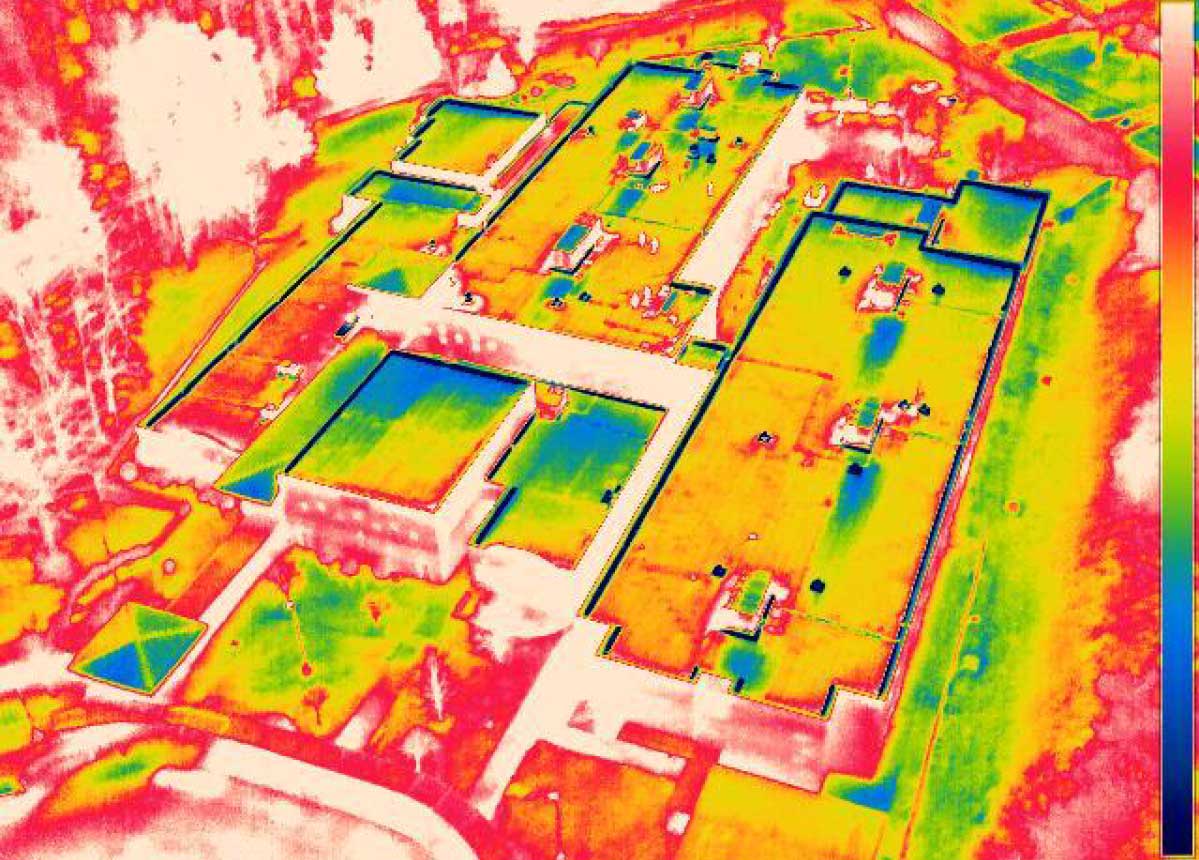
Infrared scanning for commercial roofing works on a specific physical principle: wet insulation retains heat longer than dry insulation after the sun goes down. A thermal camera scanning the roof surface in the hours after sunset detects moisture zones as warmer anomalies against the cooling dry field. A trained thermographer can map these anomalies across the full roof area in a single evening pass, producing a candidate moisture map that drives the core sampling program.
Memphis's climate creates both favorable and unfavorable IR windows. The city's highest-value IR season is October through March - daytime solar loading is sufficient to charge the insulation, and evening temperatures drop quickly enough to create a clear temperature differential between wet and dry zones. Memphis's summer nights are the problem: the humid subtropical climate holds heat in the roof assembly long after sunset, and the average July dewpoint of 70°F means the ambient moisture content in the air itself suppresses the differential that the thermal camera needs to read. June through August in Memphis produces ambiguous thermograms on most commercial roofs - not useless in every case, but not a reliable basis for capital decisions.
When IR Works and When Memphis Climate Limits It
Conditions that produce clear, actionable thermograms: At least four hours of direct solar loading on the roof surface during the day, a temperature differential of at least 15-20°F between the roof surface and ambient air at scan time, wind below 15 mph, no precipitation in the prior 48 hours, and no cloud cover blocking daytime solar charging. Memphis in October through February typically meets these conditions.
Conditions that limit IR usefulness in Memphis: High overnight dewpoint temperatures that equalize the roof surface temperature by suppressing the differential - common from May through September. Rain in the 48 hours before the planned scan - wet membrane surface from ambient moisture creates false-positive anomalies across the field. Highly reflective white or light-grey TPO or EPDM membranes - Memphis has a high proportion of post-2010 commercial roofing with light-colored reflective surfaces installed for energy code compliance, and these absorb less solar energy during the day, producing a weaker IR signal with smaller differentials between wet and dry zones. On buildings with highly reflective membranes, the signal is often too weak for confident interpretation regardless of season.
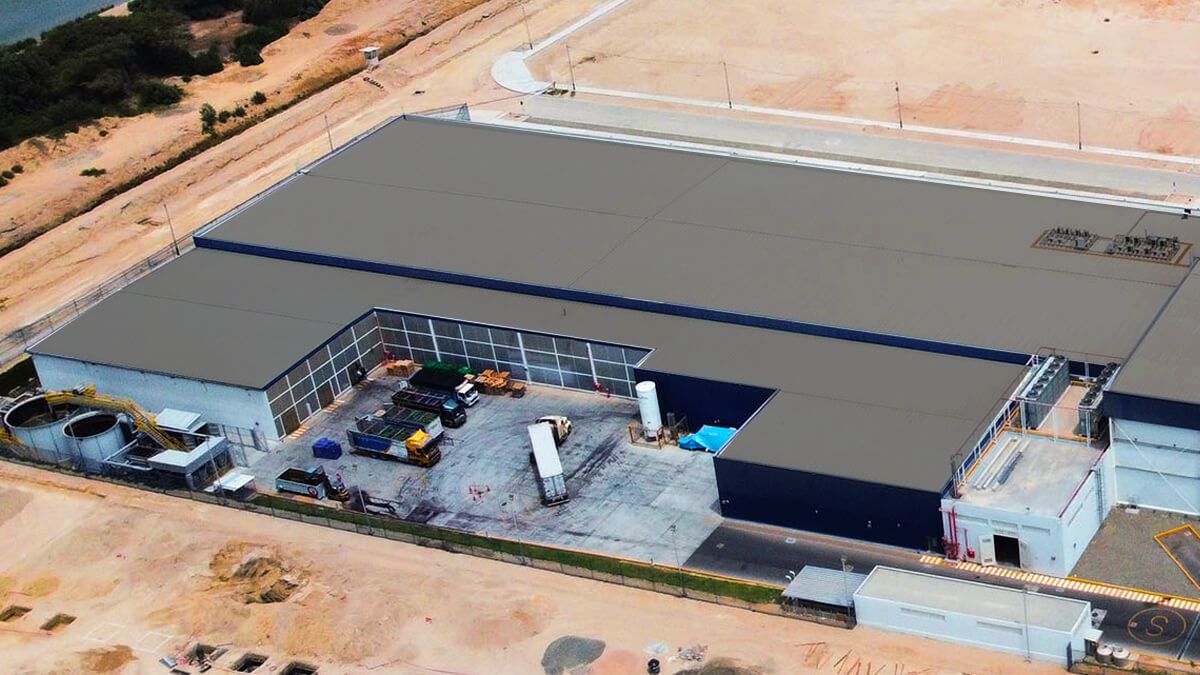
For Memphis Aerotropolis logistics facilities specifically, the scale of the buildings makes IR valuable when conditions are favorable - a 500,000 sq ft distribution building at 60 cores would require significant time and membrane disruption. A favorable October IR scan that narrows the search to 20 targeted core locations is materially more efficient. For smaller Memphis commercial buildings under 40,000 sq ft, the efficiency advantage diminishes and core sampling without IR is usually the right approach.
How We Combine IR With Core Sampling
The IR scan produces a thermogram with warm anomaly zones marked as probable moisture locations. We pull cores at each significant anomaly zone to confirm the finding - dry, damp, or wet. We also pull confirmation cores at several zones the thermogram read as dry to verify the IR interpretation is accurate for that specific building and membrane assembly.
This approach - IR to map, cores to confirm - lets us cover a large Memphis building with higher confidence than either tool alone at a lower total cost than a full-coverage grid-pattern core survey. IR alone produces probable locations without physical confirmation. Cores alone at the density needed to find all significant wet zones on a 200,000 sq ft building would require 50-60 pulls. IR plus targeted cores typically produces equivalent or better confidence at 20-25 pulls on the same building.
The combined deliverable is a moisture distribution map with each zone coded as confirmed-wet (core-verified), probable-wet (IR anomaly not yet core-confirmed), or dry (IR and core both clear). This three-level classification tells the owner where the confidence is high and where it is inferred - a distinction that matters when the capital decision is borderline.
Equipment and Report Format
We use FLIR commercial-grade radiometric thermal cameras calibrated for roofing applications. Thermograms are captured at full radiometric resolution and delivered in the report alongside the visible-light photograph of the same zone - every anomaly in the thermogram corresponds to a visible-light photo showing the membrane surface condition at that location. The comparison makes interpretation transparent: you can see what the surface looks like at the same location as the temperature anomaly.
The IR report is formatted as an addendum to the condition report - the moisture survey findings integrate into the full condition record rather than sitting as a separate standalone document. The zone diagram, the anomaly map, and the core confirmation results all use the same zone numbering system so the moisture data is directly comparable to every prior and future inspection on the same building.
Schedule an IR moisture survey for your Memphis commercial roof.
We assess whether IR conditions are favorable for your building and timeline, then combine scanning with core sampling to produce a moisture distribution map your capital decision can rely on. Call 901-808-8931 or use the form below.