Cordova's Wolfchase Galleria retail zone and the Germantown Parkway commercial spine carry some of the oldest suburban commercial roofing in Shelby County. We run regular inspection routes through this corridor and hold active maintenance accounts on several of the mid-rise office buildings along Dexter Road.
Cordova built its commercial core during the 1990s suburban expansion that followed the extension of Interstate 40 east through Shelby County. That construction wave produced the Wolfchase Galleria, the strip retail and big-box corridors along Germantown Parkway and Dexter Road, and a dense cluster of corporate and medical office buildings that drew tenants out of Midtown and the Poplar Avenue corridor. The roof systems installed on those buildings - mostly 45-mil EPDM and first-generation TPO - are now 25 to 30 years old. A significant share of Cordova's commercial inventory is in or past first major replacement.
Cordova's unincorporated status within Shelby County means commercial permitting runs through Shelby County rather than a city building department - a distinction that affects permit timelines and inspection scheduling compared to incorporated municipalities like Germantown or Bartlett. We know the Shelby County permit process and schedule accordingly. Our crews mobilize to Cordova from our Downtown office in under 30 minutes for emergency response calls.
Cordova Commercial Roof Inventory by Zone
Wolfchase Galleria and surrounding retail: The Galleria itself is a major-anchor regional shopping center - two levels, significant flat-roof area over the food court and anchor department store boxes. The pad sites and strip retail surrounding the Galleria on Germantown Parkway, Macon Road, and the I-40 service roads are predominantly mid-1990s single-tenant and multi-tenant retail. Flat roofs over 25,000 to 60,000 sq ft per building, most running original EPDM or early TPO that has been spot-patched but not replaced.
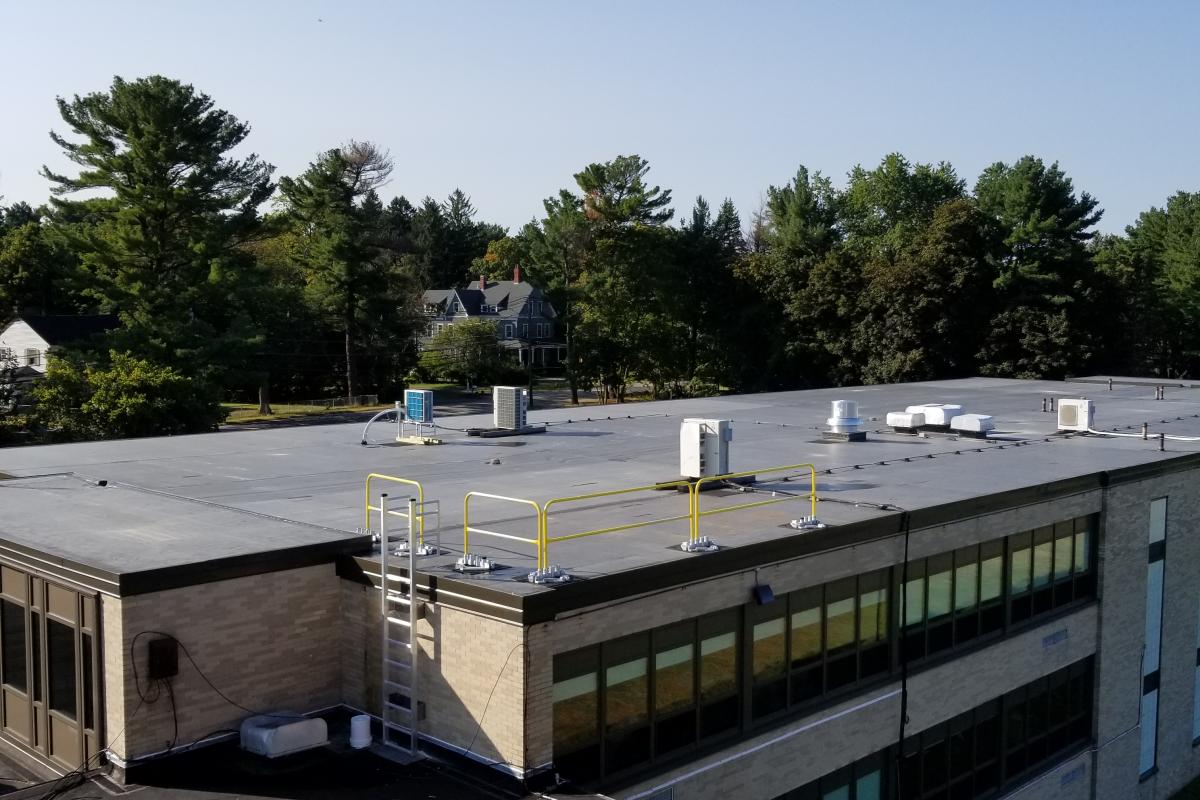
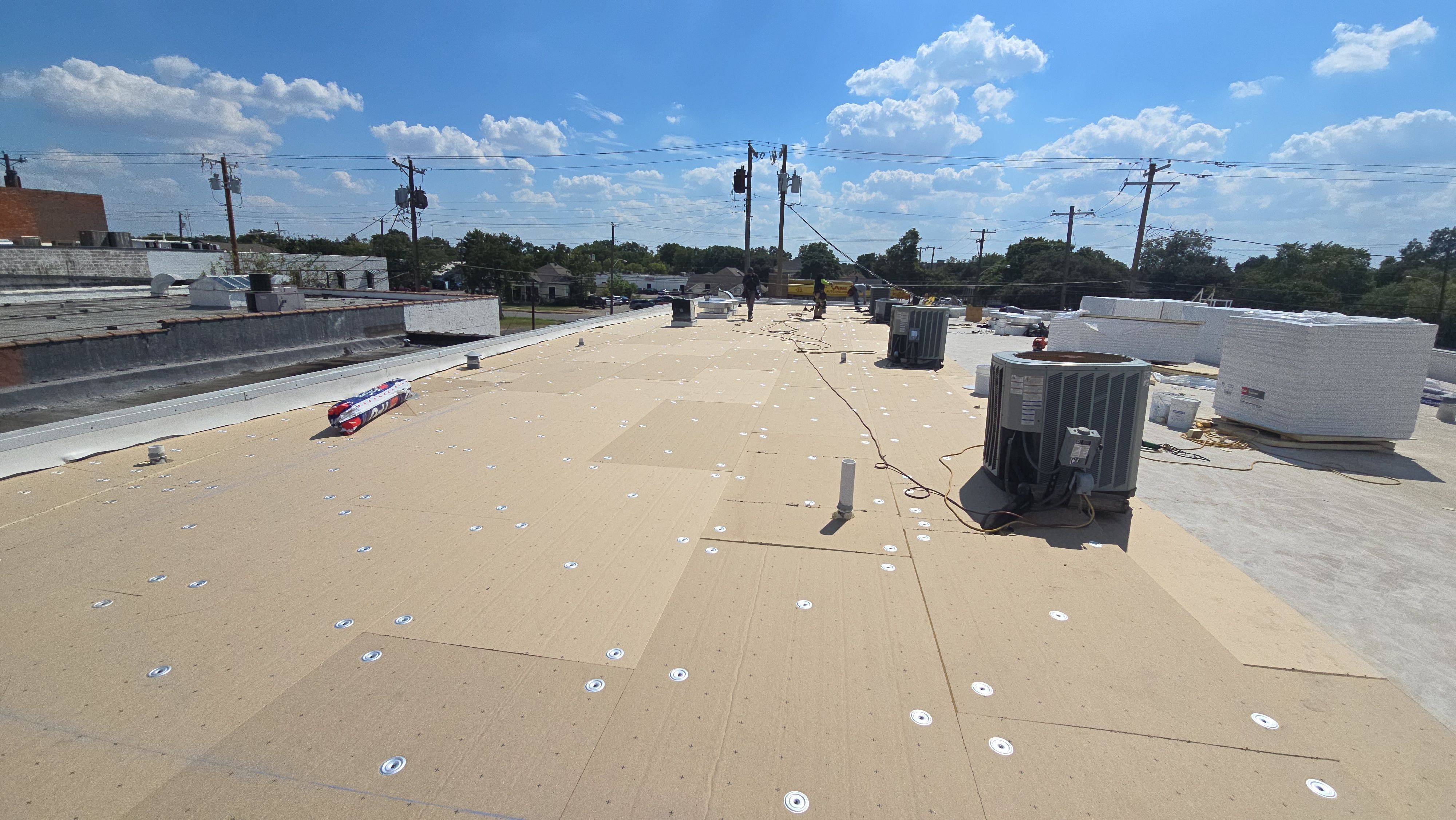
Dexter Road corporate corridor: Mid-rise and low-rise office buildings - insurance company regional facilities, healthcare administrative buildings, financial services firms - built between 1990 and 2005. The rooftop equipment density on this corridor is higher than typical suburban retail: multiple rooftop HVAC units per building, communication equipment, and on several buildings, backup generator exhaust stacks that require grease-tolerant flashing. We document every rooftop penetration on a zone diagram at inspection, not just the obvious ones.
Germantown Parkway restaurant and service retail: The fast-casual restaurant corridor along Germantown Parkway creates one of the most concentrated grease-exhaust penetration environments in Shelby County. Standard TPO and EPDM flashings degrade significantly faster at restaurant exhaust penetrations - the cooking exhaust deposits oils that attack the membrane chemistry at the flashing termination. We specify grease-rated flashing material at every restaurant exhaust penetration and verify exhaust cap condition as part of every maintenance visit on these buildings.
Age-Related Issues on Cordova's Commercial Inventory
Thirty-year-old EPDM shrinkage: First-generation 45-mil EPDM installed in the early 1990s has, in many cases, exceeded its intended service life on Cordova buildings. The specific failure mode we see most often is membrane shrinkage - the EPDM pulls back from perimeter termination bars and parapet flashings, opening gaps at the most water-vulnerable locations on the roof. Spot-patching shrinkage on a 30-year-old EPDM system extends life by months, not years. When we see this pattern on a Cordova building, we say so clearly rather than scheduling another patch visit.
Ponding from original drain placement: 1990s commercial buildings in Cordova were frequently designed with inadequate drain count for their actual drainage area. Memphis's heavy spring rainfall - March through May average exceeds 14 inches - creates ponding conditions that accelerate membrane deterioration on undersized drainage systems. Part of our scope work on these buildings includes documenting ponding zones, calculating the drainage area per drain against current code standards, and recommending drain additions or tapered insulation remediation where the math does not support the existing drain count.
Parapet brick-to-roof junction failures: Cordova's commercial buildings frequently feature brick parapet walls - an architectural detail that looks solid but is mechanically independent from the roof membrane. The silty clay loam under Shelby County expands and contracts seasonally, producing lateral parapet movement that eventually separates the counter-flashing from the brick. We inspect parapet flashing terminations at every visit because this is where water gets in before the building owner notices anything inside.
Cordova commercial roof inspection or scope?
Our project managers walk Cordova roofs regularly. If your building is in the Wolfchase corridor or along the Dexter Road office spine, we can usually schedule an inspection within the week.