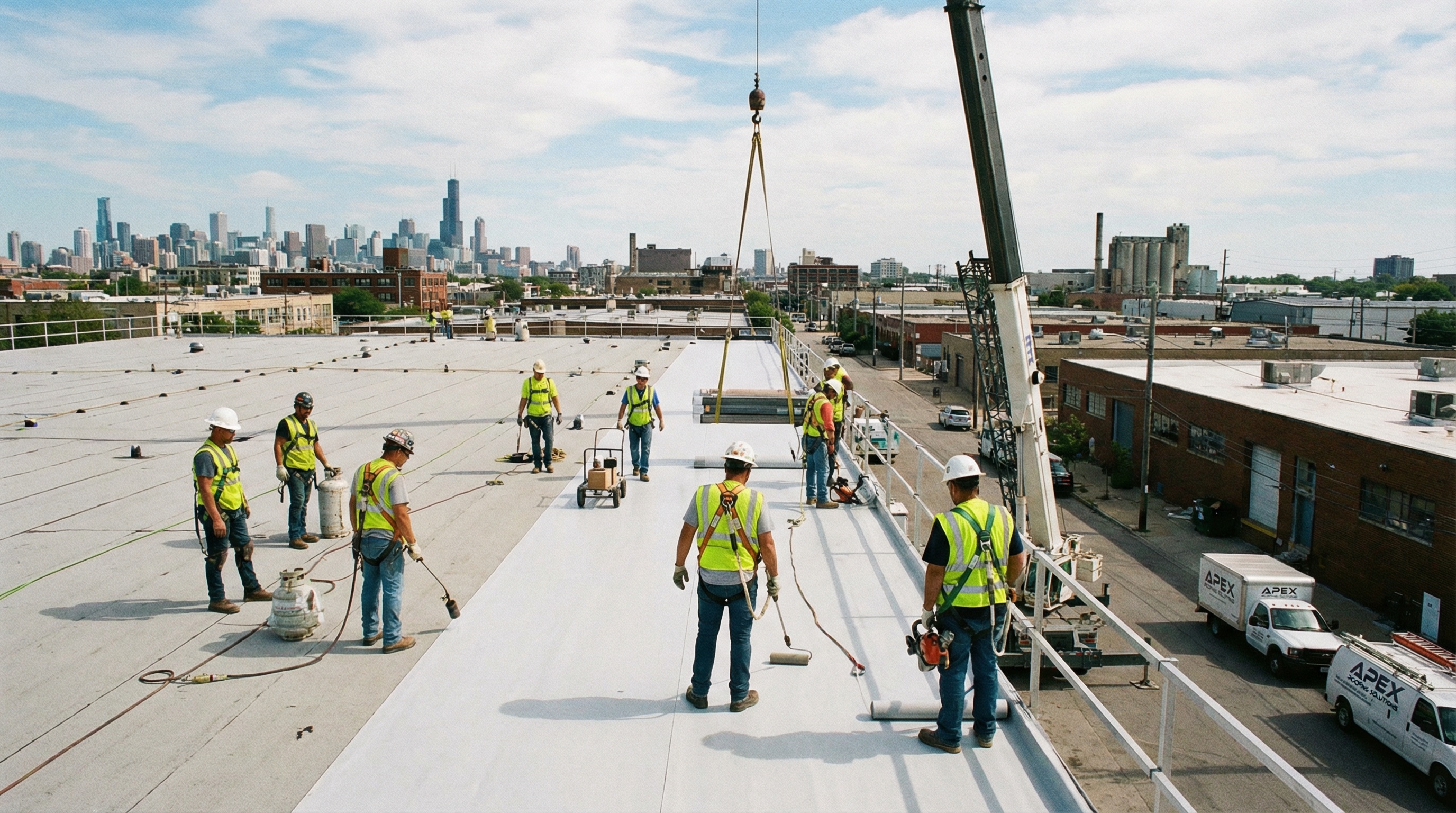
We apply a documented decision framework to the recover-or-replace question on aging Memphis commercial roofs - moisture survey, deck condition, warranty status, and capital horizon - and deliver a written recommendation the owner can take to a capital committee.
The replacement-versus-recover decision is the highest-stakes choice in commercial roof asset management. A recover option at 40-50% of full replacement cost is worth taking only if the existing insulation is dry, the deck is sound, and the capital horizon supports the extend-now, replace-later approach. A recover applied over wet insulation traps the moisture, accelerates deck deterioration under the insulation layer, and voids the new warranty - converting a $280,000 recover project into a $600,000-plus emergency replacement four years later.
Memphis's humid subtropical climate makes the recover-versus-replace question more consequential here than in drier markets. With 54 inches of annual rainfall and an average July dewpoint of 70°F, the rate of insulation saturation in aging commercial roofs is higher than in arid climates. On Memphis commercial buildings over 15 years old that we have cored during assessment work, we find saturated insulation at a rate that drier-climate contractors consistently underestimate. The moisture survey is not an optional data point in Memphis - it is the foundation of an honest recommendation.
The Four-Part Decision Framework
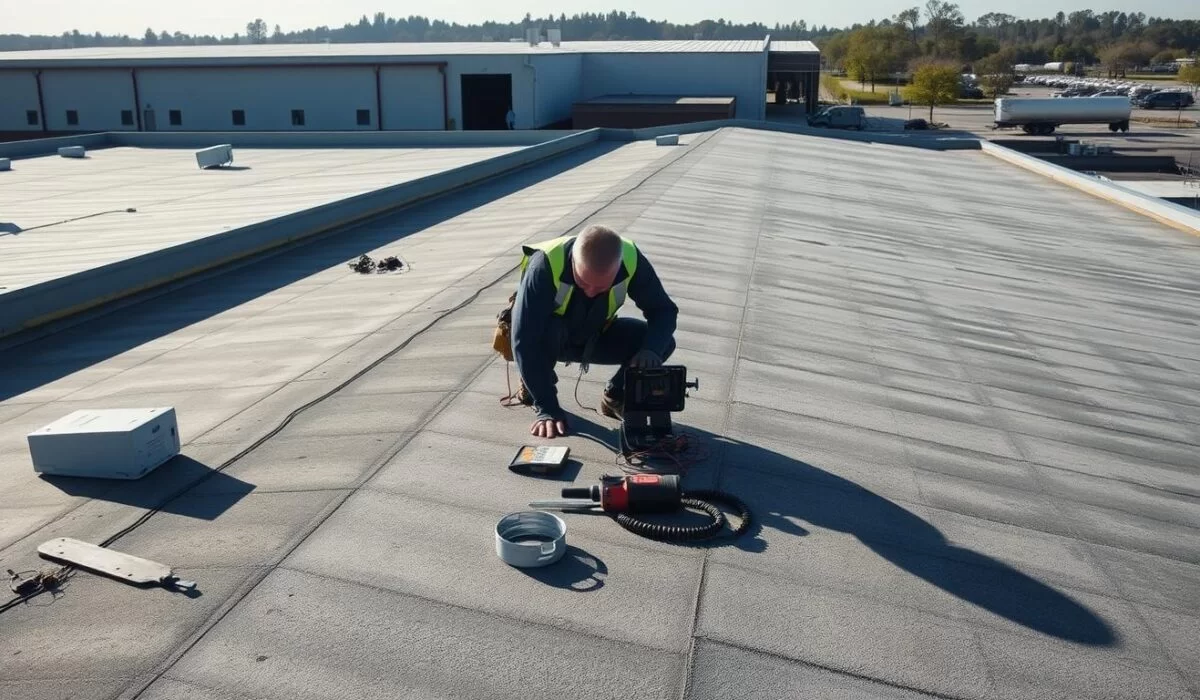
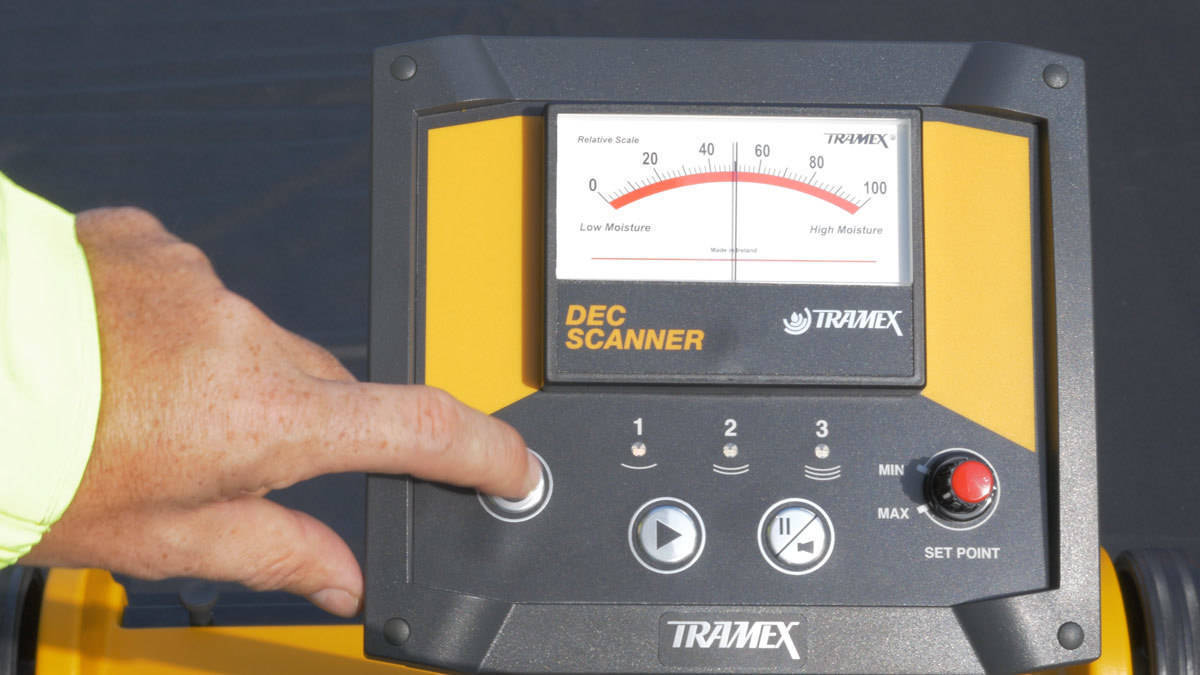
Part 1 - Moisture distribution: We core the existing roof system at a density of one core per 2,000-3,000 square feet of roof area, with additional cores at known wet zones identified by prior leak reports or infrared scan results. Each core is physically assessed for moisture and photographed. If more than 20-25% of the roof area is wet, we recommend replacement - recovering wet insulation traps the moisture and voids the new manufacturer warranty. If under 20%, the recover path is moisture-viable. Between 20-25%, the distribution pattern is decisive: concentrated wet areas that can be surgically removed before recovering are fundamentally different from diffuse saturation across the full field.
Part 2 - Deck condition: Wet insulation that has been wet for an extended period under Memphis's humidity and rainfall pattern eventually compromises the deck below it. On metal deck construction - the dominant deck type on Memphis commercial buildings from 1980 forward - we pull inspection ports at wet core locations and at any observable deck deflection points. Corroded metal deck at drain sumps and at parapet-adjacent fields fails the recover path. A building with 15% wet insulation but corroded deck under those wet areas needs full replacement plus deck repair, not a recover. On wood deck buildings - older South Memphis strip retail and some restaurant construction along the Beale Street corridor - rot under wet areas is the determining condition.
Part 3 - Warranty status: An active manufacturer warranty on the existing system is a material factor. Some manufacturers offer warranty term credit or continuation when the existing system is still in-warranty at recover time - conditions vary by manufacturer, and we document the existing warranty status, remaining term, and the specific manufacturer's recover-over-existing warranty policy before making the recommendation. A building with 8 years remaining on a Carlisle warranty is a different situation than a building running a 22-year-old roof with no active warranty.
Memphis-Specific Factors in the Recover Decision
Alluvial clay movement and parapet conditions: Memphis's Mississippi River alluvial subsoil expands and contracts seasonally, driving horizontal movement at parapet walls and building expansion joints that shows up as flashing separation and membrane stress at these transitions over time. On the recover-versus-replace decision, we assess whether the existing flashing conditions at parapets can be remediated to the recover manufacturer's warranty standard. If the parapet conditions require more extensive remediation than the recover cost advantage supports, the scope comparison narrows and replacement becomes more competitive.
Humidity-driven insulation saturation rate: Memphis averages 54 inches of annual rainfall with high humidity throughout the summer growing season. This combination drives insulation saturation in aging roofs faster than in drier markets. A building that is borderline on the moisture threshold (20-25% wet) in Memphis is more likely to cross the threshold within the next two to three years than a comparable building in a drier climate - which matters for the capital horizon analysis.
Tennessee IECC 2021 energy code at recover: Current Tennessee energy code requires minimum R-25 for low-slope commercial roof assemblies. A recover that does not add insulation to However, some lenders and some Memphis suburban municipalities have begun requiring code-compliance verification at recover as well as replacement. We confirm the applicable code and jurisdiction requirements before finalizing the recover recommendation.
What the Written Report Contains
Core log: Location of each core pull on the zone diagram, layer-by-layer description (membrane, cover board if present, insulation type and thickness, any prior recover layers, vapor barrier, deck type), moisture reading and condition assessment at each layer, and photograph of each core. The core log is the primary data source for the moisture distribution finding and the document a manufacturer needs to evaluate recover-warranty eligibility.
Deck condition summary: Inspection port findings and photographs with a map of locations where deck condition was assessed. Any condition that affects the recover recommendation - corrosion, deflection, section loss - is called out explicitly with photographs.
Warranty status documentation: Existing warranty document obtained from owner records or reconstructed from the manufacturer's warranty desk using the building location and approximate installation date, remaining warranty term, and the manufacturer's specific policy on recover-over-existing-system warranty eligibility.
Facing the recover-or-replace decision on a Memphis commercial building?
We pull cores, assess deck condition, document warranty status, and deliver a written recommendation with the data behind it - so your capital committee has what it needs to make the call. Call 901-808-8931 or use the form.