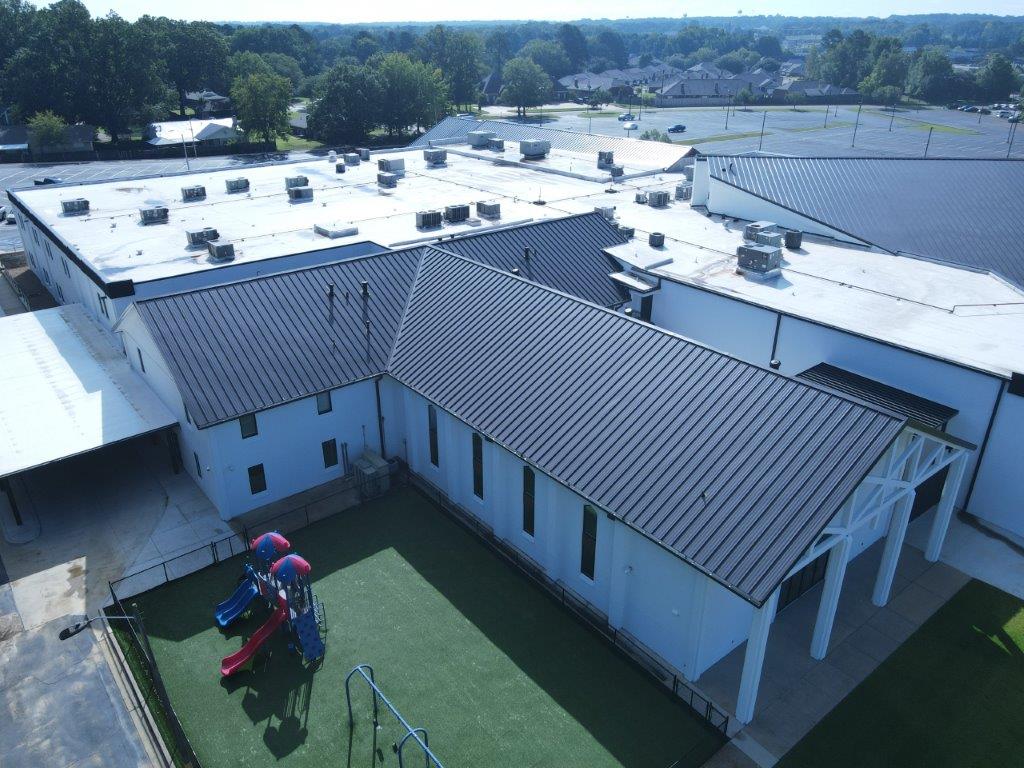
Memphis's religious building inventory spans pre-Civil War Downtown Memphis churches with steep-slope slate and terra cotta to Bellevue Baptist Church's large-format campus in Cordova. Each requires roofing expertise matched to the building type and the congregation's budget reality.
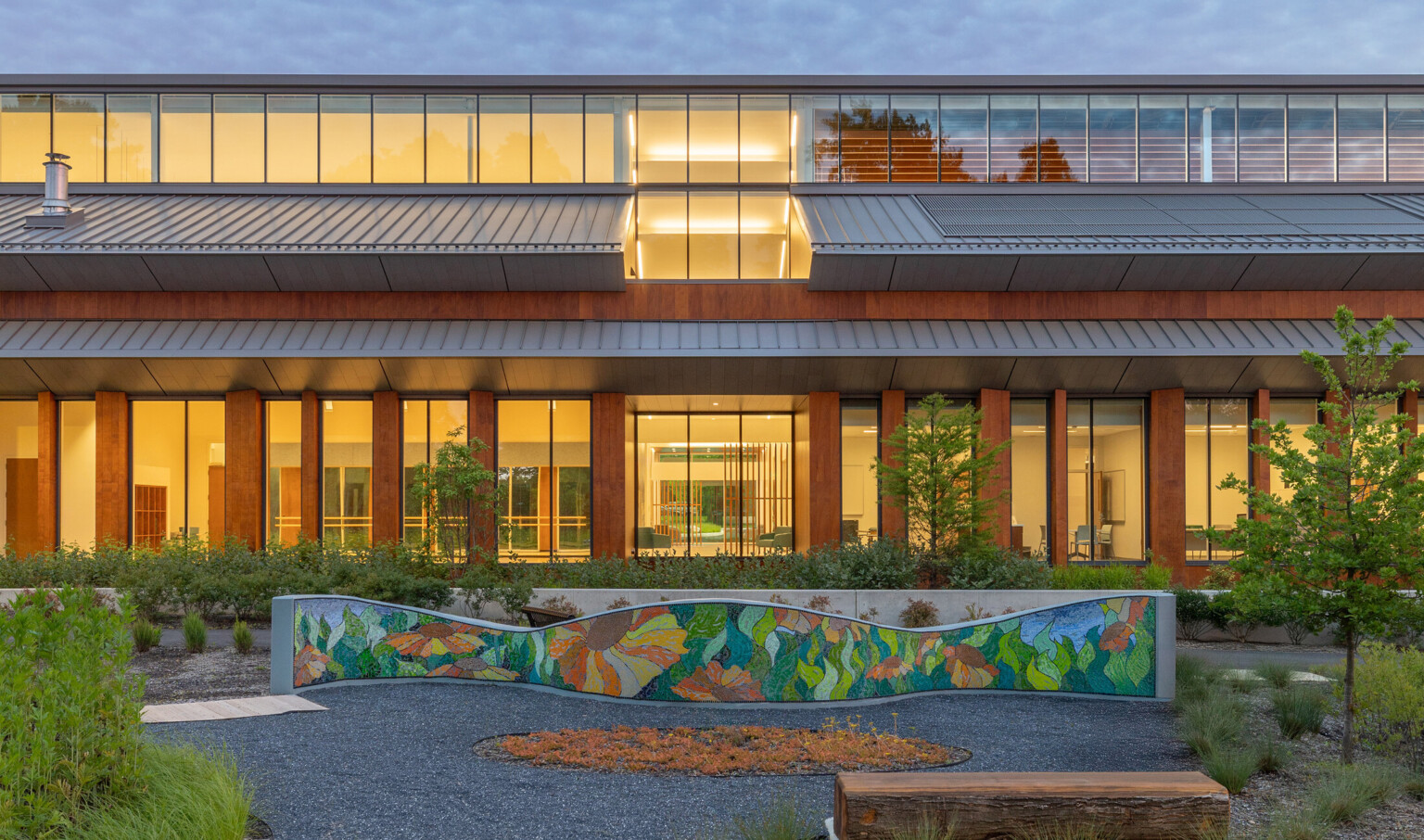
Memphis has one of the most architecturally significant concentrations of historic religious buildings in the Mid-South. Downtown Memphis's antebellum and Victorian-era churches - including the First Baptist Memphis campus on Poplar, Calvary Episcopal Church at (one of the oldest continuously operating churches in Tennessee), and the Mid-South Conference structures along Madison - carry roofs with steep-slope slate, copper flashing, and terra cotta tile that require specialized restoration skills, not standard commercial membrane contractors.
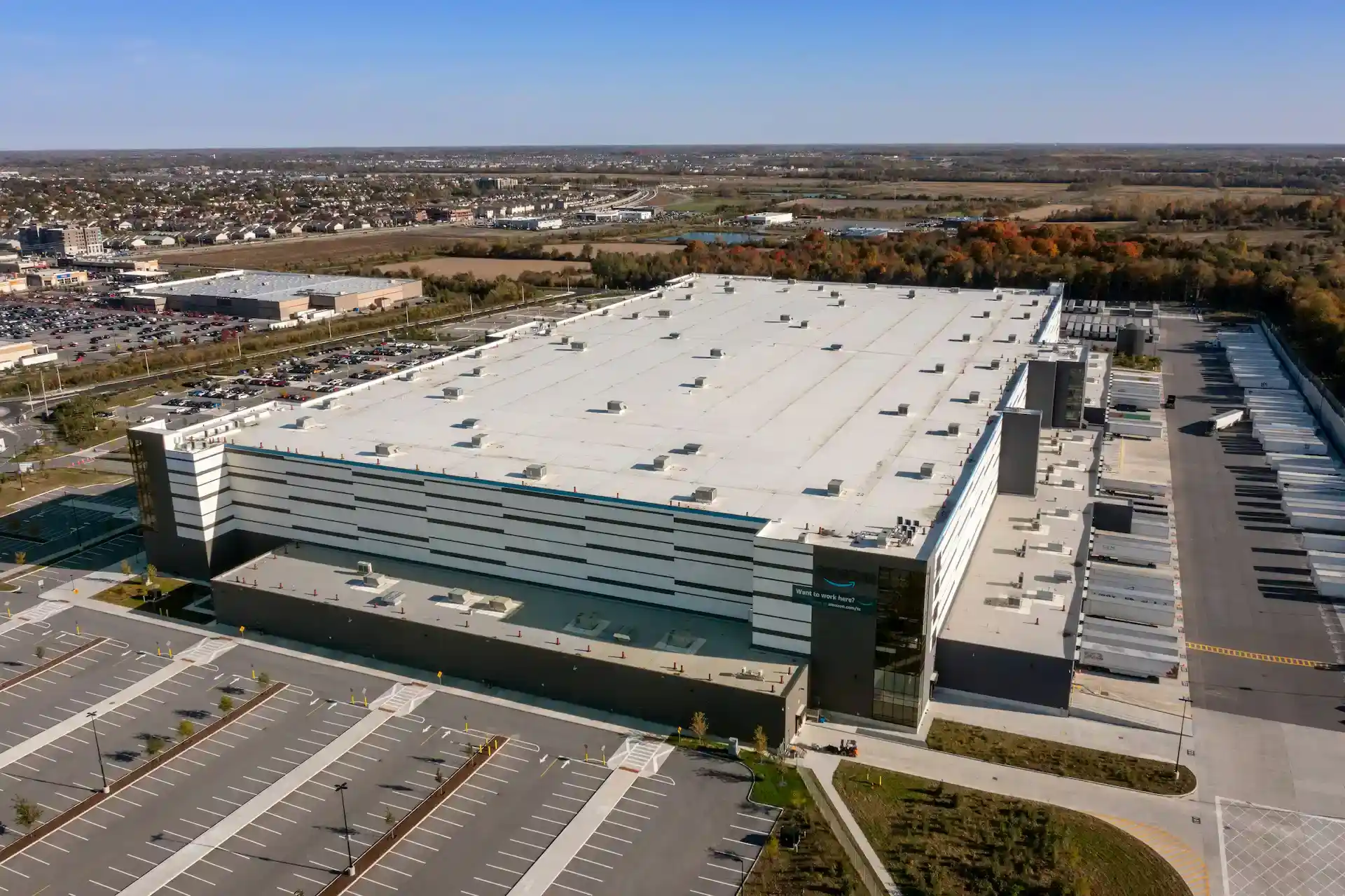
Bellevue Baptist Church's Cordova campus represents the other end of the Memphis religious roofing spectrum - a large contemporary church facility with multiple building sections, extensive flat and low-slope membrane roofing, and a facility management operation that functions more like a commercial property owner than a small congregation managing a single building. We have worked on religious facilities across this full range and understand the practical and financial constraints that church facility management involves - including the reality that congregational approval processes often run on a different timeline than commercial property decision-making.
Historic Downtown Memphis Church Roofing - Preservation-First Approach
The historic churches of Downtown Memphis include some of the oldest inhabited buildings in Tennessee. Calvary Episcopal, First Congo (First Congregational Church), and the other pre-Civil War and Victorian-era buildings along Madison, Poplar, and Second Street carry slate roofs, copper valleys, lead-coated copper flashings, and decorative terra cotta elements that require matching or historically appropriate replacement materials when damaged. Replacing a slate hip with asphalt shingles is not an acceptable repair on a landmark-reviewed building - it triggers Landmarks Commission review and can create compliance problems for a congregation that did not anticipate regulatory involvement in a roof repair.
We identify preservation jurisdiction before any scope work on historic Downtown Memphis religious buildings. For buildings listed on the National Register of Historic Places or within the Landmarks Commission's review area, we coordinate scope documentation with the congregation's facilities committee and, where required, with the State Historic Preservation Office's technical guidance on appropriate replacement materials for historic church roofing systems.
Contemporary Memphis Church Campuses - Bellevue Baptist and Multi-Building Congregations
Bellevue Baptist Church's Cordova campus covers multiple building sections - the main worship center, education wings, recreation facilities, and administrative buildings - with a mix of roof systems installed at different times as the campus expanded. Managing a multi-section church campus roof portfolio is structurally similar to managing a garden-style apartment community or a corporate office campus: condition documentation across all sections, replacement prioritization by urgency and budget cycle, and maintenance programs to extend sections that are not yet at end-of-life.
We approach large church campus roofing the same way: we walk every section, document conditions with photos and moisture cores where indicated, assign urgency ratings, and produce a campus-level capital plan that the facilities committee can present to the church leadership for budgetary approval. Congregational budget processes are often annual and tied to the church's fiscal year - we produce documentation on the timeline that supports that approval cycle, not the timeline that is convenient for us.
Budget Realities and Financing Options for Memphis Congregations
Religious organizations in Memphis - from small neighborhood congregations in South Memphis to large suburban campuses in Cordova and Germantown - often manage roofing capital on constrained budgets that cannot absorb a full replacement in a single fiscal year. Phased replacement - prioritizing the most critical sections in year one and deferring lower-urgency sections to years two and three - is a legitimate capital management strategy that we scope explicitly when we produce a multi-section condition assessment. We identify which sections can be extended with targeted repairs and maintenance, and which sections represent active leak risk that cannot wait.
We do not offer financing directly, but we can produce the scope documentation in the format required by SBA lenders and church-specific lending programs (several of which serve Mid-South congregations) for capital improvement financing. A well-documented roof condition assessment with photos, core data, and capital cost bands is more useful to a lender than a one-page bid.