Sports & Recreation Facility Roofing in Memphis
Recreation buildings sit at the center of neighborhood life across this city, and they rarely sit empty. The Memphis Parks community centers, the Kroc Center on South Bellevue, club soccer and volleyball facilities out toward Cordova and Collierville, the natatoriums tied to area schools and universities, and the private fitness and court clubs along Poplar all run programming into the night and across the weekend. That schedule, combined with the way these buildings are framed and conditioned, makes them a category we treat on their own terms rather than as oversized retail boxes.
Two structural realities drive the roofing on a sports or recreation building: the roof usually spans a long way with nothing underneath holding it up, and the air inside is often far more humid than a normal occupancy. Both have to be respected, or the roof works against the building.
Long Clear Spans Change How the Roof Behaves
A gym floor, a field house, or an indoor court complex puts a wide roof deck over open space with no interior columns to break it up. That span deflects and moves under wind and snow load far more than a short-bay roof, and it flexes the membrane, the seams, and the perimeter details every time the weather changes. The fastening pattern that holds a 30-foot bay is not the pattern that holds an 80-foot clear span, and assuming otherwise is how seams fatigue and edges pull loose. On every long-span building we evaluate the deck type and the actual span, then specify attachment and uplift resistance to match, rather than reaching for a default detail.
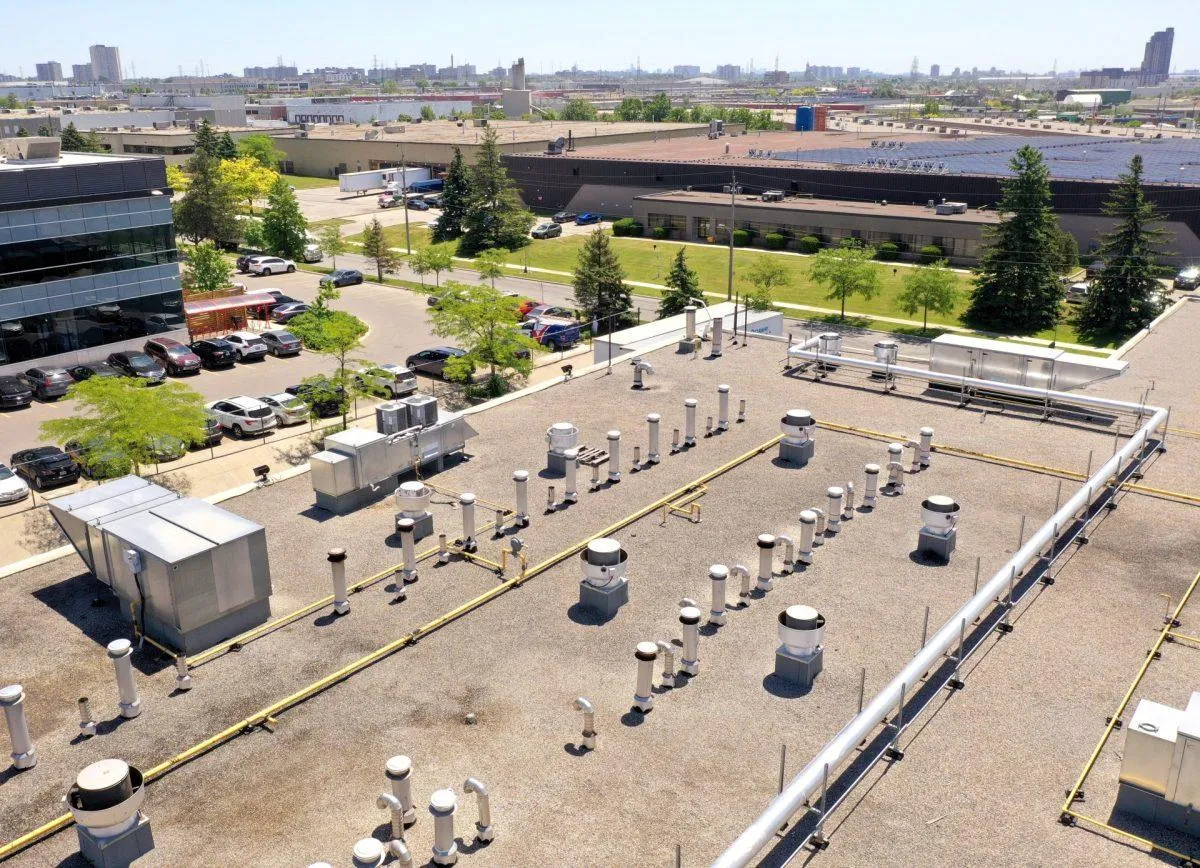
These roofs also carry serious rooftop mechanical, because a packed gym at peak hours throws off a lot of heat and needs heavy ventilation and cooling. Those big units add concentrated load and a cluster of penetrations to a deck that is already flexing, so we treat the curb and support details as engineered points, not afterthoughts.
An indoor pool is one of the most punishing environments a roof can sit over. The warm, chlorine-laden air rises and presses against the underside of the deck all day, and if the vapor barrier is missing or in the wrong place that moisture condenses inside the assembly, soaks the insulation, and corrodes the structure with no leak showing on the surface. Worse, the chloramine vapor that pools give off is aggressive: it attacks ordinary steel and aluminum flashing and can degrade some membrane adhesives over time.
Working Around the Programming Calendar
These facilities live and die by their schedules: youth leagues, swim meets, group classes, tournament weekends. We build the work around that calendar instead of fighting it, concentrating loud gym and court roof work into weekday daytime hours, confirming dry-in before evening programming starts, and coordinating any pool-hall ventilation or exhaust work with the aquatics staff so air exchange over the water is never compromised mid-session.
Questions Facility Managers Ask Us
How do you handle roofing over a natatorium or pool hall?
We place the vapor retarder correctly for the pool-hall conditions and the Memphis climate, survey the existing assembly for trapped moisture before we scope anything, and never simply recover over a wet natatorium deck. Solving the vapor drive is the whole job on a pool building.
What materials hold up against chloramine exposure near the pool?
We specify stainless steel or copper in the areas exposed to chloramine, confirm the membrane and adhesives against the manufacturer's chemical data, and avoid the standard metal details that corrode in a pool environment.
Can the facility stay open for programming during the project?
Yes. We concentrate the disruptive work in daytime windows, confirm dry-in before evening and weekend programming, and coordinate pool ventilation work with your aquatics staff so air exchange over the water is never interrupted during use.
Get Your Facility Roof Reviewed
If you run a gym, rec center, court complex, or aquatic facility in the Memphis area, reach out through our contact page. We will walk the roof, run a moisture survey where it is warranted, and put together a written plan that fits your programming calendar.