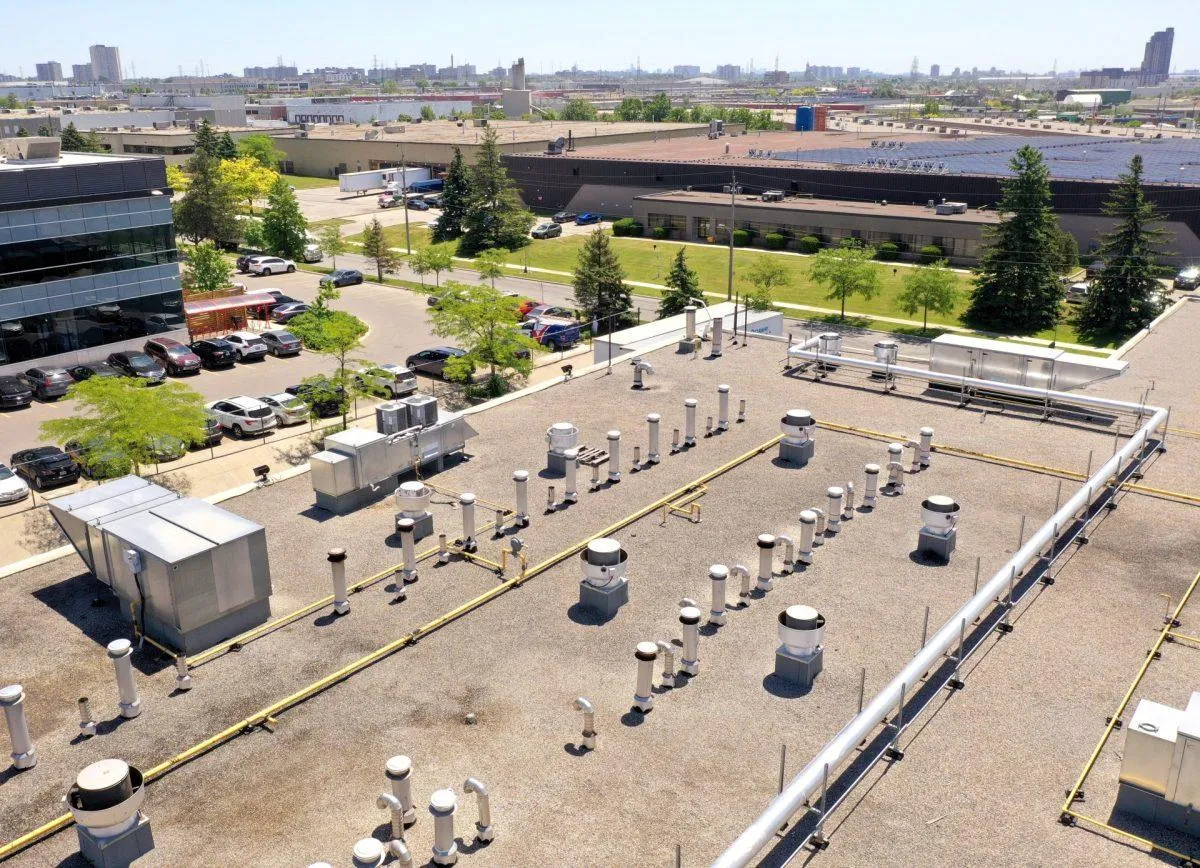
Food Processing Facility Roofing in Memphis
Food and beverage production runs deep in this city. The Smucker's coffee roasting operation off Hungerford Road, snack and bakery plants scattered through the Frayser and Raleigh industrial areas, beverage and cold-storage facilities clustered near the airport, and a long roster of co-packers and meat and poultry processors along the Lamar and Brooks Road corridors all keep product moving around the clock. We roof these plants knowing that the building below us is a regulated production environment, not a generic box, and that changes nearly every decision we make.
The two forces that define a food-plant roof are moisture and weight. Sanitation washdown and the process itself keep the interior air loaded with humidity, and the refrigeration that runs over chill rooms, freezers, and blast cells stacks real mechanical and thermal load onto the deck. Get either one wrong and the roof fails quietly, from the inside, long before anyone sees water on the production floor.
Washdown Humidity and the Vapor Drive
A processing floor that gets hosed down every shift pushes warm, wet air straight up against the underside of the roof deck. In Memphis summers, when the outdoor dew point sits high for weeks, that vapor wants to drive into the assembly and condense inside it. Without a properly positioned vapor retarder you get water forming inside the insulation, soaked facers, corroding steel deck, and eventually a structural problem with no external leak to warn you. We size and place the vapor barrier for this specific climate and for the plant's real interior conditions, because the assembly that works in a dry climate is exactly wrong here.
We also assume the deck may already be wet on an existing plant. Before recommending a recover or replacement we core the assembly and, where the history is unclear, scan it for trapped moisture. Laying a new membrane over saturated insulation just seals the problem in and voids the new warranty.
Over a freezer or blast cell, the roof has a second job: hold the thermal line of the cold chain. Ponded water over a freezer adds load to the refrigeration system and accelerates deck corrosion, so we use tapered insulation to drive drainage to the right outlets and we match the insulation strategy to the operating temperature of the space below. The condensing units, compressor racks, and refrigerant lines that sit up top also concentrate weight and traffic, and every one of those penetrations and supports has to be flashed and detailed to take it.
Building Around a Production Schedule
Most of these plants run two or three shifts with one sanitation window a week, and that window is often the only time we can open the envelope above an active line. We plan the phasing around your production calendar, confine envelope-opening work over production areas to the sanitation window with QA confirming the floor is clean and protected, and guarantee same-day dry-in so the line is never exposed when it starts back up. A summer thunderstorm into an open deck over a running line is the exact event we exist to prevent.
Questions Plant Engineers Ask Us
Can you reroof without shutting down the production line?
Usually yes. We confine the work over active production to your weekly sanitation window or a planned shutdown, dry in the same day, and keep work over non-production areas moving on a normal schedule. We never leave an open deck over a running line.
How do you keep roofing materials compliant with our food-safety plan?
We confirm every product, membrane, adhesive, primer, and sealant, against your food-safety plan and QA requirements before installation. We do not assume a standard roofing detail is acceptable over a food contact area.
How do you handle roofing over refrigerated and cold-storage bays?
We use tapered insulation to eliminate ponding over refrigerated bays, match the insulation to the space temperature, and detail every condensing-unit and line penetration so it carries its load without leaking. Standing water over a freezer is both a deck-corrosion and an energy problem, and we design it out.
Schedule a Plant Roof Assessment
If you run a food or beverage plant in the Memphis area and want a roofing contractor who understands washdown humidity, refrigeration loads, and the rules that govern what goes over a production floor, reach out through our contact page. We will assess the roof and deliver a written scope focused on your shifts and sanitation window.