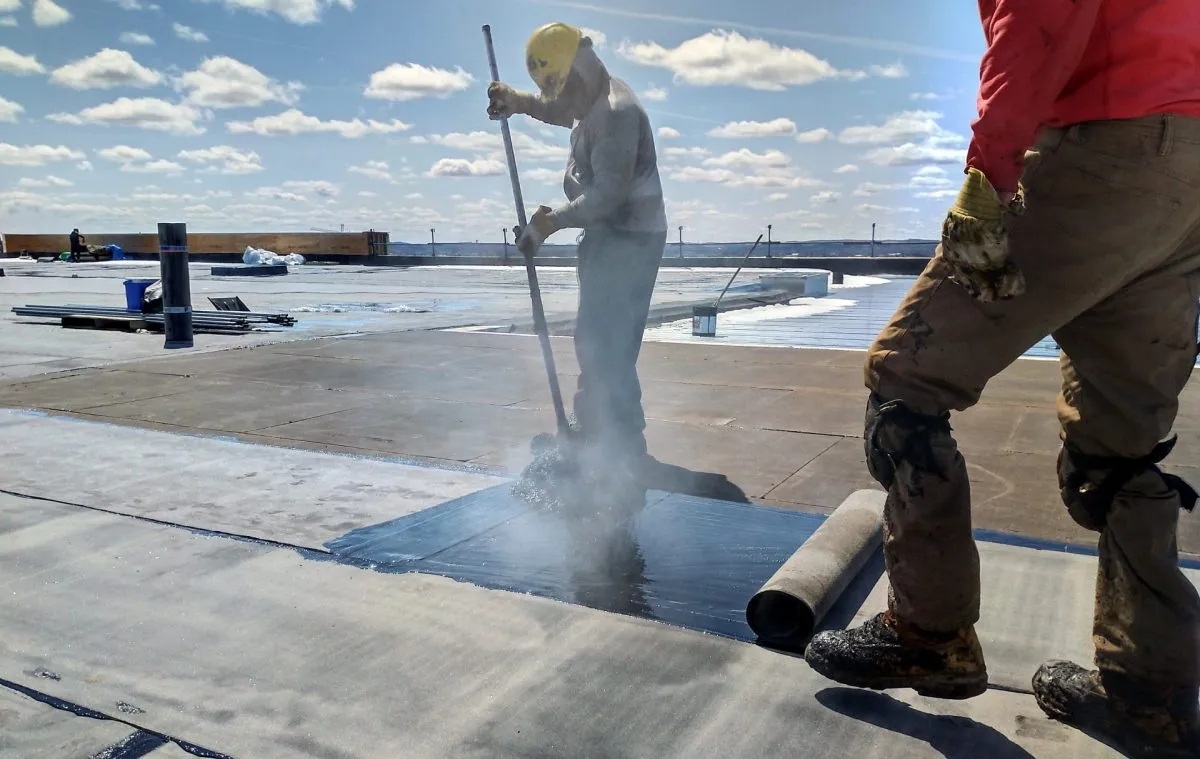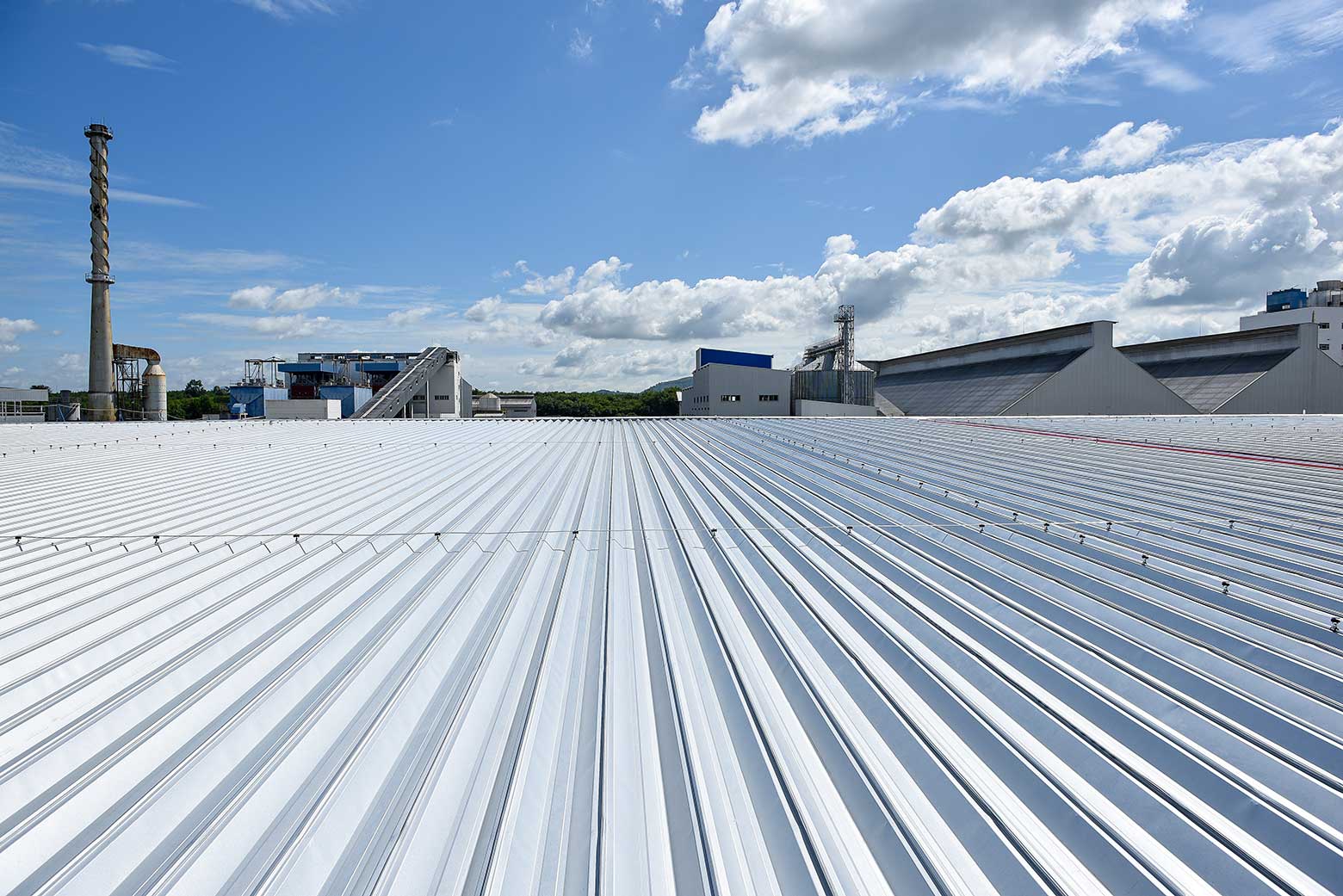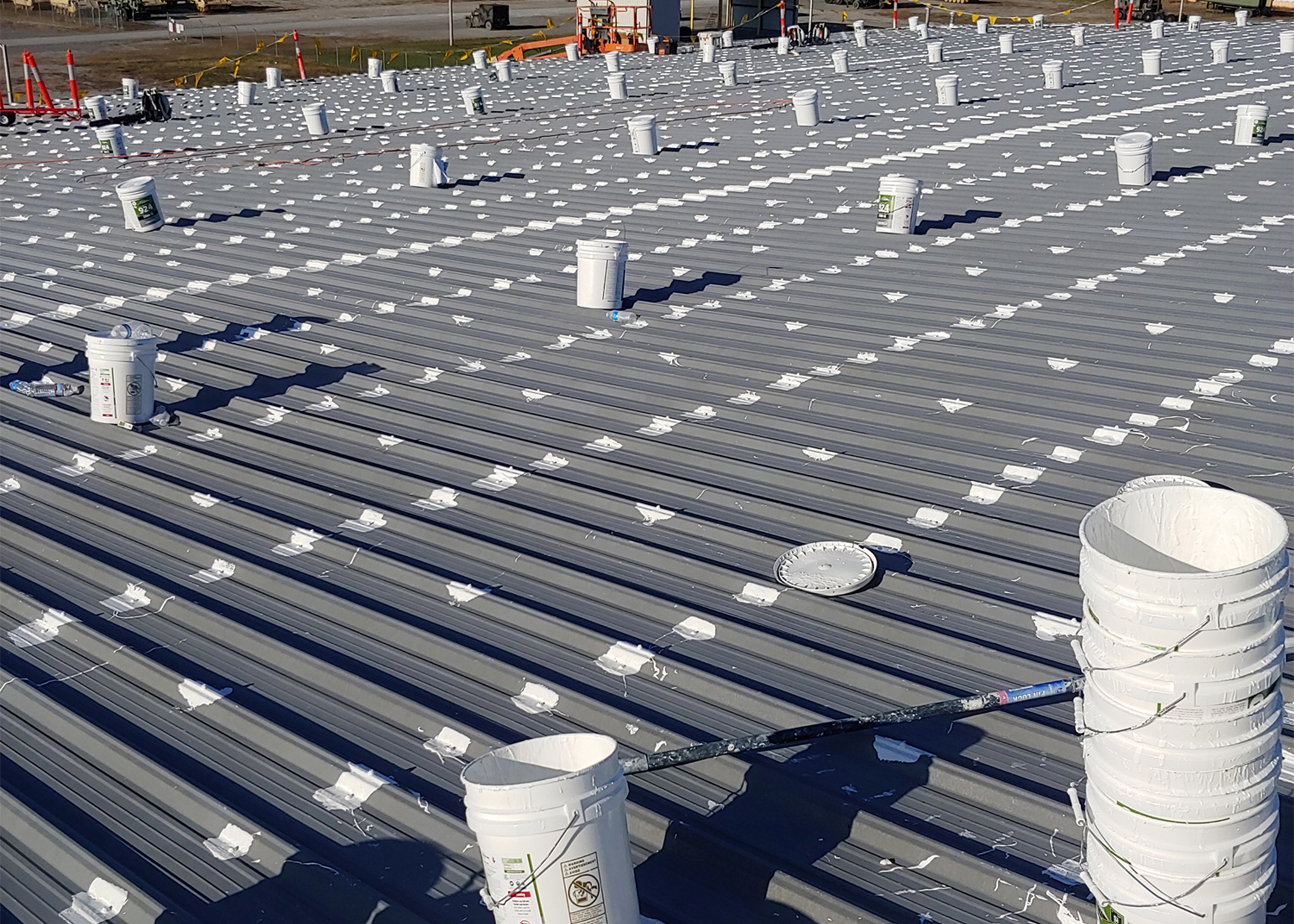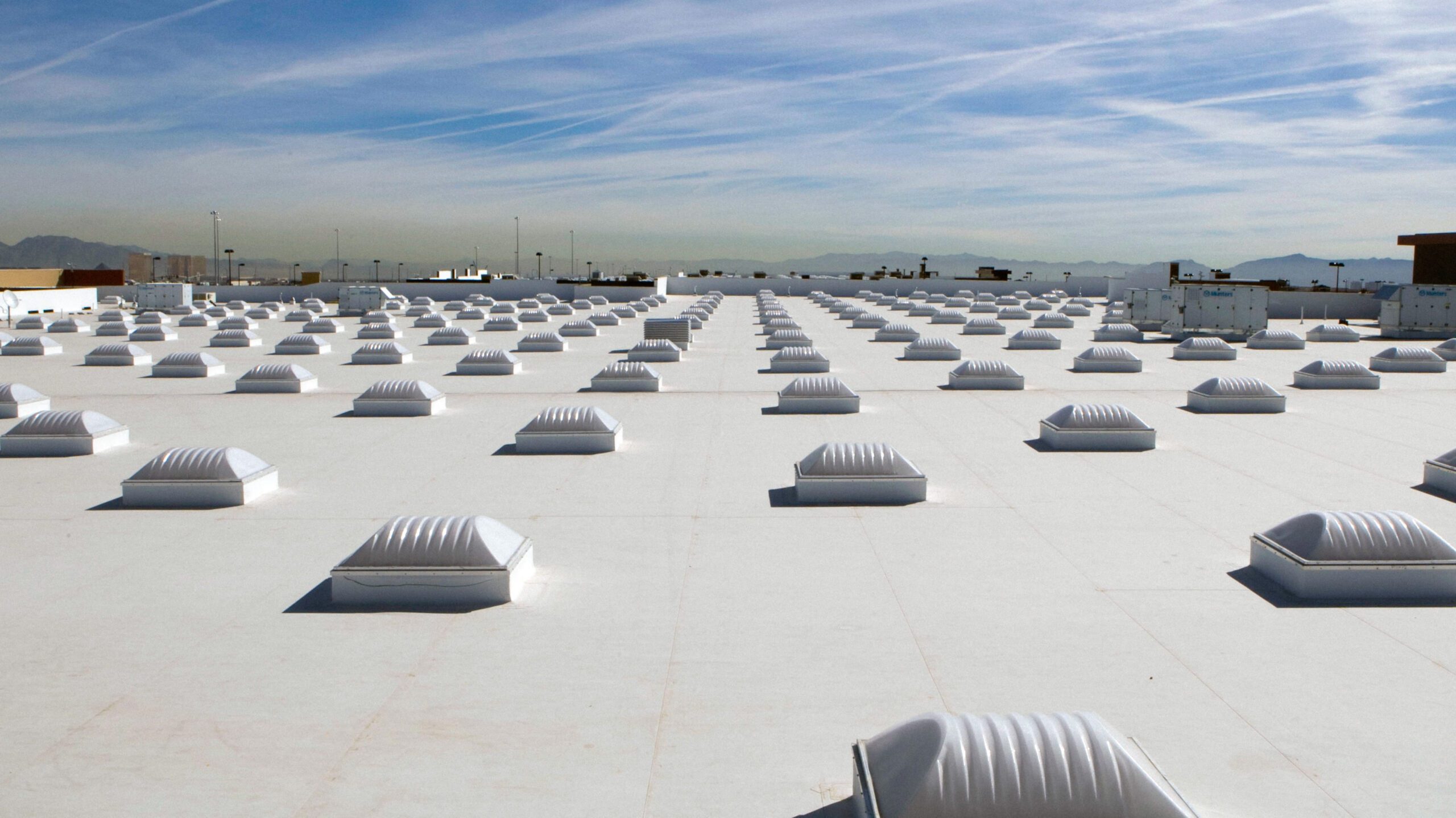
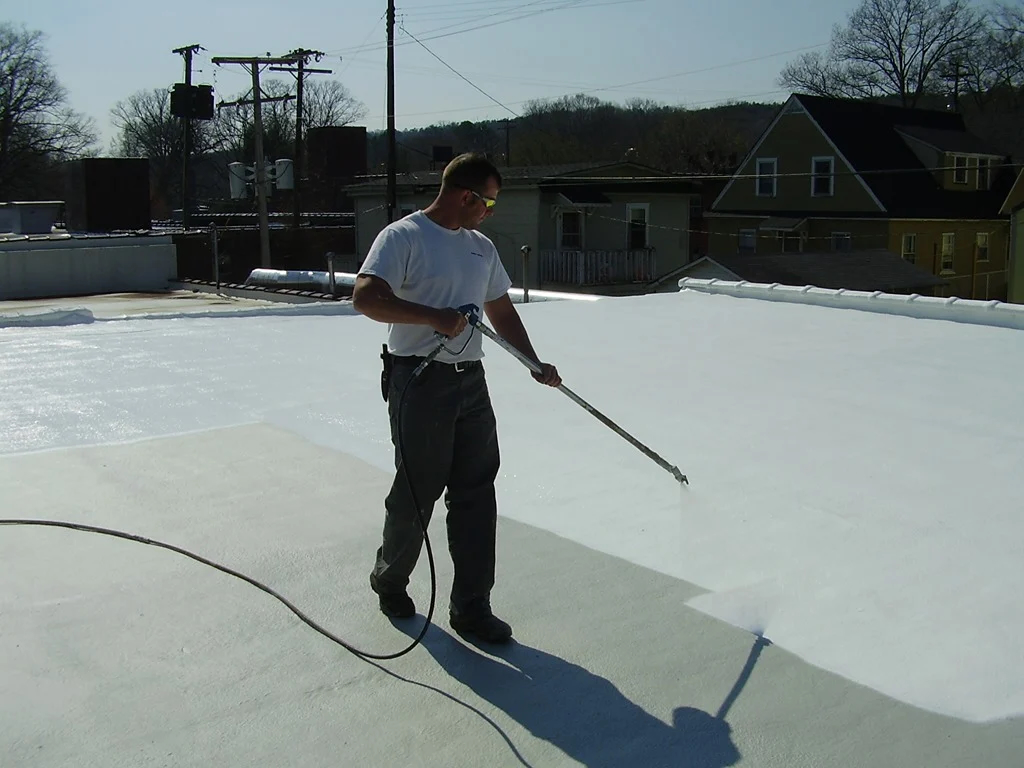
SPF roofing is the highest-R-value commercial roofing system available - a monolithic foam installation that eliminates thermal bridging, fills substrate irregularities, and carries a silicone topcoat that provides long-term UV and weather protection for Memphis commercial buildings.
Spray polyurethane foam roofing is a two-component system - polyol and isocyanate - mixed and applied in the field as a liquid that expands to a closed-cell foam monolith, bonded directly to the substrate. The result is a seamless, self-flashing roofing system with an R-value of approximately 6.0 to 7.0 per inch - significantly higher than polyiso insulation board at equivalent thickness. For Memphis commercial buildings where the energy performance of the roof assembly is a priority, SPF delivers more R-value per inch of added thickness than any other system.
SPF application in Memphis requires careful attention to weather conditions. The two-component foam reacts during application, and ambient temperature, humidity, and wind speed all affect the reaction and the resulting foam quality. Memphis's high summer humidity - dewpoints regularly at 70°F or above in July and August - requires application scheduling during morning hours when dewpoints are lower and before the afternoon peak temperature drives off-ratio mixing issues. We schedule SPF projects with weather monitoring and halt application when conditions fall outside the manufacturer's parameters.
SPF System Components and Topcoat Requirements
The foam itself is the substrate and the thermal layer - closed-cell SPF at 2 to 3 inches of installed thickness provides R-12 to R-21. A 3-inch application on a Memphis commercial building brings the roof assembly to or above the Tennessee IECC 2021 R-25 minimum in a single pass, often with less total roof height addition than a stacked polyiso assembly.
The topcoat is the UV protection layer - SPF foam degrades rapidly under UV exposure without a protective coating. Silicone is the standard topcoat for commercial SPF roofing in Memphis, applied at a minimum of 20 mils DFT over the cured foam. The silicone topcoat is not a secondary product - it is the weather and UV barrier for the entire system, and its application thickness and adhesion to the foam surface directly determine the warranty term. We specify silicone topcoat application over SPF to the same manufacturer standards I apply to standalone silicone coating projects.
Warranty terms for SPF systems with silicone topcoat run 10, 15, or 20 years depending on topcoat mil thickness, manufacturer, and foam application quality documentation. The manufacturer requires foam thickness verification (typically via core samples at multiple locations) and topcoat mil verification before issuing the warranty. We document both at closeout.
Memphis-Specific SPF Applications
Older commercial buildings with irregular substrates: Buildings from the 1960s and 1970s in the South Main Arts District and Midtown with concrete deck substrates that have settled, cracked, or been repaired multiple times present a challenge for board insulation - the boards telegraph the substrate irregularity and create high spots that membrane systems must bridge. SPF fills the irregularities and creates a smooth, monolithic surface without the mechanically complex leveling work that board insulation requires on uneven decks.
Cold storage and refrigerated warehouse at the Aerotropolis: SPF's superior R-value per inch and its seamless application make it a strong candidate for cold-storage buildings where thermal performance directly affects refrigeration operating costs. A 4-inch SPF application on a cold-storage roof delivers R-28 and eliminates the thermal bridging at fasteners and joints that mechanically attached board systems produce. The seamless application also eliminates the vapor intrusion pathways that board joints create in cold-storage environments.
Churches and institutional buildings with complex geometry: Memphis's large institutional building inventory - particularly the historic churches of Midtown and Downtown - includes buildings with complex parapet configurations, multiple roof levels, and penetration densities that make flat-panel installation difficult. SPF's liquid application conforms to any geometry without custom fabrication, making it particularly useful on buildings where the roof geometry changes frequently at transitions.
SPF Application Conditions and Quality Control
Ambient temperature must be above 50°F for SPF application, and substrate temperature must be above the dew point - no surface moisture. Memphis's spring season (March-May) is the most challenging scheduling period for SPF: temperatures are adequate but dewpoints are high and rainfall is frequent. We schedule SPF projects for late September through November and for late February through March when Memphis delivers the best combination of adequate temperature and manageable humidity.
Wind speed is the other constraint. SPF overspray in moderate wind conditions can travel significant distances and deposit foam on neighboring buildings, vehicles, and HVAC equipment. I scope wind screens on every Memphis SPF project where adjacent property is within the overspray zone, and I halt application when wind exceeds the manufacturer's threshold.
Foam quality verification is mandatory. We pull core samples at a minimum of five locations on every SPF project to verify foam thickness, cell structure, and adhesion to substrate. Foam that exhibits large irregular cells - indicating off-ratio mixing or application in out-of-spec conditions - does not carry the manufacturer's warranty and must be removed and re-applied. I do not accept a warranty closeout without confirmed core results.
Evaluating SPF for a Memphis commercial building?
We will assess the substrate, the building's energy performance objectives, and the application conditions, and tell you whether SPF delivers better lifecycle value than membrane alternatives for your specific building.