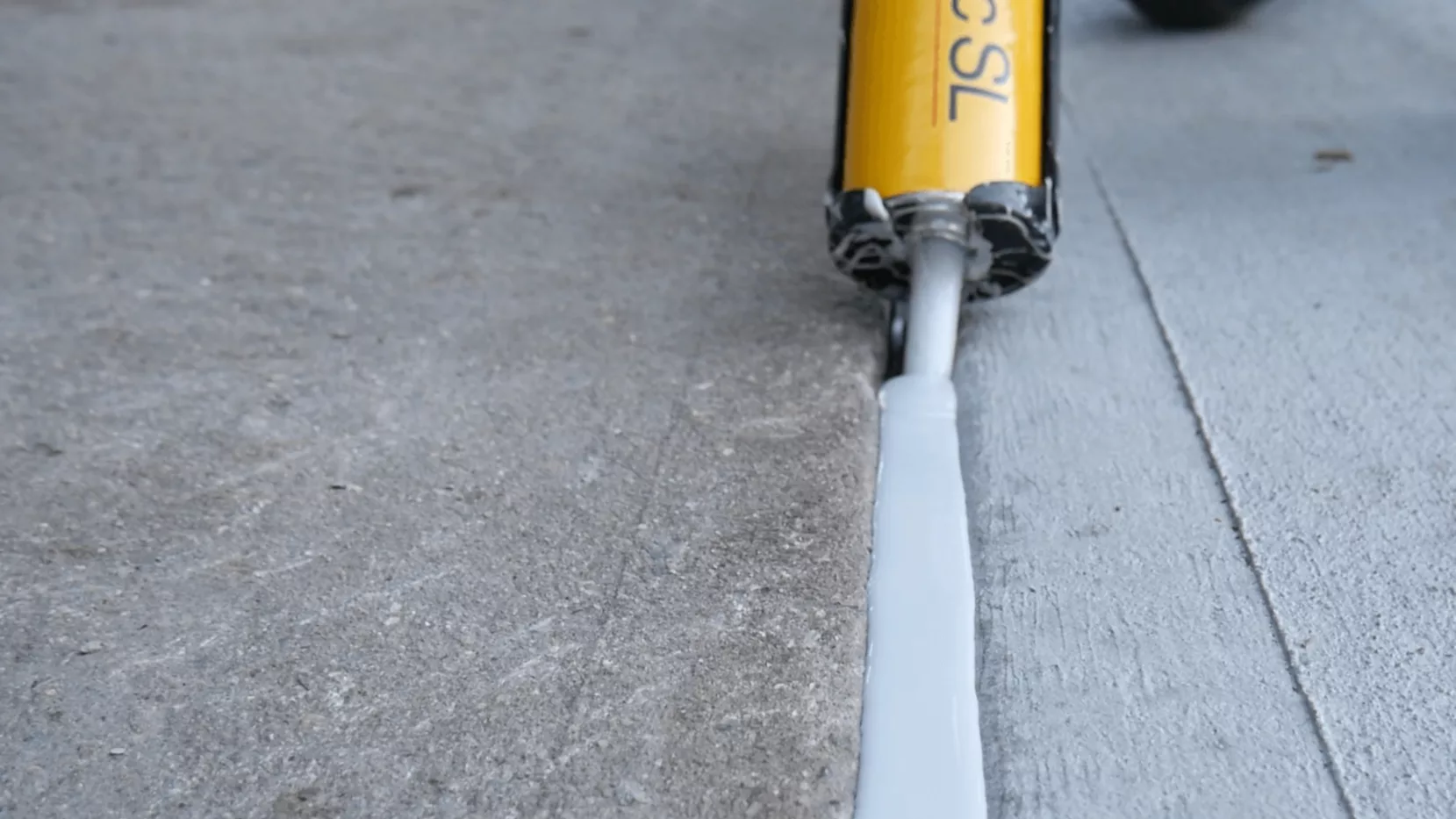
Memphis buildings on silty clay alluvial subsoil move more than most American commercial markets. Expansion joint cover assemblies that cannot accommodate that movement fail - we restore and replace them with details specified for Memphis's actual movement profile.
An expansion joint in a commercial roof is designed to accommodate structural movement between adjacent building sections - thermal expansion and contraction, foundation settlement, and in Memphis's case, the seasonal movement driven by the silty clay alluvial deposits under virtually the entire metro. When the expansion joint cover assembly fails, the joint becomes an open water entry pathway at exactly the location where the two building sections have separated. Water enters, runs down into the insulation on both sides of the joint, and produces interior leaks that are difficult to trace because the entry point is at the joint, not at either of the adjacent membrane fields.
Memphis's movement environment is more demanding than most American commercial markets. The Mississippi River alluvial subsoil expands and contracts with the city's wet-spring, drier-summer moisture cycle. Buildings on this substrate experience lateral movement at foundation and parapet level that larger building sections - distribution warehouses, office complexes, medical campuses - address with designed expansion joints. Those joints must be covered with assemblies specifically rated for the movement magnitude the building actually experiences.
How Memphis Building Movement Affects Expansion Joint Assemblies
Thermal movement: Memphis rooftops cycle from below freezing in winter to 155°F+ surface temperature in July. A 300-foot building section expands and contracts approximately 1.5 to 2 inches across that temperature range, depending on deck material. Expansion joints must accommodate this movement repeatedly, annually, without fatigue failure at the cover assembly attachment points. Metal cover assemblies with bellows configurations handle this movement range; foam-filled cover strips with surface laps do not, and typically show lap separation within three to five years on Memphis large-format commercial buildings.
Soil-driven lateral movement: The silty clay alluvial subsoil contracts during dry summer periods and expands during the wet spring. On buildings with foundations that do not reach stable soil below the alluvial layer - common in the older commercial districts close to the riverfront - this soil movement produces measurable lateral displacement between adjacent foundation sections, which transmits to the structural expansion joint between building sections. We have documented lateral movement at Memphis expansion joints of up to 3/4 inch across a single seasonal cycle on older buildings near Downtown.
New Madrid Seismic Zone: Memphis sits directly above one of the most active seismic zones in North America. A significant New Madrid event would produce horizontal acceleration that loads expansion joints in shear - a loading mode that most standard cover assemblies are not designed to accommodate. We specify expansion joint cover assemblies with seismic movement capability on buildings where the structural engineer's seismic design requires it.
Expansion Joint Cover Assembly Types and Selection
Two-piece metal cover with bellows center: The standard for Memphis commercial roof expansion joints that must accommodate more than one inch of movement. Two aluminum or stainless steel flanges, each mechanically fastened to the adjacent roof section with isolated fasteners, connected by a formed metal bellows that absorbs movement in all three axes - compression, extension, and lateral shear. Covered by a cap piece with compatible membrane flashing on each flange. This assembly accommodates three to six inches of movement without fatigue failure.
Foam-filled neoprene cover: The lower-cost alternative used on joints expected to move less than one inch. A formed neoprene strip, foam-backed, bonded and mechanically fastened across the joint. Simple to install, adequate for low-movement joints, but not appropriate for Memphis buildings with soil-driven movement. We do not specify foam-filled covers as a permanent repair on any Memphis commercial building showing documented movement above one inch - it will fail again.
Fluid-applied expansion joint systems: A newer category of expansion joint cover using a reinforced fluid-applied membrane system - typically a high-elongation silicone or polyurea base with a woven fabric reinforcement across the joint gap. These systems can accommodate one to two inches of movement with high elongation characteristics. Installation is faster than two-piece metal assemblies and produces a seamless watertight cover across the full joint length. We specify fluid-applied systems on joints where the movement profile is confirmed at one inch or under and where the aesthetic or access requirements make metal assemblies impractical.
Repair Scope - What Expansion Joint Restoration Involves
Diagnosis first: We walk the full expansion joint length - not just the section above the interior leak - and document the cover assembly condition, the movement pattern (whether the joint shows tension, compression, lateral shear, or a combination), and the flange-to-membrane condition on both sides of the joint. A failed joint cover that is replaced without understanding the movement pattern will be replaced again in five years with the same result.
Removal and preparation: Existing cover assembly removed, joint faces cleaned, and existing flange membrane flashing removed. We inspect the joint substrate - concrete slab edge, steel frame, or masonry - for deterioration at the joint face. Spalled concrete at the joint face, missing mortar, or corroded steel at the joint edge is addressed before the new cover assembly is installed.
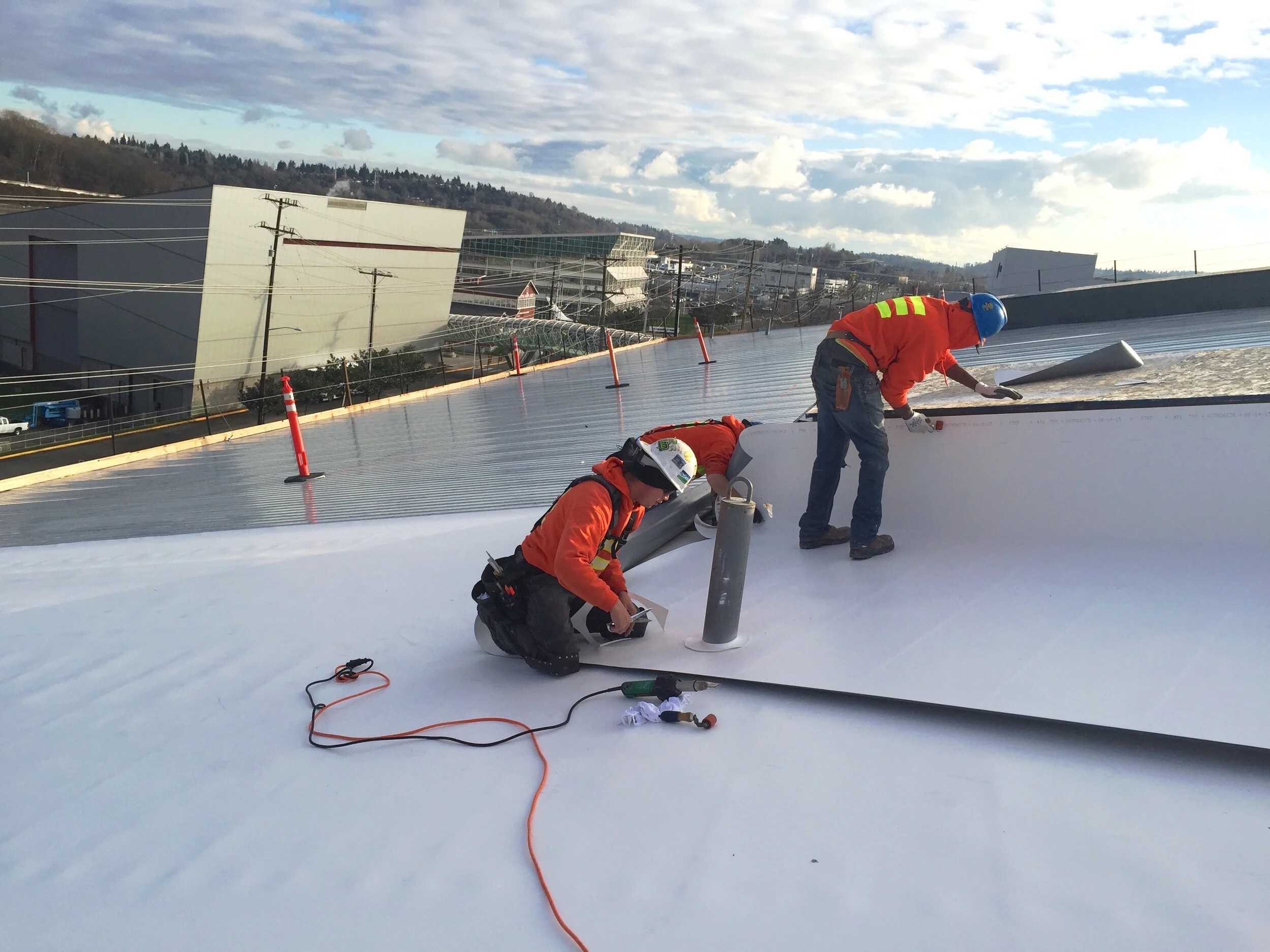
Installation and membrane integration: New cover assembly installed with isolated fasteners that allow the flanges to move independently of the adjacent membrane field. Membrane flashing is stripped into the existing roof field on both sides using compatible materials and heat-welded or adhesive seam. The transition from the expansion joint cover to the adjacent membrane field is the most technically demanding part of the installation - improperly detailed transitions fail first.
Expansion joint failure on a Memphis commercial building?
We diagnose the movement pattern, specify the right cover assembly for your building's actual movement profile, and install with full membrane integration and documented closeout.