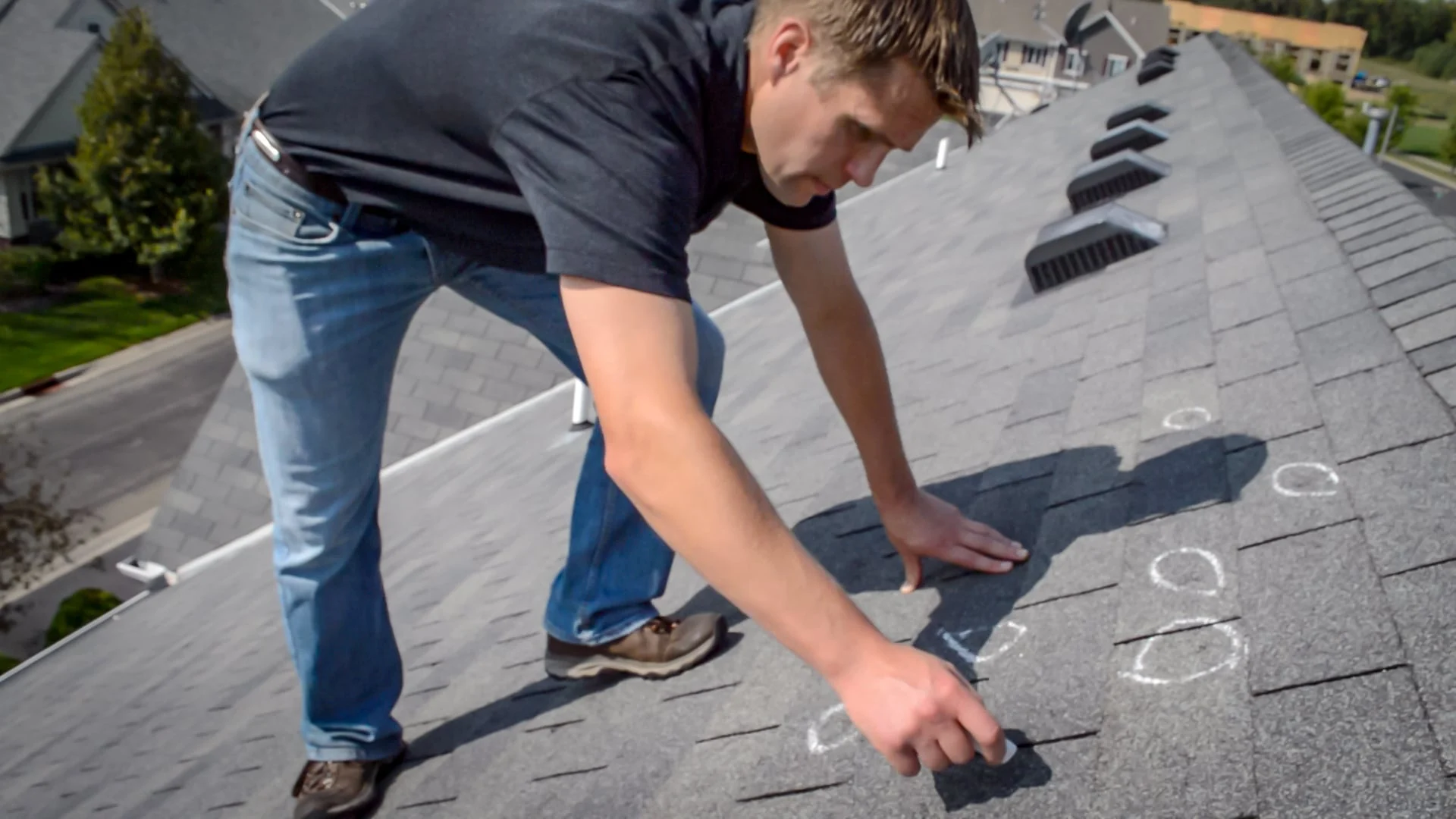
Memphis spring storm season brings regular large-hail events across Shelby County. We document the damage, produce insurance-formatted inspection reports, and repair what hail actually damaged - not everything on the roof.
Memphis sits in an active hail corridor. The same storm track that drives tornadoes up the Mississippi River valley delivers significant hail events to Shelby County every spring - March through June sees the highest hail frequency, with events producing stones of one inch or larger recorded multiple times per decade across the metro. The April 2020 storm that crossed northern Shelby County deposited two-inch hail on parts of Bartlett and Cordova. The March 2023 event moved through the southern suburbs. Memphis commercial roof owners who do not have a post-storm inspection protocol in place are leaving insurance documentation on the table every hail season.
Hail damage on commercial flat roofs is less visible than on sloped commercial shingles, which leads some Memphis building owners to assume their flat roof survived when it did not. A TPO membrane struck by one-inch hail may show no immediate water penetration - but the impact craters, granule displacement at flashing edges, and spatter patterns at drain sumps document a loss event. The membrane degradation at impact points accelerates UV breakdown and reduces service life by years. Insurance adjusters require documented evidence of the damage, not a general statement that the roof was struck.
What Hail Actually Does to Memphis Commercial Flat Roofs
TPO membrane: Hail impact on TPO produces surface cratering at the point of impact. Stones under one inch rarely penetrate 60-mil TPO - but they displace the membrane surface chemistry, creating localized UV degradation accelerators that shorten the affected area's remaining life. Stones above 1.25 inches can produce punctures in 60-mil systems, particularly at seam edges and perimeter zones where the membrane is under tension from mechanical attachment. Large-stone events (1.75 inches or larger) produce visible punctures that create immediate water intrusion pathways.
EPDM membrane: More puncture-resistant than TPO due to its thermoset rubber composition, but the impact pattern is still documentable. EPDM hail damage typically presents as surface spatter patterns and, in severe events, seam separation at impact zones where the membrane was driven against the seam adhesive bond.
Flashing and metal components: Parapet cap metal, roof drain rings, HVAC curb coping, and edge metal fascia are significantly more vulnerable to hail impact than the membrane field. Aluminum components dent visibly at one inch or larger; galvanized metal deforms at 1.5 inches. Metal flashing damage is often the primary documentation evidence in insurance claims, because it is unambiguous and measurable. We document metal damage with caliper measurements of dent depth and diameter, which adjusters use to estimate stone size.
Insurance Claim Documentation - What We Produce
Inspection report with impact mapping: Each roof section documented independently with impact count, impact zone pattern (field, perimeter, corner, drain area), estimated stone size based on impact diameter and metal dent measurements, and an overall damage classification (cosmetic, functional degradation, full loss). This is the format most insurance adjusters use to evaluate commercial flat roof hail claims in the Memphis market.
Photo log keyed to roof plan: Every impact site photographed with a reference scale in frame. Photos are labeled with section ID and location on the roof plan. A claim with 40 photos numbered sequentially is less useful to an adjuster than 40 photos keyed to a map - we produce the latter.
Moisture survey correlation: On buildings where post-storm moisture intrusion is suspected, an infrared moisture survey correlated with the impact documentation is the most complete insurance submission package. The moisture survey shows where the hail damage has already produced water infiltration into the insulation system - evidence that goes beyond surface damage to documented consequential loss.
Repair Protocols for Hail-Damaged Commercial Membranes
Field membrane puncture repair: Clean and dry the impact zone, apply compatible membrane patch with heat-welded or adhesive seam (matched to the existing membrane type), probe-test to manufacturer specification. We do not tape-patch hail punctures on commercial membranes - tape patches are a temporary measure that fail within one to two Memphis wet seasons.
Perimeter and flashing restoration: Dented or displaced metal flashing is refastened and re-caulked where the damage has compromised the seal. Where metal is deformed beyond functional restoration, replacement sections are fabricated and installed with compatible fasteners and sealant. We photograph before-and-after at every flashing replacement location.
Manufacturer warranty coordination: Hail damage to a warranted roof system creates a warranty claim scenario. Most manufacturers distinguish between manufacturing defect claims (covered by NDL warranty) and storm damage claims (which may be covered by the building's property insurance rather than the roofing warranty). We document the distinction clearly and provide the technical language that supports whichever claim path is appropriate for your situation.
Post-hail inspection and documentation for your Memphis commercial building.
We inspect the full roof, document impact evidence in insurance-formatted reports, and scope the permanent repair based on what was actually damaged by the storm.