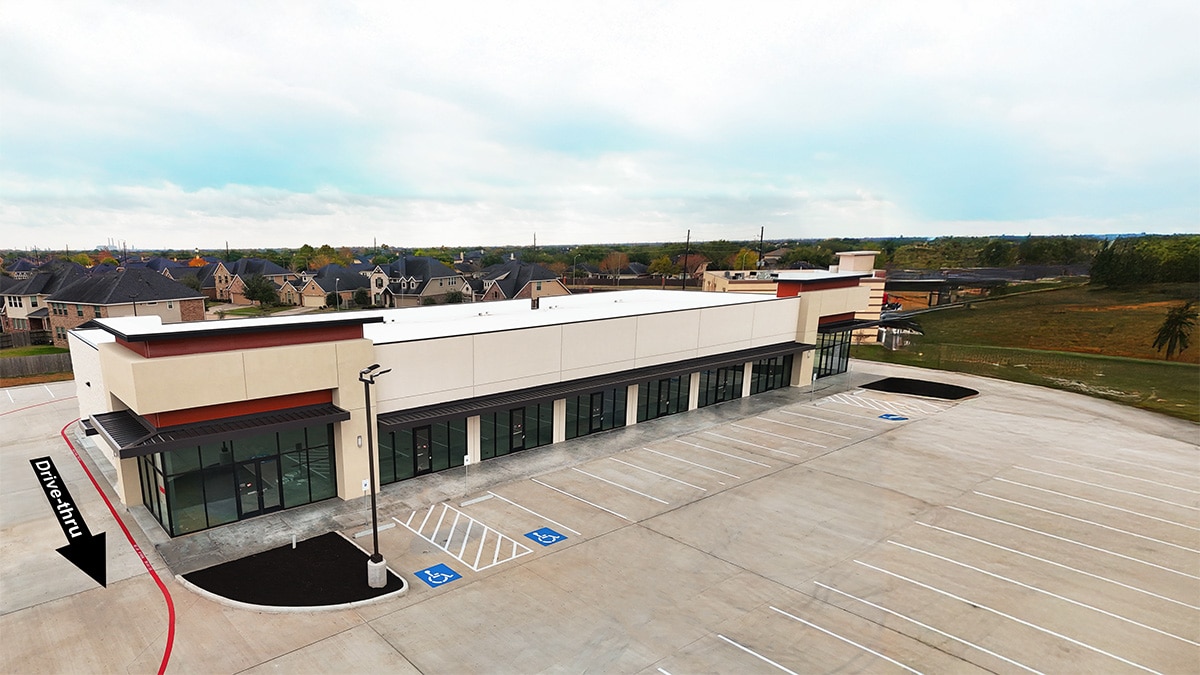
Memphis retail real estate runs along a series of commercial corridors that reflect the city's sprawling east-west geography, from the dense strip commercial districts along Summer Avenue and Covington Pike in the northeast to the major retail clusters around Wolfchase Galleria in Bartlett, the Germantown Parkway corridor in the suburbs, and the older commercial inventory along Winchester Road and the Lamar Avenue corridor heading toward Southaven across the Mississippi line. The city's position at the convergence of multiple interstate systems makes it a regional retail anchor for parts of Tennessee, Mississippi, and Arkansas. Every strip mall, power center, and big-box store in this market relies on flat roofing systems that must survive Memphis's demanding climate: subtropical summer heat and humidity, ice storms in winter, and spring tornado season that brings severe weather events requiring immediate post-storm roofing response.
TPO roofing systems dominate new installation and replacement projects across Memphis's commercial retail sector. The white membrane surface provides meaningful energy benefit during the long Memphis cooling season - summer heat and humidity combine to make air conditioning a major operating cost for retailers, and a reflective roof surface that reduces heat transfer through the deck makes a measurable difference in cooling loads for anchor stores with large square footages. The seam strength of heat-welded TPO is particularly relevant in a market where tornado-associated wind events can deliver powerful uplift forces. Properly installed TPO with code-compliant attachment rates at perimeter and corner zones provides superior wind resistance compared to older membrane systems with adhesive-bonded laps.
Retail and Shopping Center Roofing in Memphis, TN Scope Notes
Memphis ice storms create a winter roofing challenge that differentiates the city from warmer Gulf Coast markets and colder Great Lakes markets alike. The freezing rain events that hit Memphis every few winters - sometimes severe enough to close the city for days - coat flat retail roofs with ice that adds structural load, forces water under any compromised flashing detail, and creates conditions where the freeze-thaw cycling of the warming period afterward accelerates deterioration. Post-ice-event inspections should be a standard protocol for Memphis retail property managers. The 72 hours after a significant ice event, as temperatures climb back above freezing and the ice load melts, is when pre-existing marginal flashing details reveal themselves by leaking into tenant spaces.
HVAC penetrations on Memphis retail rooftops are heavily loaded due to the extended cooling season. Strip mall rooftops in commercial corridors like Germantown Road and Poplar Avenue often support dense arrays of rooftop units serving inline tenants plus larger equipment for anchor spaces. Condensate production during the humid Memphis summer is substantial, and condensate lines must be routed through internal drains or properly pitched to discharge points where the moisture doesn't pool against curb bases or membrane edges. Biological growth - algae and moss - flourishes in Memphis's humid environment wherever moisture accumulates consistently on rooftop surfaces, creating staining and, over time, conditions that accelerate membrane surface degradation if not addressed through periodic cleaning.
The Wolfchase Galleria cluster in Bartlett and the surrounding power center development represent some of the highest-value retail real estate in the Memphis metro, with institutional-quality landlords who manage to professional standards. The CAM structures in these major retail centers treat roofing as a carefully budgeted line item, with capital reserves set aside for eventual membrane replacement and maintenance costs tracked against annual benchmarks. Smaller landlords managing strip plazas along corridors like Stage Road and Macon Road can benefit from applying the same discipline - annual roofing inspection, documented repair history, and a reserve budget that anticipates eventual replacement - even if their properties don't have the professional property management infrastructure of institutional centers.
Memphis's spring severe weather season runs from March through May, with tornado watches and severe thunderstorm warnings affecting the metro area regularly during this window. Large hail associated with severe thunderstorm events is a periodic threat, and tornado-force winds can affect rooftop conditions even when a tornado doesn't make a direct hit on a retail property. Landlords managing Memphis retail assets should maintain a relationship with a commercial roofing contractor who offers emergency response services, so that post-storm inspections can be conducted within 24 to 48 hours and any damage documented for insurance purposes before subsequent weather events compound the problem. Waiting weeks for an inspection after a storm event makes damage assessment harder and allows small leaks to cause increasing interior damage.
Older Memphis retail properties - the mid-century strip malls that line sections of Summer Avenue, Lamar Avenue, and the older portions of the Poplar Avenue corridor - frequently carry roofing systems that are well past their service lives. Multiple recover layers, each representing a previous attempt to extend the roof's useful life without a full tear-off, have accumulated in some cases to the point where the structural deck's load capacity is a genuine concern. A responsible re-roofing approach on these properties begins with core sampling to assess insulation condition and a layer count, followed by an engineering assessment of the deck's remaining load capacity before any new material is added. Skipping this step is a liability risk that no responsible commercial roofing contractor should accept.
PVC roofing offers advantages for Memphis retail properties with significant restaurant or food-service tenant concentrations. The Poplar Avenue dining corridor, the restaurant-heavy strip malls near Germantown, and the food hall configurations emerging in newer Memphis retail formats create rooftop environments where cooking exhaust and grease deposits would significantly shorten the service life of standard TPO membranes. PVC's resistance to organic compounds in cooking exhaust is a practical durability advantage that justifies the cost premium in these applications. Landlords whose tenant mix includes multiple food-service operators should discuss PVC specification with their roofing contractor before the next major re-roofing project.
Memphis commercial retail landlords who invest in proactive roofing programs - annual inspections, prompt post-storm response, and documented maintenance histories - find that their properties perform better in a leasing market where national tenants increasingly scrutinize building condition during site selection. The city's retail market has seen significant changes as e-commerce and changing consumer patterns affect which formats perform well, making building quality a more important differentiator than it was when consumer options were more limited. A warranted roofing system with a clean maintenance record is a tangible competitive advantage for Memphis retail landlords competing for the national tenant relationships that stabilize occupancy and support property valuations.