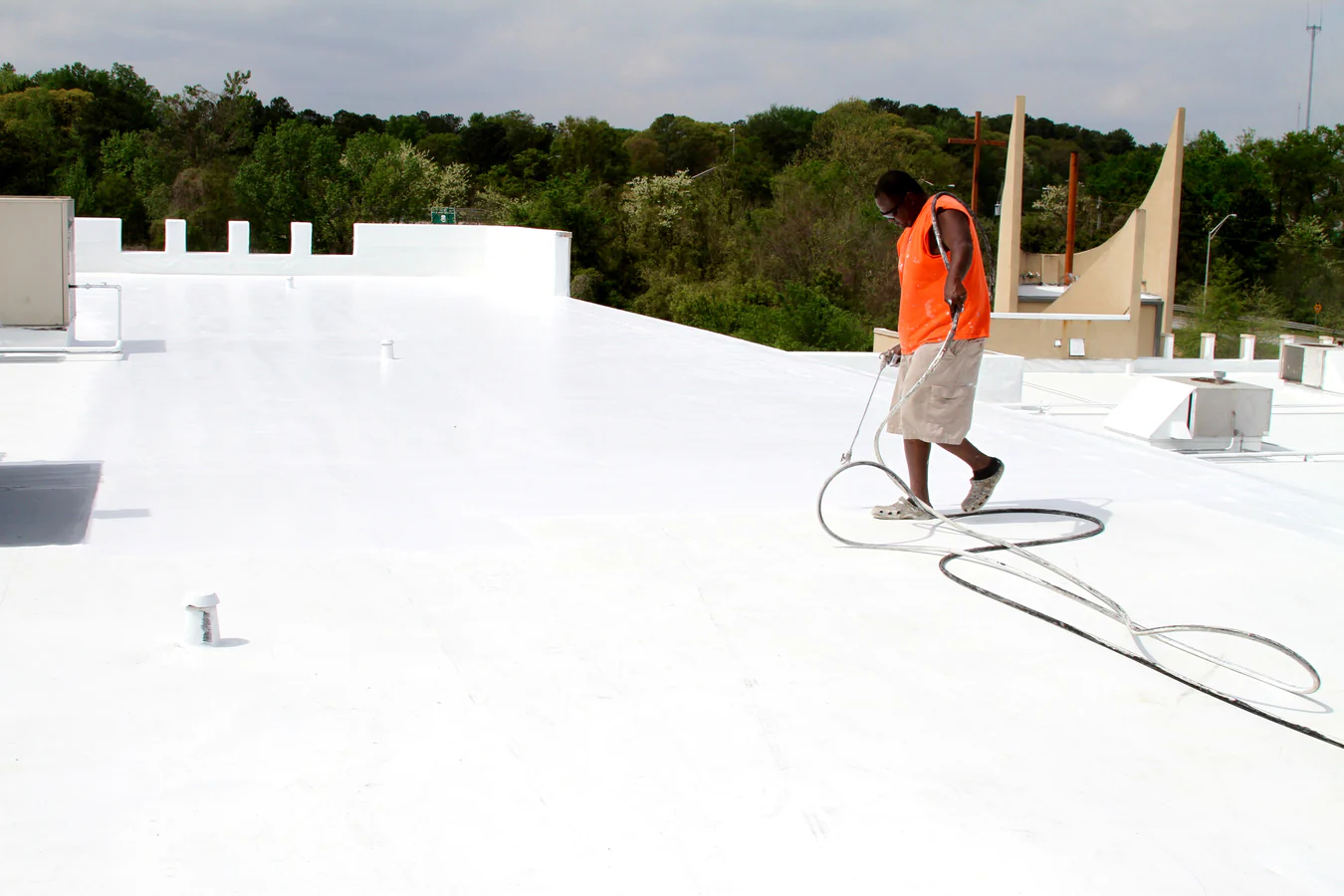
What Silicone Coating Actually Is - and What It Requires
Silicone fluid-applied coating is a single-component moisture-cure silicone polymer applied by spray, roller, or squeegee at a mil thickness specified by the manufacturer's warranty program. Common commercial warranty programs are 10-year (typically 25 wet mils), 15-year (30-35 wet mils), and 20-year (40+ wet mils) depending on the manufacturer. Silicone cures to a seamless elastomeric film that is highly UV-resistant, highly ponding-water-resistant (silicone does not absorb water the way acrylic coatings do), and reflective in white-coat formulations at 85-90% solar reflectance.
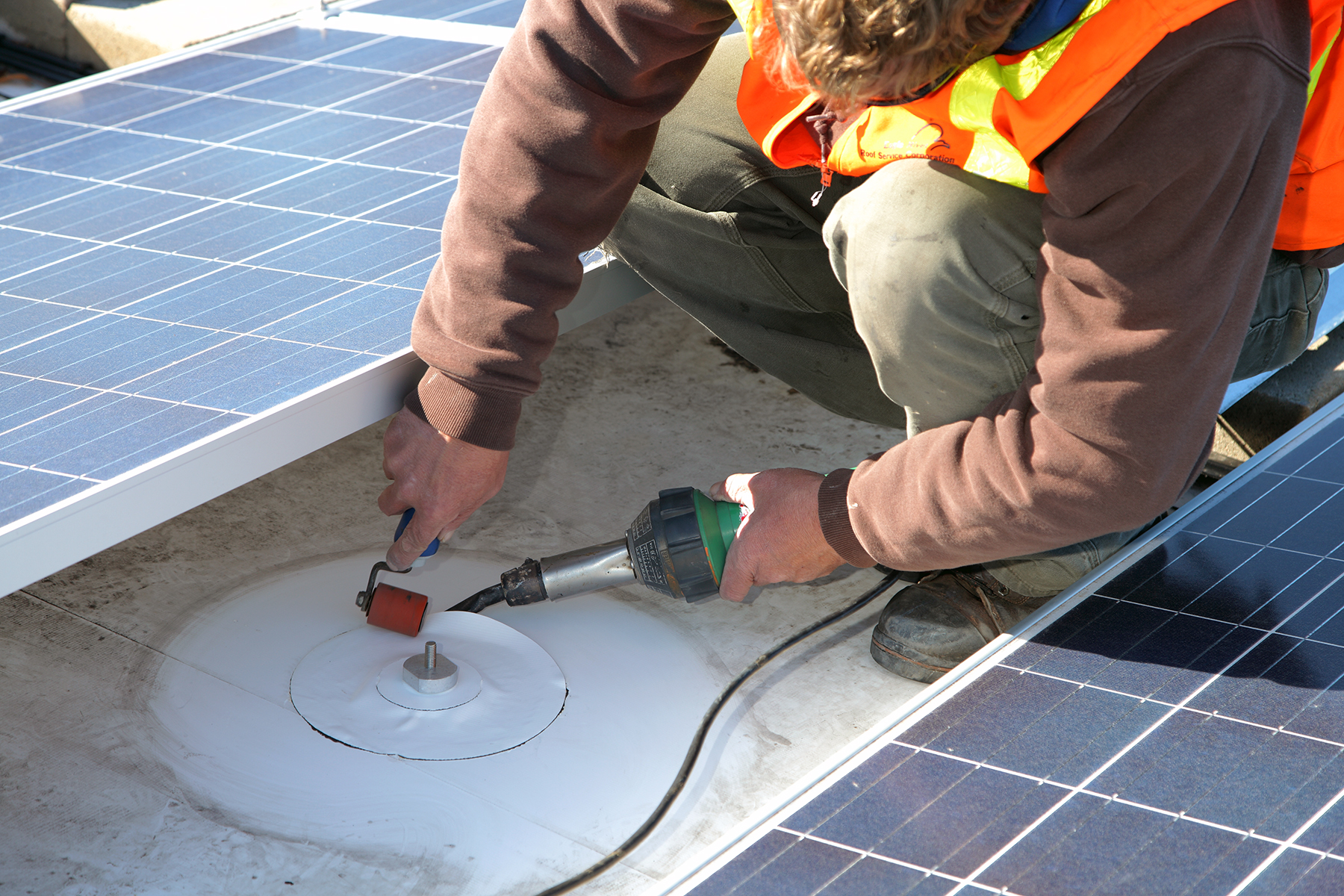
What silicone coating requires before application: pressure washing to remove contamination (Memphis rooftops accumulate organic growth, industrial particulate from the FedEx World Hub operations, and pollen from the Mississippi flyway at rates that are meaningfully higher than drier Western markets); core pulls to confirm dry insulation across the full roof area; seam reinforcement with polyester fabric set in silicone primer at every lap seam, cut edge, and flashing termination; and primed transitions at all penetrations, parapets, and drains. These preparation steps are not optional - they are where coating projects fail when the contractor skips them to hit a lower price.
What silicone coating does not do: it does not structurally repair a seam that has separated; it does not restore a membrane that is at end-of-life with widespread crazing or delamination; and it does not replace the need for drain maintenance. Memphis rooftops require annual drain clearing regardless of the roofing system, and a silicone-coated roof with clogged drains will produce ponding that eventually compromises the coating at drain perimeters.
Memphis-Specific Conditions That Affect Silicone Coating
Humidity and cure schedule: Silicone coatings cure via atmospheric moisture - the same high humidity that makes Memphis summers uncomfortable actually accelerates silicone cure. This is an advantage compared to drier markets where cure times extend. The tradeoff is that high humidity during application can introduce bubbling at the film surface if ambient conditions exceed the manufacturer's stated application window. We schedule silicone application to avoid rain within the manufacturer's required cure window, typically 4-8 hours depending on the system.
Organic contamination from tree canopy and river proximity: Memphis's proximity to the Mississippi River and its mature urban tree canopy produce high biological growth rates on rooftops - algae, lichen, and moss that must be killed, removed, and treated before coating adhesion can be trusted. Our standard prep on Memphis silicone coating projects includes a biocidal wash after pressure washing. Buildings in Midtown and South Main with heavy tree overhang get a preventive biocide added to the topcoat to extend the time between biofouling events.
Solar reflectance and Memphis cooling loads: A white silicone coating converts a dark or aged-gray membrane surface to a highly reflective surface. Memphis commercial buildings with significant cooling loads - the hospitals along the Madison Avenue medical corridor, the distribution facilities running refrigerated storage in the Aerotropolis zone - can see meaningful HVAC load reductions after a white coating installation. We document pre- and post-installation surface temperature data on projects where the owner wants to track the cooling load impact.
Coating or Replace - How We Make the Call
The coating-viable scenario: membrane in serviceable condition (no widespread crazing, delamination under 10% of surface by area, no active seam failures), insulation dry in core pulls at representative locations, deck sound, no more than one existing roof system in place, slope adequate for drainage. When these conditions are met, coating is an honest scope.
The replacement scenario: wet insulation in core pulls at more than 25% of sampled locations, membrane with widespread delamination or crazing, existing assembly at two-roof-system limit, or a deck condition that requires correction. In those cases, coating is not a responsible recommendation. We have written reports that recommend replacement to owners who came to us hoping for a coating solution, because coating over a failing substrate does not defer the capital - it accelerates it when the premature coating failure occurs.
Is your Memphis commercial roof a silicone coating candidate?
We will walk the roof, pull cores if insulation saturation is a question, and give you a straight answer on whether coating is the right scope - or whether the building needs replacement.