A solar array is only as good as the roof it sits on
Panels are warrantied for two and a half to three decades. The membrane carrying them has to make it that far too, or the whole investment unwinds. We are brought in as the roofing contractor on solar projects across Memphis, and the single most useful thing we do is settle one question before anything gets bolted down: can this roof actually host an array for the life of the system? Too often a building owner signs the solar paperwork first and asks about the roof second. That ordering quietly buries a future cost. If the membrane has eight years left and the array carries a twenty-five-year warranty, at some point a crew is paying to detach the entire array, tear off and replace the roof beneath it, then reset every panel. That detach-and-reset routine can add a five-figure sum to a reroof that would otherwise be straightforward.
We do not sell, finance, or install photovoltaic systems. We own the roof: its condition, its detailing, its watertightness, and its warranty. Because we are not chasing a solar commission, our read on whether your roof is ready is an honest one. If we tell you to reroof first, it is because the numbers say so, not because there is an array we are trying to move.
Why so much of Memphis is built for rooftop solar
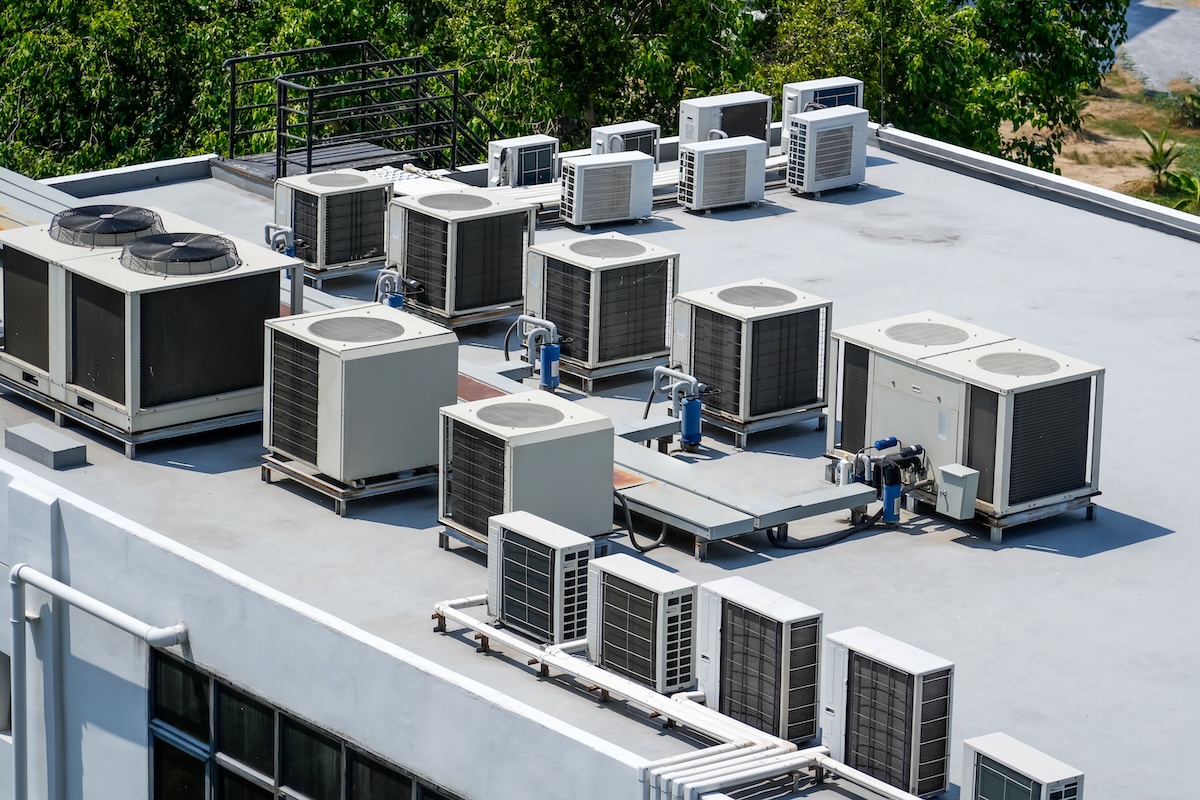
The sheer quantity of flat, unshaded, low-slope roof in this region is hard to overstate. The logistics build-out tied to the FedEx World Hub at Memphis International, the distribution and fulfillment buildings clustered around the BNSF and CN intermodal yards in southeast Shelby County, the industrial inventory running along Lamar Avenue and inside the I-240 loop, and the cold-storage plants serving the food and grocery supply chain all sit under enormous single-ply roofs with nothing but rooftop units to interrupt them. Those roofs see strong sun for most of the year, and they belong to operations whose power demand peaks in daylight, which is exactly when an array produces. Pair that load profile with the federal Investment Tax Credit, accelerated depreciation on commercial equipment, and MLGW's interconnection and net-metering terms, and the payback window on these buildings gets short enough to take seriously.
The complication is age. A large share of that warehouse stock went up in the 1970s and 1980s on steel decks engineered to the lighter load assumptions of the day. A roof being broad and flat tells you nothing about whether its structure can absorb the dead weight of a ballasted solar system. That is the first thing we put under the microscope.
Ballasted racking versus penetrated mounts
On a low-slope commercial roof there are two ways to hold an array down, and the choice dictates how we prepare the membrane.
Membrane choice and the conduit nobody plans for
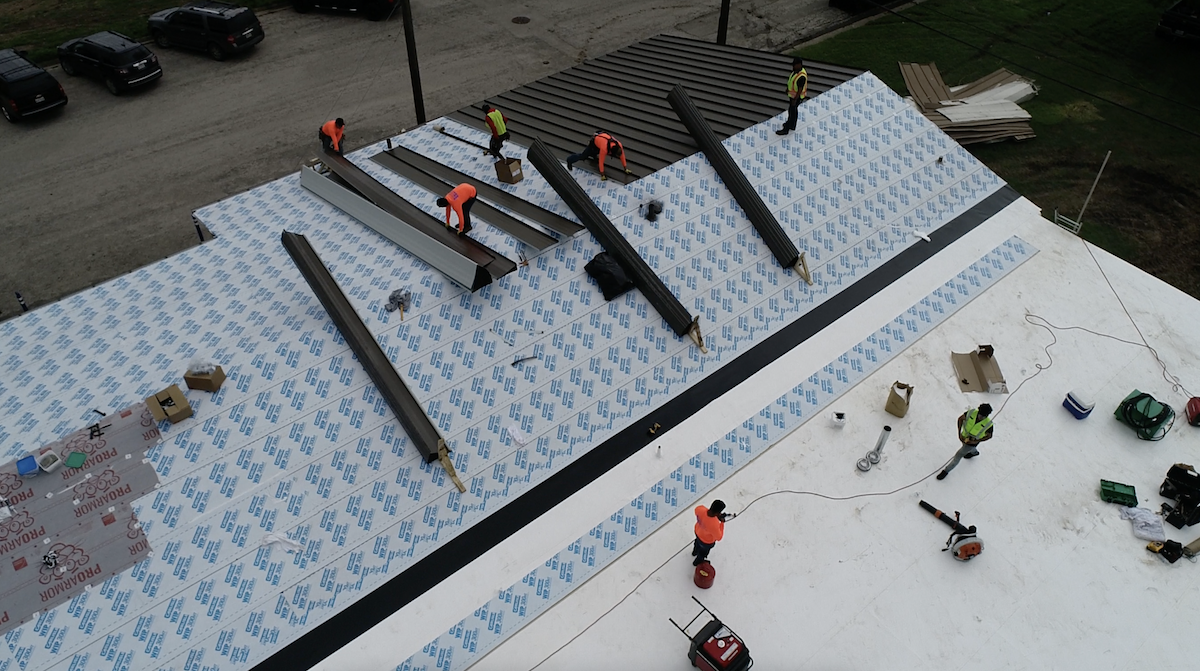
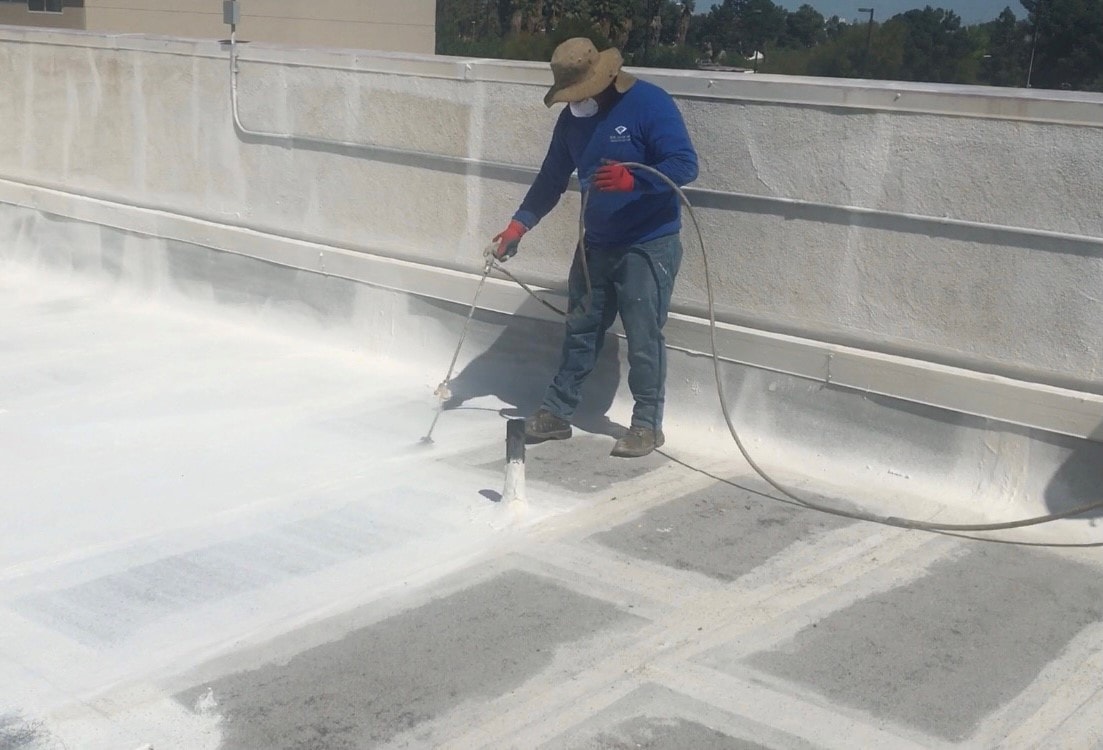
Under an array we most often steer owners toward a white reflective TPO or PVC. The bright surface runs cooler, which modestly helps the panels behind them, and both are tough, heat-weldable single-plies that accept ballast trays and flashed penetrations cleanly. EPDM can host solar as well, though it gives up the reflective edge. What matters more than the brand on the roll is that the membrane is documented, sound, and approved by its maker for solar loading.
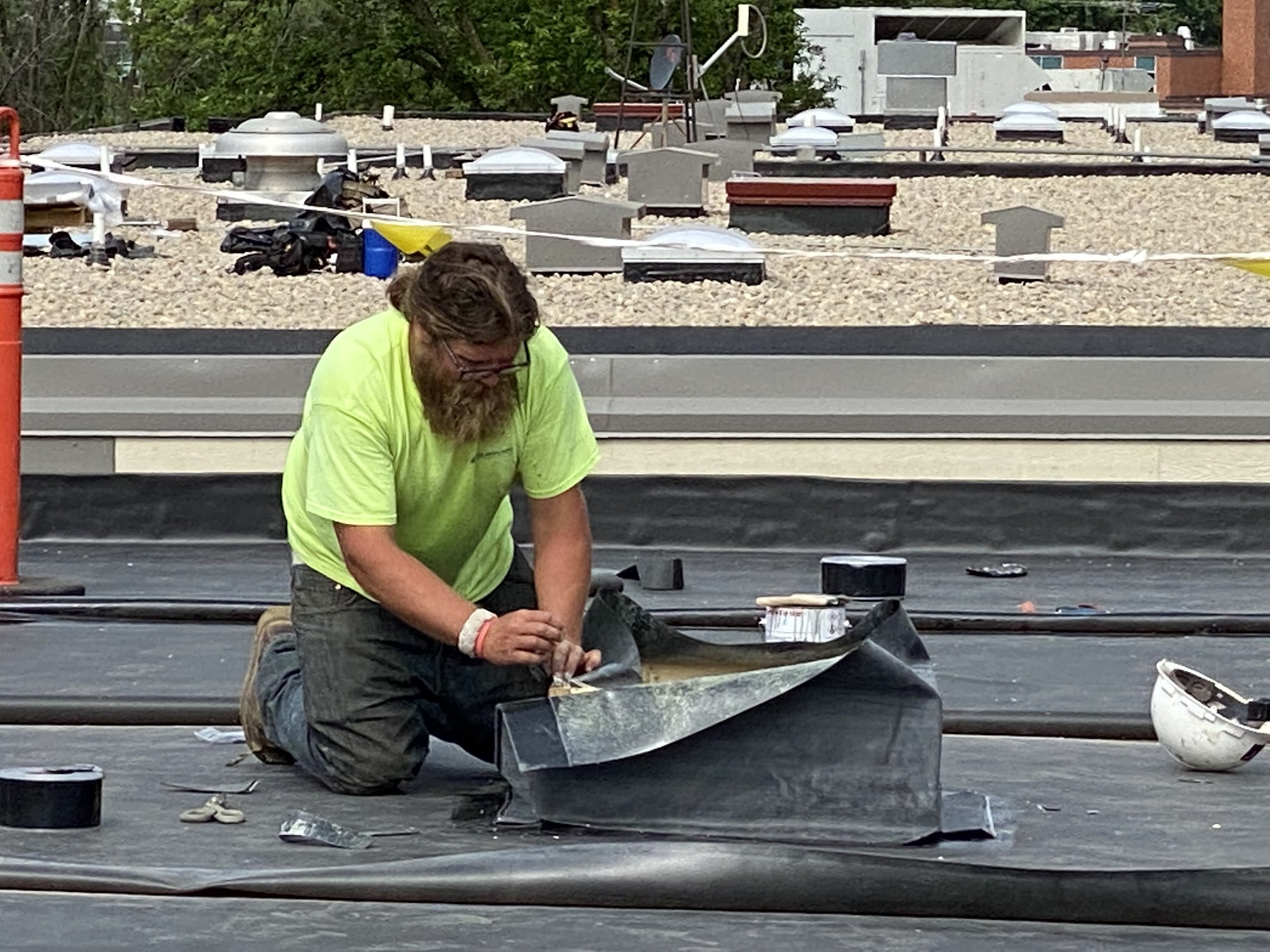
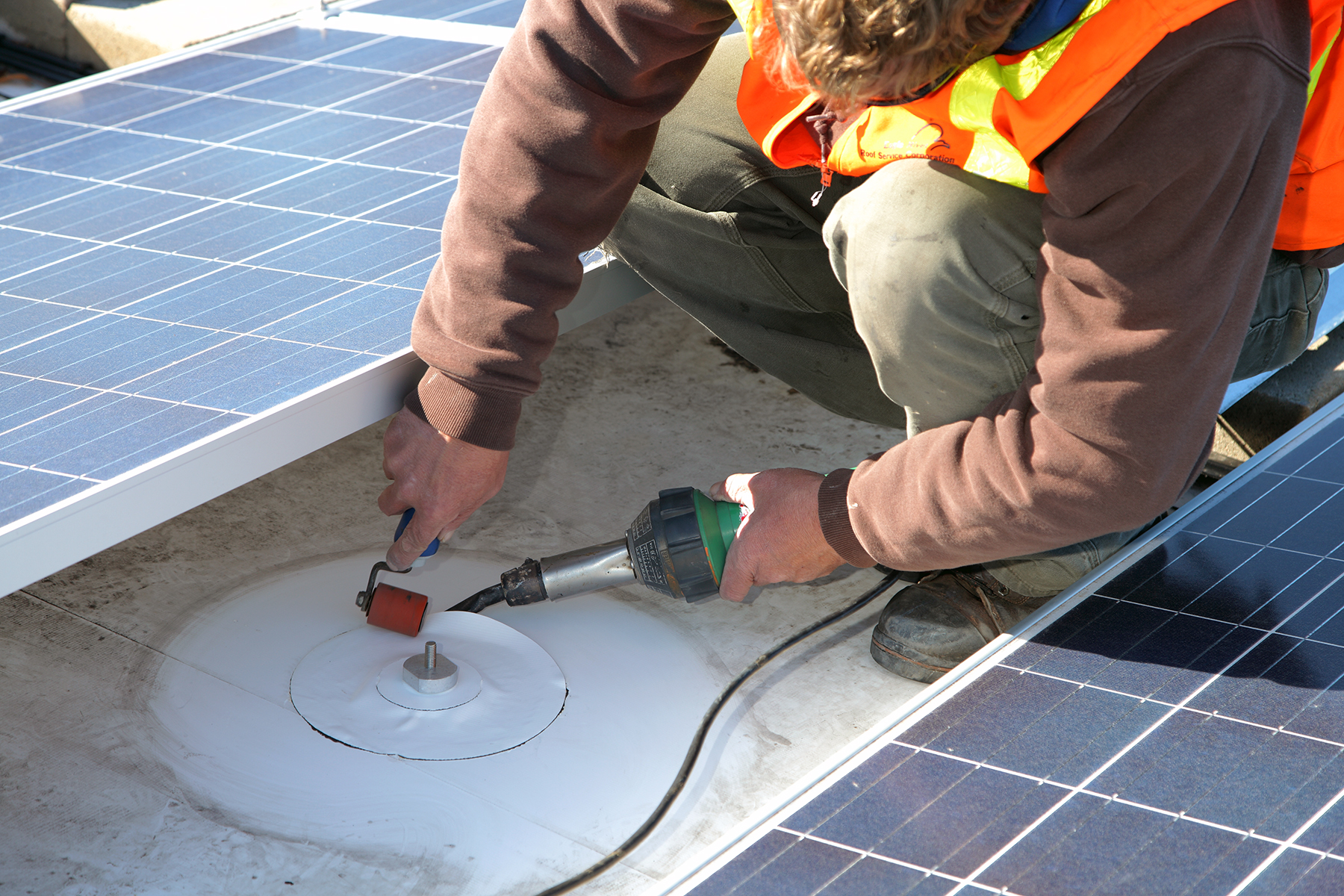
Conduit is the detail that quietly sinks solar roofs. The wiring runs from the array down to the building's electrical service have to cross the membrane somewhere, usually in several places. If a solar electrician screws conduit flat to the roof or seals a crossing with a generic boot, abrasion and chronic seepage show up within a couple of seasons. We lay out the routing and detail every crossing before any wire is pulled, using standoffs and pitch pockets or molded conduit flashings so the runs stand clear of the surface and each penetration is sealed to a real, warrantable detail.
Wind uplift changes once an array is up there
Memphis sits in an active severe-weather belt and absorbs straight-line wind events and tornado-warned systems most springs. An array rewrites the wind behavior of the entire roof. Panels catch air, a ballasted layout can creep or lift if its weight and friction were not engineered to the local design wind speed, and the perimeter and corner zones, where uplift always runs highest, need either extra ballast or mechanical anchoring. We confirm the array layout respects those high-uplift zones and that the racking design ties back to the wind load the code actually requires here, not a generic figure pulled from a product sheet.
Two trades, one roof, two warranties that have to survive together
The fastest way to void a roof warranty is to run the solar job and the roof as if they were strangers. Most major single-ply manufacturers permit an array over a warrantied roof, but only when the system design, ballast pads, walkway protection, and any penetration details are reviewed and approved by their warranty representative ahead of the work. We carry that review for you: a pre-construction coordination meeting with your solar contractor, a documented sequence so the membrane gets inspected before any racking lands on it, and correct registration of both the roofing and solar warranties at closeout. Handled that way, the array and the roof reinforce each other instead of canceling each other out.
It comes down to remaining service life. With fifteen or more documented years left on a sound membrane, mounting on the existing roof is reasonable. With seven or fewer, reroofing first almost always beats paying to detach and reset the array during a later replacement. We core the roof and give you a service-life number before you commit either way.
It can. Much of the metro's warehouse stock was framed decades ago to lighter load standards, and ballast adds real dead weight. We check the ballast load against the building's rated capacity and bring in a structural engineer when the margin is thin. A lower-weight penetrated system is often the answer when ballast is too heavy.