Ask an owner what the roof cost last year and the honest answer is usually a shrug, a repair invoice in March, another in August, an insurance deductible somewhere in between. The membrane is not the expensive part of a commercial roof; the unpredictability is. A roof service agreement replaces that scatter of surprise invoices with one flat annual number an owner or CFO can put in the budget and stand behind.
What the Fixed Number Buys
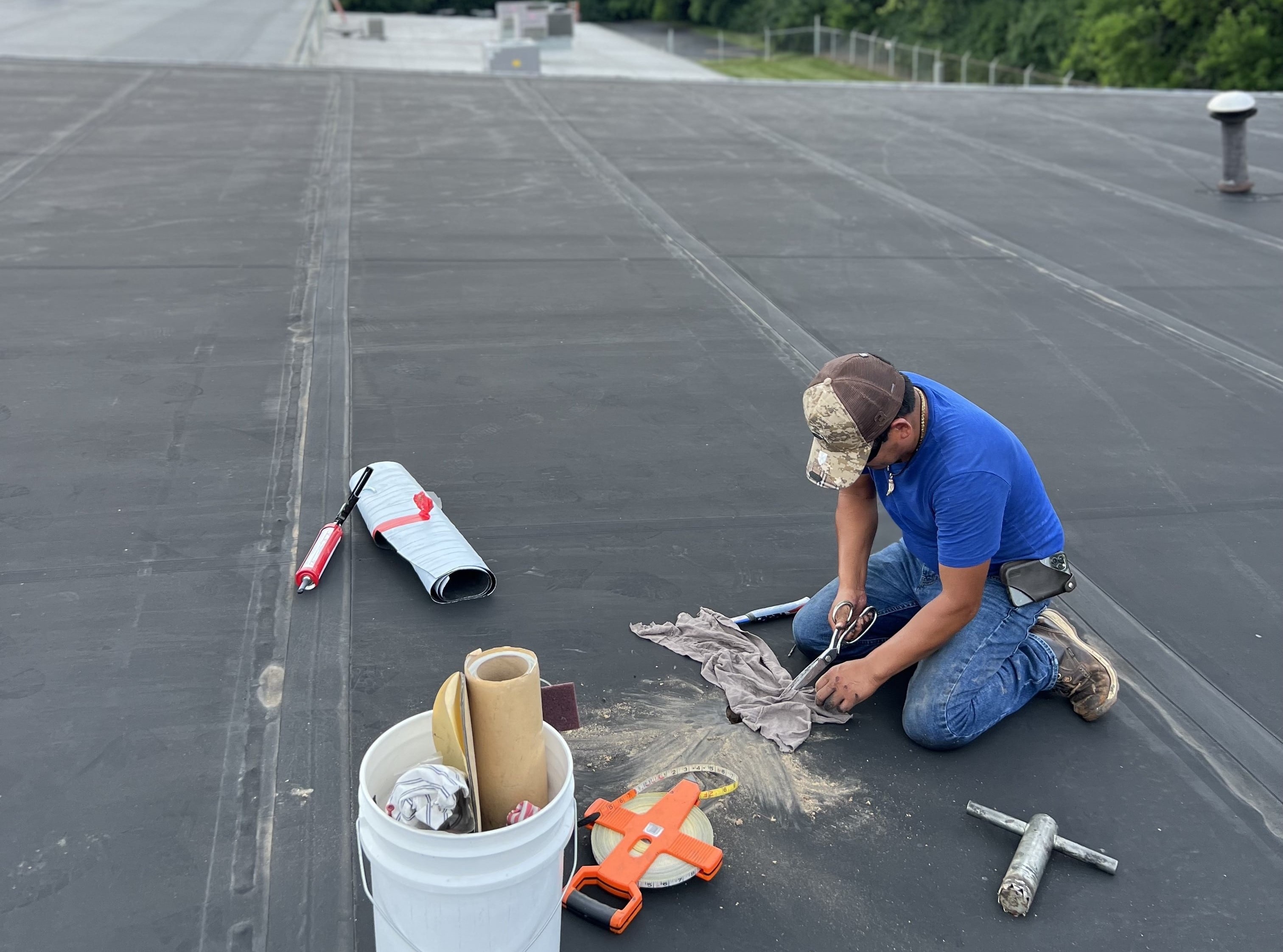
The agreement covers two scheduled rooftop visits a year, and each one is working time, not a drive-by. The crew covers the entire field of the roof, every seam, every termination, every penetration flashing, re-caulks what has lifted, and opens up every drain and scupper, no small job in a metro this heavily treed, where one autumn leaf load can stand water on a low-slope roof for months. Small membrane repairs get closed during the visit instead of quoted as a second mobilization.
Within two business days you get the report: photo-keyed findings, what was corrected on the spot, and a short list of what deserves planned attention ahead of the following visit. No hourly billing, no per-trip charges, and no incentive for anyone to go find drama on your roof.
From Condition History to Capital Forecast
For finance teams, the reports are where the agreement earns its keep. Each visit updates a running condition history, and that history supports a realistic read on remaining service life, which sections will need attention in two years, which details are stable, and when replacement actually belongs in the capital plan. Replacement priced three budget cycles out is a project; replacement priced during an active leak is a ransom.
The same file protects the warranty. Manufacturers expect documented maintenance on record when a claim is filed, and an agreement folder full of dated reports and photographs settles that question before it gets asked. Owners here have also put the reports to work at insurance renewal and in lender packages, where a documented roof reads very differently from an unknown one.
Timed to the Mid-South Calendar
Visit timing follows the weather that actually damages roofs here. The spring visit comes after the severe-storm months have thrown their straight-line winds and hail at the building, we document what the season did while the evidence is fresh. The late-fall visit lands after leaf drop, so drains, scuppers, and gutters go into the wet months clear instead of dammed. Buildings from the airport logistics corridor to the Shelby County industrial parks run on the same rhythm, and the schedule holds even in the years when nothing seems wrong, those are the visits that keep it that way.